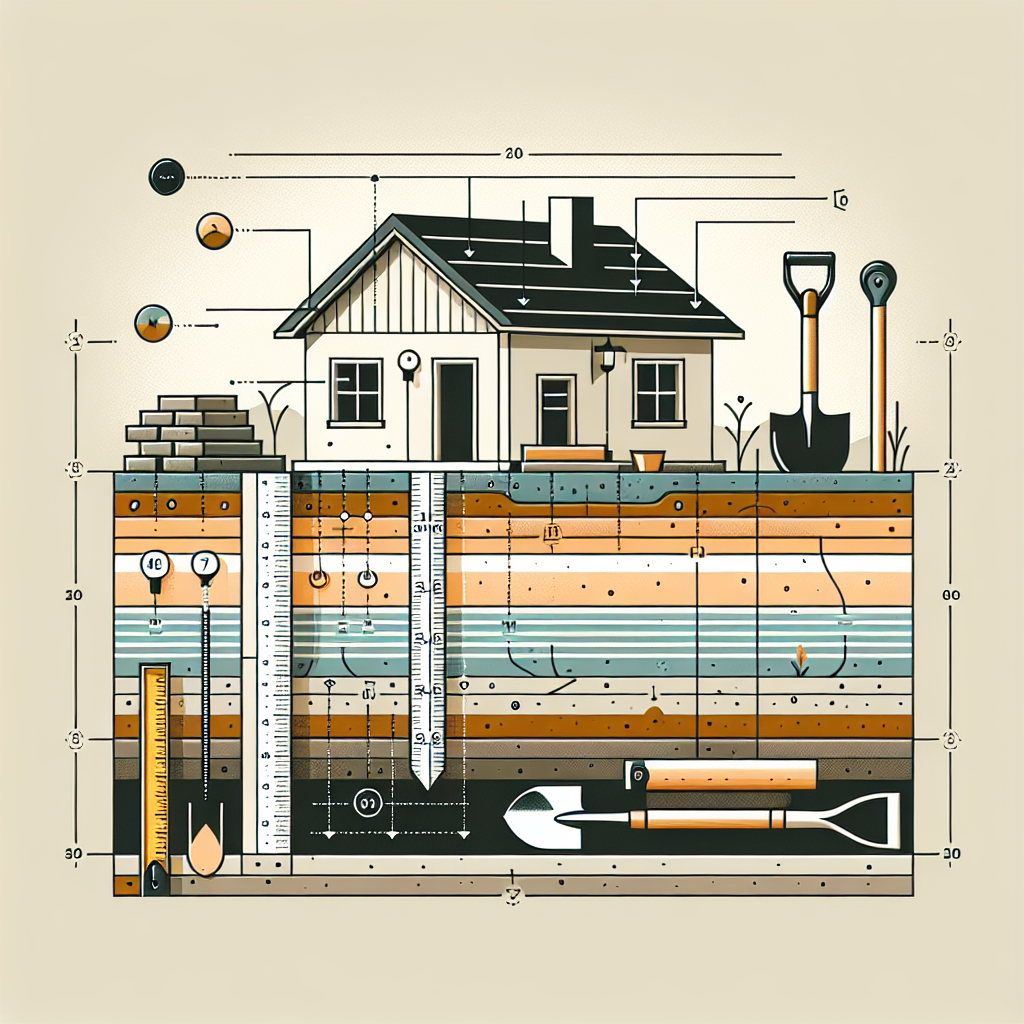
Choosing the right depth for a footing is one of the most important decisions in foundation work. The wrong depth can lead to settlement, moisture issues, or frost heave, while a sensible depth helps the structure stay stable and durable.
This article explains how to think about footing depth in practical terms. It covers the main factors that matter, straightforward calculation ideas, and common checks to avoid costly mistakes.
Why footing depth matters
Footings transfer building loads to the ground. If they sit too shallow, the soil under them might compress unevenly or freeze and heave during cold months. Too deep, and excavation costs and unnecessary concrete use go up.
Depth also affects moisture exposure, corrosion risks for embedded items, and access for inspections. Balancing safety, soil behavior, and cost is the goal when picking a depth.
How depth links to load and settlement
Deeper footings typically reach firmer soil layers with higher bearing capacity, which reduces the chance of settlement. But not every project needs a deep footing — a lightly loaded structure on good soil may be safe at shallow depths.
Estimate expected settlement by comparing soil stiffness and the imposed load. If the predicted settlement is within acceptable limits, a shallower footing may be fine; otherwise, deepen until the soil response is reliable.
Frost, moisture and durability
In cold climates, frost lines are a decisive factor. Footings must sit below the frost depth to avoid uplift from freezing and thawing cycles. In wet areas, deeper placement reduces the risk of prolonged saturation or erosion around the footing.
Durability concerns also include corrosion of buried fixtures and soil chemistry that can attack concrete. Where soil is aggressive, additional depth plus protective measures help protect the structure.
Key factors that affect depth
Several variables determine how deep a footing should go. Addressing each early will narrow the safe and economical depth range for your project.
Understanding these factors makes calculations more reliable and reduces guesswork on site.
Soil type and bearing capacity
Coarse, dense soils like gravel and dense sand provide strong support near the surface. Soft clays and loose silts often need deeper footings or soil improvement to reach adequate bearing capacity.
A basic step is to obtain a site soil report or at least perform simple tests like the Standard Penetration Test (SPT) or hand auger observations to identify layers and strengths.
Loads from the structure
Heavier structures demand footings that distribute larger loads without excessive pressure on the soil. Calculate the total load (dead load plus live load) and convert it to a pressure under the footing area to compare with soil capacity.
For columns or isolated footings, use the column load divided by footing area to find contact pressure. For continuous footings, distribute the wall load across the footing width and length.
Local climate and frost depth
Research the local frost depth from building codes or regional data. Footings must be placed below that depth unless special measures like insulation or frost-protected shallow foundations are used.
Frost depth varies widely by region and often by microclimate. When in doubt, use conservative values from code or a local authority.
Groundwater and drainage
High groundwater raises the risk of buoyancy or prolonged wet soil conditions that weaken support. If groundwater is close to the surface, consider deeper footings, drainage measures, or reinforced concrete designs.
Provide adequate site drainage so surface water does not collect near the foundation, which can change effective soil strength over time.
Simple calculation steps
These steps outline a practical approach to sizing footing depth and checking safety. They focus on common building situations and can be adapted when specialist soil data is available.
The aim is to produce a defensible depth that balances safety and cost.
Step 1: Identify soil layers
Start with a quick soil survey. Use bore logs or hand auger samples to map soil types and their depths. Note any soft layers, gravel seams, or organic matter near the surface.
If a lab report is available, capture the soil properties such as unit weight, cohesion, and internal friction angle. When not available, use conservative default values from codes or local practice.
Step 2: Determine the design load
Sum the loads the footing must support: dead loads, live loads, and any concentrated loads from equipment. Convert these to an ultimate design load using appropriate load factors from codes if required.
For quick estimates, a factored load helps ensure the chosen depth and size include a margin for safety.
Step 3: Select a footing type and area
Decide whether an isolated pad, strip footing, or continuous footing is appropriate. The required area depends on dividing the applied load by the allowable bearing pressure of the supporting soil.
Example: If the allowable soil pressure is 150 kPa and the factored load on a column is 300 kN, the required footing area = 300 kN / 150 kPa = 2.0 m2.
Step 4: Check settlement and depth
Estimate settlement using simple elastic methods or empirical formulas for the soil type. If predicted settlement exceeds acceptable limits, deepen the footing until it rests on stiffer material or consider enlarging the footprint.
As a rule of thumb, the footing should bear on a layer that offers sufficient stiffness for long-term performance; this often means reaching dense sand or compacted gravel layers.
Step 5: Account for frost and cover
Set the bottom of the footing below the local frost depth. Add extra cover for durability and to protect embedded steel or connections from corrosion and physical damage.
Where frost depth is deep, options like frost-protected shallow foundations or insulation can allow shallower footings, but these require careful calculation and are less common in simple projects.
Common mistakes and practical checks
Even experienced teams sometimes miss simple details that lead to problems. A short checklist helps catch common issues before excavation begins.
Use these checks during planning and on site to avoid rework and costly fixes.
Underestimating soil variability
Soil can change over short distances. Relying on a single sample can be risky. Take multiple samples across the site to detect soft pockets or unexpected layers.
When variability is high, design conservatively or plan for in-situ testing during excavation so you can adapt the footing depth if needed.
Ignoring frost and seasonal changes
Skipping frost depth checks leads to heave or movement later. Use local code values and consider microclimate effects like shading or nearby water bodies that can alter freeze depth.
Temporary drainage during construction also prevents saturation that could weaken soils before the footing cures.
Poor compaction and backfill practices
Even a correctly deep footing can fail if the surrounding backfill is poorly compacted. Specify compaction standards and test density where possible.
Keep heavy equipment off freshly placed footings and avoid stockpiling soil near foundations until compaction is complete.
Simple site checklist
- Confirm local frost depth and groundwater level.
- Review multiple soil samples across the site.
- Estimate loads with conservative assumptions if exact values are unknown.
- Plan for proper drainage and compaction procedures.
- Have a contingency for deeper excavation if soft layers appear.
Conclusion
Picking the right footing depth means balancing soil behavior, loads, climate, and cost. A practical sequence of soil assessment, load estimation, area sizing, and settlement checking gives a solid starting point for most projects.
When soil conditions are uncertain or loads are high, get additional testing or specialist input. Simple checks and good site practices prevent many common foundation problems.
Frequently Asked Questions
How deep should footings be in cold climates?
In cold regions, footings should reach below the local frost depth to prevent movement from freeze-thaw cycles. Check regional code values and allow extra depth where drainage is poor or the soil is prone to freezing.
Can shallow footings work on sandy soil?
Sandy soils with good compaction and drainage can support shallower footings. Verify bearing capacity and settlement expectations with site tests. If sand is loose or saturated, deeper footings or treatment may be necessary.
What if the soil report shows a soft layer near the surface?
If a soft layer exists, options include extending the footing to a deeper, firmer layer, increasing the footing area to spread the load, or improving the soil by compaction or replacement. The correct choice depends on the depth and extent of the soft material.
Is groundwater a reason to deepen the footing?
Yes. High groundwater can weaken supporting soils and cause buoyant forces. Deepening to reach unsaturated, stronger layers or adding drainage and waterproofing measures helps maintain footing performance.
When is extra reinforcement needed with deeper footings?
Deeper footings that must span soft upper layers or resist lateral loads often need additional reinforcement to control bending and cracking. Design reinforcement based on expected bending moments, shear, and construction practices.