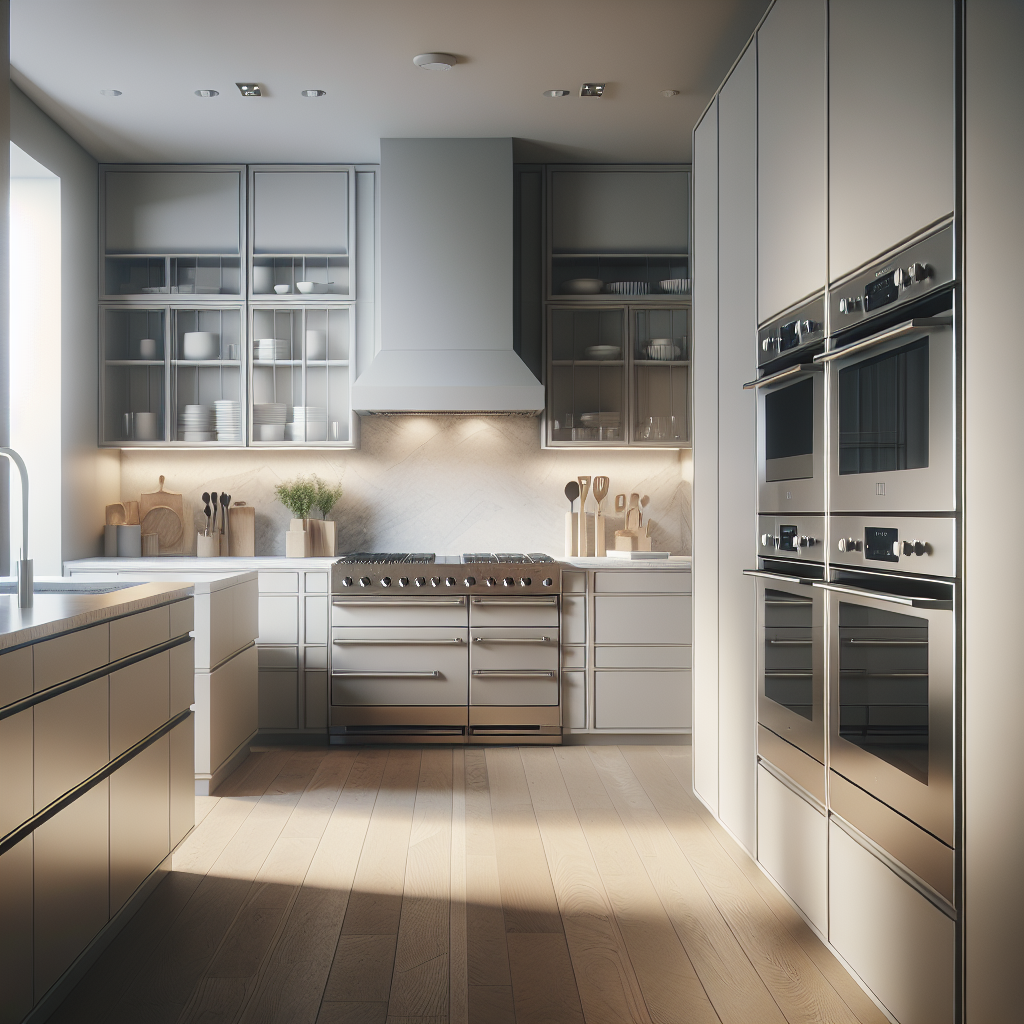
Picking an oven that fits your kitchen and cooking needs starts with understanding size and space. Measurements include the oven’s external footprint, internal capacity, and the clearances needed for safe, efficient use.
This article breaks down typical oven widths, depths, heights, and installation considerations so you can compare models and avoid surprises during installation.
Common oven widths, depths and capacity ranges
Oven sizes are described by their outer width, depth, and height as well as the internal cooking volume. Manufacturers often follow a set of common widths to match cabinetry and kitchen layouts.
Knowing these typical ranges makes it easier to choose an oven that fits a cabinet opening or a freestanding space.
Typical widths
Common widths are 24 inches, 27 inches, 30 inches, and 36 inches. The 30-inch width is the most common choice for single ovens and ranges in many homes.
- 24 inches: Good for compact kitchens and smaller households.
- 27 inches: Fits some modular cabinetry and offers modestly larger interiors.
- 30 inches: Standard in many kitchens; balances capacity and space.
- 36 inches: Often used for commercial-style ranges or larger built-in units.
Common depths and how they affect fit
Depth is measured from front face to the back. Standard oven depths often range from about 23 to 26 inches for built-in models. Freestanding ranges can be slightly deeper due to oven door profiles and rear connections.
Shallow models exist to align flush with cabinets, while deeper professional-style ranges may extend beyond counters.
Internal capacity explained
Oven capacity is usually given in cubic feet. Smaller ovens are around 2 to 3 cu ft, mid-size models 3 to 5 cu ft, and large ovens exceed 5 cu ft.
Think about the types of dishes you make: large holiday roasts, multiple trays of cookies, or mostly single-dish meals. Capacity affects rack positions and how many pans you can cook at once.
Built-in wall ovens versus freestanding ranges
These two formats behave differently in terms of dimensions and how they integrate into a kitchen. The space you have will often dictate which style works best.
Understanding the practical size differences helps you plan cabinetry openings, countertop layouts, and ventilation.
Freestanding ranges
Freestanding ranges combine cooktop and oven in one appliance and usually slide between cabinets. Typical width is 30 inches, with some 24- and 36-inch options available.
Range height including cooktop is normally around 36 inches to match countertop height, but final height can vary slightly with adjustable legs.
Built-in wall ovens
Wall ovens are installed within cabinetry at a chosen height. Single units often fit within a 27- to 30-inch tall cabinet opening, while double ovens require taller vertical space.
Built-in units offer design flexibility but need precise cabinet cutouts and sometimes additional trim or filler pieces to achieve a finished look.
How to measure your kitchen space accurately
Taking clear, careful measurements reduces the risk of buying an oven that won’t fit. Measure multiple times and note both finished cabinet openings and rough openings behind them.
Include measurements for width, height, depth, and any obstacles such as plumbing, electrical junctions, or ventilation paths.
Measuring width and height
Measure the cabinet opening at the top, middle, and bottom to check for inconsistencies. Use the smallest reading as your usable width.
For wall ovens, measure the vertical cabinet opening and take note of shelf or support positions that could affect installation.
Measuring depth and clearance needs
Measure from the front face of the cabinet to the wall behind to confirm the available depth. Allow space for electrical cords, gas lines, and ventilation ducts.
Remember that oven doors need room to open fully. Check floor-to-door clearance if the unit will sit on a raised platform or stone base.
Clearances, ventilation and safety considerations
Proper clearances and ventilation are essential for safe operation and to protect surrounding cabinets and surfaces from heat. Manufacturer instructions provide exact figures for each model.
When planning, include recommended side, top, and rear clearances, and confirm whether additional spacers or trim are needed.
Ventilation basics
Ovens can be vented either to the room or externally, depending on model and local codes. Range hoods above cooktops require adequate capture area and proper ducting to remove heat and smoke.
Built-in ovens may have rear or bottom vents; leaving space behind helps maintain airflow and prevents overheating.
Clearance and heat protection
Keep flammable materials away from the oven and ensure adjacent cabinetry can tolerate heat exposure. Some finishes and cabinet materials need additional protective measures.
If cabinets sit close to the oven, consider heat-resistant trim or insulating material as specified by the appliance maker.
Electrical, gas connections and practical installation notes
Before buying, verify whether the oven needs a specific electrical service or gas hookup. Installation often requires a licensed technician for safe and code-compliant connections.
Plan the location of the outlet or gas shutoff relative to the oven so that cords and hoses are not pinched or overly exposed.
Electrical and power details
Many larger ovens and electric ranges require a dedicated 240V circuit; smaller or compact units may run on 120V. Check the appliance’s specifications to confirm electrical needs.
Proper grounding and outlet placement make installation simpler and safer. Avoid using extension cords or adapters unless explicitly allowed by the manufacturer.
Gas line placement and ventilation
For gas ovens, position the gas shutoff and check that flexible connectors meet local codes. Vent and burner performance can be affected by improper line sizing or routing.
Always test for leaks and proper burner function after installation. A professional installer will complete these checks and provide peace of mind.
Practical tips to choose the right oven size
Selecting the right size is about balancing available space, cooking habits, and future needs. Think beyond current use to consider occasional large meals or entertaining.
Some models offer adjustable racks or convection features that can increase usable cooking area, making a mid-size oven perform like a larger one.
Match capacity to cooking style
If you roast large birds or use multiple pans, prioritize internal volume and rack positions. Baking frequently might benefit from even heating and multiple racks.
If counter space is limited but you still want flexibility, consider single wall ovens paired with a separate cooktop.
Consider longevity and resale
Choosing a common size helps future buyers or future upgrades fit without major remodels. Standard widths and depths are easier to replace over time.
Pay attention to standard cabinet openings if you expect to switch or upgrade ovens later.
Conclusion
Understanding typical widths, depths, internal capacity, and installation requirements makes choosing an oven much easier. Accurate measurements and attention to ventilation and power needs are key to a smooth install.
With the right planning you can select an oven that fits your kitchen, supports your cooking, and avoids costly adjustments after delivery.
Frequently Asked Questions
What width oven is most common?
The most common width for a single oven or range is 30 inches. This size balances cooking capacity and compatibility with standard base cabinets.
How deep should the space be for a built-in oven?
Typical depths range from about 23 to 26 inches. Check the model’s installation manual and allow extra room for cords, vents, and any adapters.
Can I replace a freestanding range with a built-in wall oven?
Replacing a range with a wall oven may require cabinet modifications, changes to ventilation, and adjustments to electrical or gas connections. Plan measurements carefully before buying.
How much internal capacity do I need?
Smaller households may be fine with 2 to 3 cubic feet, while families or frequent entertainers often prefer 4 to 5+ cubic feet. Consider the largest dish you plan to cook regularly.
Are there oven sizes that match custom cabinets?
Yes, some manufacturers offer trim kits or adjustable models to fit custom openings. For unique layouts, measure carefully and consult product specs to find the best match.