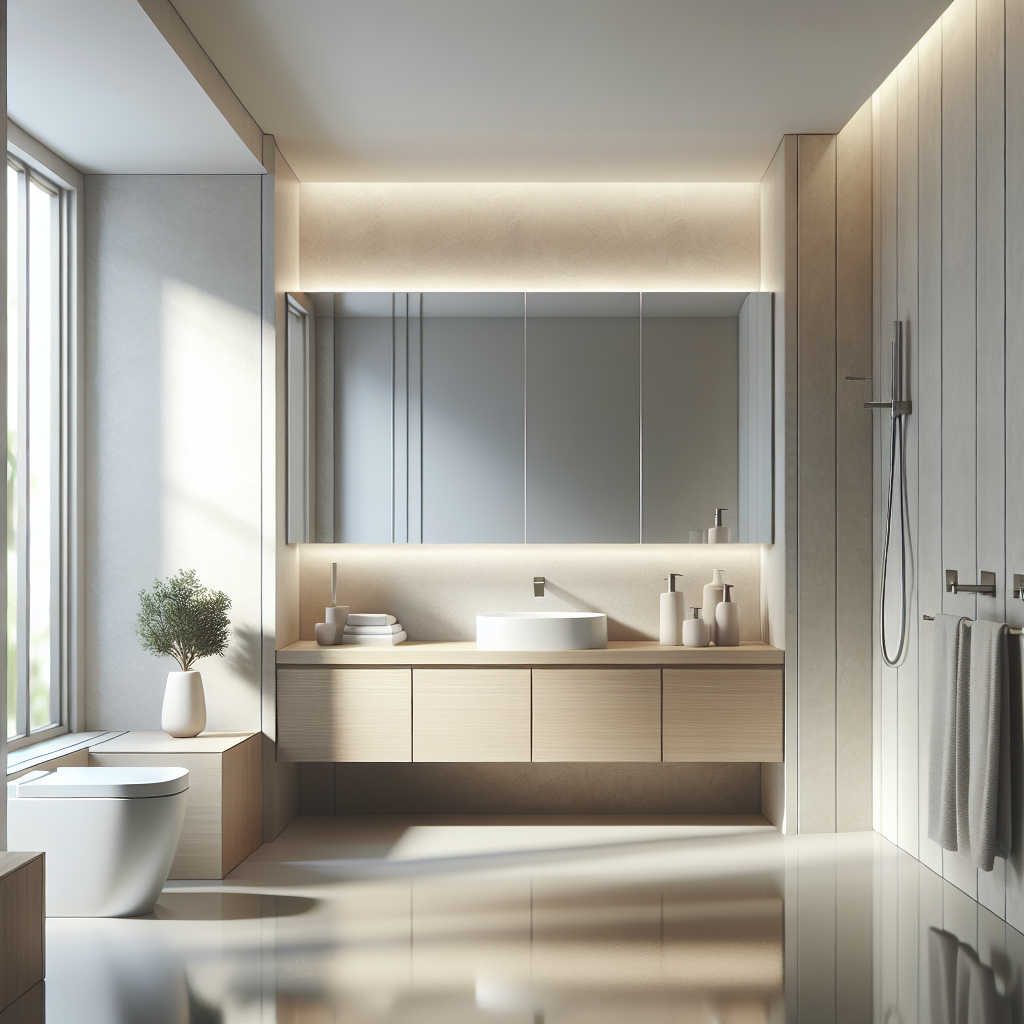
Choosing the right cabinet sizes makes a bathroom feel balanced and easier to use. This article walks through common measurements, placement tips, and storage choices to help you plan around plumbing, door swings, and daily routines.
Whether you’re updating a small powder room or fitting a double-sink vanity into a family bathroom, clear numbers and simple rules will keep decisions practical and reduce surprises during installation.
Planning cabinet size and layout
Start with a clear sketch of the bathroom showing doors, windows, and plumbing lines. Note floor space and the location of fixtures so cabinets don’t block movement or appliance access.
Think about who will use the room and how. A single user needs less storage than a family. Prioritize functionality: easy access to daily items and enough clearance around sinks and toilets.
Measuring the space
Measure floor-to-ceiling height, wall lengths, and distances between fixtures. Record where water supply and drain lines are located. Include baseboard thickness if it affects cabinet fit.
Take at least two measurements for each dimension to avoid mistakes. Use a long tape measure and mark key points on the floor or a paper plan.
Allowing clearances
Leave at least 30 inches of clear space in front of a vanity to allow comfortable use. This can be tighter in small rooms but should not fall below 21 inches to keep it usable.
For doors and drawers, ensure swing and pull space are unobstructed. A cabinet that collides with a door or toilet will reduce usability significantly.
Common cabinet heights and depths
Cabinets come in a range of standard heights and depths that work with typical sinks and countertops. Choosing the right combination affects comfort and storage.
Most measurements below are industry-standard and work well in average homes. Adjust them slightly to suit taller or shorter users where needed.
Vanity heights
Floor-mounted vanities usually range from 30 to 36 inches high. The shorter end suits older styles, while 32 to 36 inches is more comfortable for standing tasks.
Wall-mounted or floating vanities are installed at similar heights, but allow more visible floor area and can make a small bathroom feel larger.
Cabinet depths and clearances
Standard base cabinet depth is 21 to 24 inches, measured from the wall to the front of the cabinet box. This gives enough room for most sinks and faucets without sticking into the walking area.
Shallow cabinets for tight spaces are often 12 to 15 inches deep and are great beside toilets or in hall bathrooms where storage is needed without a large footprint.
Tall and linen cabinets
Tall storage cabinets typically stand 72 to 84 inches high and 12 to 24 inches deep. They offer vertical storage without taking up vanity space.
Place tall units against a full wall and keep doors and drawers accessible. Consider adjustable shelves to accommodate towels and tall bottles.
Sinks, countertops, and fitting considerations
Sink type influences countertop depth, cabinet layout, and plumbing placement. Match cabinet design to the sink to avoid awkward gaps or trimming during installation.
Consider the maintenance of the countertop edges and seams when choosing materials and joinery around the sink area.
Drop-in and vessel sinks
Drop-in sinks sit in a cutout from the countertop, requiring a standard depth and cabinet below to hide the rim and plumbing. They are simple to install with common cabinet sizes.
Vessel sinks sit on top of the counter and may need less cabinet depth but require taller faucets and secure mounting points. Make sure the cabinet supports the countertop weight and plumbing access.
Undermount sinks and integrated tops
Undermount sinks are attached beneath the countertop for a seamless look. Cabinets must allow for the countertop thickness and support; ensure the front edge line matches cabinet face heights.
Integrated tops such as solid surface or stone can be heavier and need precise cabinet dimensions. Confirm the cabinet width and strong support where the countertop will sit.
Counter overhang and knee space
Standard countertop overhang is typically 1 to 1.5 inches beyond cabinet faces. For seated vanity areas, leave at least 15 inches of knee clearance depth and a minimum height of 30 inches from floor to underside of the countertop.
Overhangs beyond 1.5 inches may need additional support brackets or corbels to prevent sagging, especially with heavy stone tops.
Practical storage and organizational tips
Well-planned internal layouts make even small cabinets feel spacious. Think about daily routines and store frequently used items at reachable heights.
Use organizers and adjustable shelves to adapt to changing needs. Pull-out trays and drawer inserts improve access in deep cabinets.
Drawer vs cabinet door layouts
Drawers provide easier access to toiletries and stacked items, while doors with shelves store taller items like bottles and cleaners. Mix both types to get the best of each.
Soft-close mechanisms improve longevity and prevent slamming in busy households. Consider full-extension drawers to access the entire depth.
Using open shelving and niches
Open shelves add visual depth and quick access to towels or decor but require tidy styling. Use baskets to hide clutter while keeping items accessible.
Recessed niches near showers or at eye level on a wall are great for daily items without losing floor space. Plan the niche depth so it doesn’t interfere with plumbing or structural studs.
Material choices and finishing touches
Cabinet construction and finishes impact durability in a humid environment. Choose moisture-resistant materials and finishes that withstand cleaning products.
Painted or lacquered surfaces offer a sleek look, while engineered veneers and laminate resist warping and are easier to maintain in wet rooms.
Hardware and fittings
Select pulls and knobs that match the overall bathroom style. Larger handles can make drawers easier to open, especially when hands are wet.
Hinges should be rated for bathroom humidity. Concealed hinges give a clean look and often include adjustment options to align doors precisely.
Lighting and mirrors
Proper lighting above or around the mirror improves usability. Use fixtures that cast even light to reduce shadows on the face when shaving or applying makeup.
Mirror cabinets add hidden storage with lighting built-in. Verify depth so the mirror unit does not conflict with existing switches or towel racks.
Conclusion
Choosing cabinet sizes is a balance of comfort, storage, and proportion. Start with reliable measurements of available space and plan cabinets that match common sink and countertop dimensions.
Mix conventional heights with customized storage to suit daily routines. Small changes in depth or height can greatly improve usability without a full redesign.
Frequently Asked Questions
What is a comfortable vanity height for most adults?
Heights between 32 and 36 inches are comfortable for most standing tasks. Choose the higher end if users are taller or if a vessel sink will be used, which may require additional faucet height.
How deep should a bathroom vanity be?
Typical depth is 21 to 24 inches, which accommodates sinks and provides usable workspace. In very tight rooms, 18 inches can work but reduces countertop space and drawer depth.
Can I place a tall cabinet next to a toilet?
Yes, but ensure there is enough clearance for toilet use and that cabinet doors do not hit the toilet tank. A 12- to 15-inch deep tall cabinet often fits well beside a toilet while offering vertical storage.
Are floating vanities a good option for small bathrooms?
Floating vanities create a sense of more floor space and are easier to clean beneath. They still need proper wall support and often require custom mounting to handle the weight of countertops and sinks.
What clearance is needed for cabinet doors and drawers?
Allow at least 21 inches in front of cabinets for doors and drawers to open comfortably. For full functionality, aim for 30 inches when possible, especially in busy bathrooms.