Road Shoulder Meaning: Types, Design, Functions, and Safety Guide
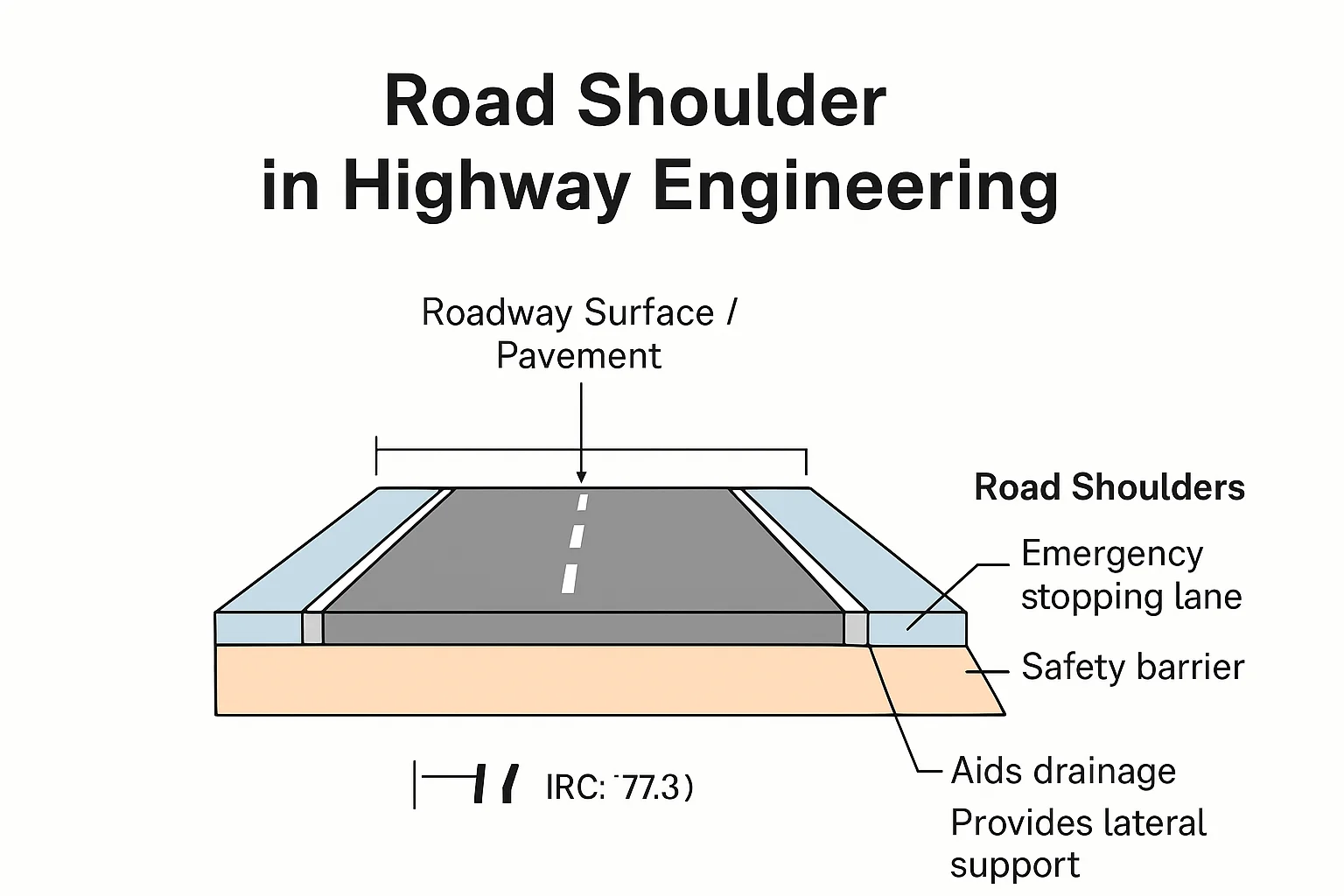
Road Shoulder Meaning in Highway Engineering: Purpose, Types, Width & IRC Standards If you are looking for the road shoulder ...
Read more
What is PQC Tie Bars and Dowel Bars? – Types, Uses, and Benefits
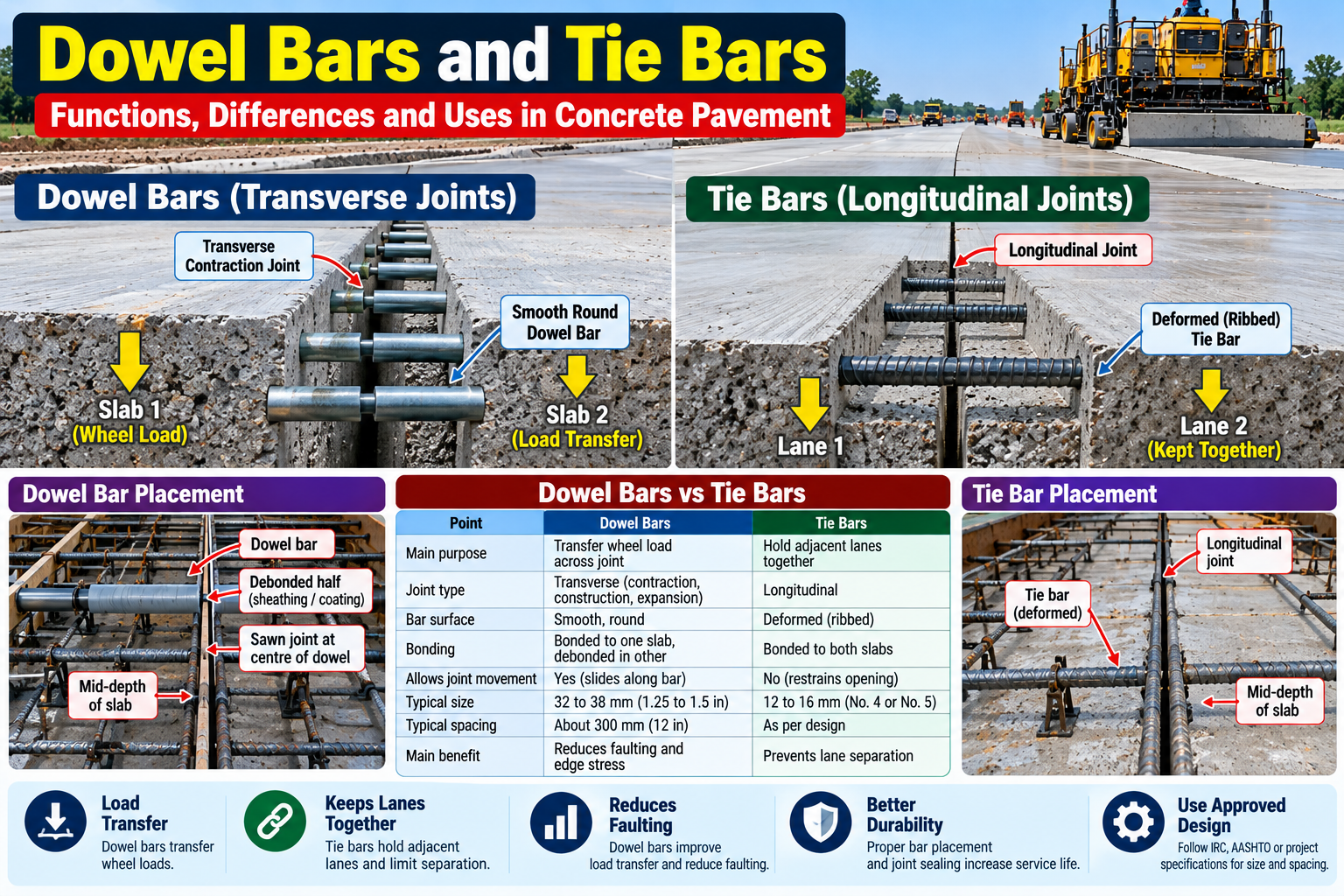
Dowel bars are smooth round steel bars placed across transverse joints of a concrete pavement. They transfer wheel loads from ...
Read more
Concrete Pavement Thickness (PQC): Typical Values & Design Guide

How thick should a concrete pavement be? Typical concrete pavement (PCC / PQC) thickness ranges from about 4 to 6 ...
Read more
Concrete Pavement Construction: US Standards, Materials and Methods

Concrete pavement construction in this article refers to US practice for building rigid pavements with Portland cement concrete over a ...
Read more
Types of Road Shoulders: Paved, Earthen, Gravel and Stabilized

The types of road shoulders are generally distinguished by their surface material and construction: paved, earthen, gravel, and stabilized shoulders ...
Read more
Berm: Road Embankment Stability, Slope Protection, and Types

When we’re talking about large earthworks, whether it’s building a new highway or excavating a canal, the stability of the ...
Read more
BC Full Form in Road Construction: Meaning, Specs, and Guidelines

If you are searching for bc full form in road construction, the answer is simple: BC means Bituminous Concrete. It ...
Read more
Road Shoulder Width and Cross-Section: IRC Design Factors

Road shoulders are the portions of a road provided between the edge of the carriageway and the side drain, verge, ...
Read more