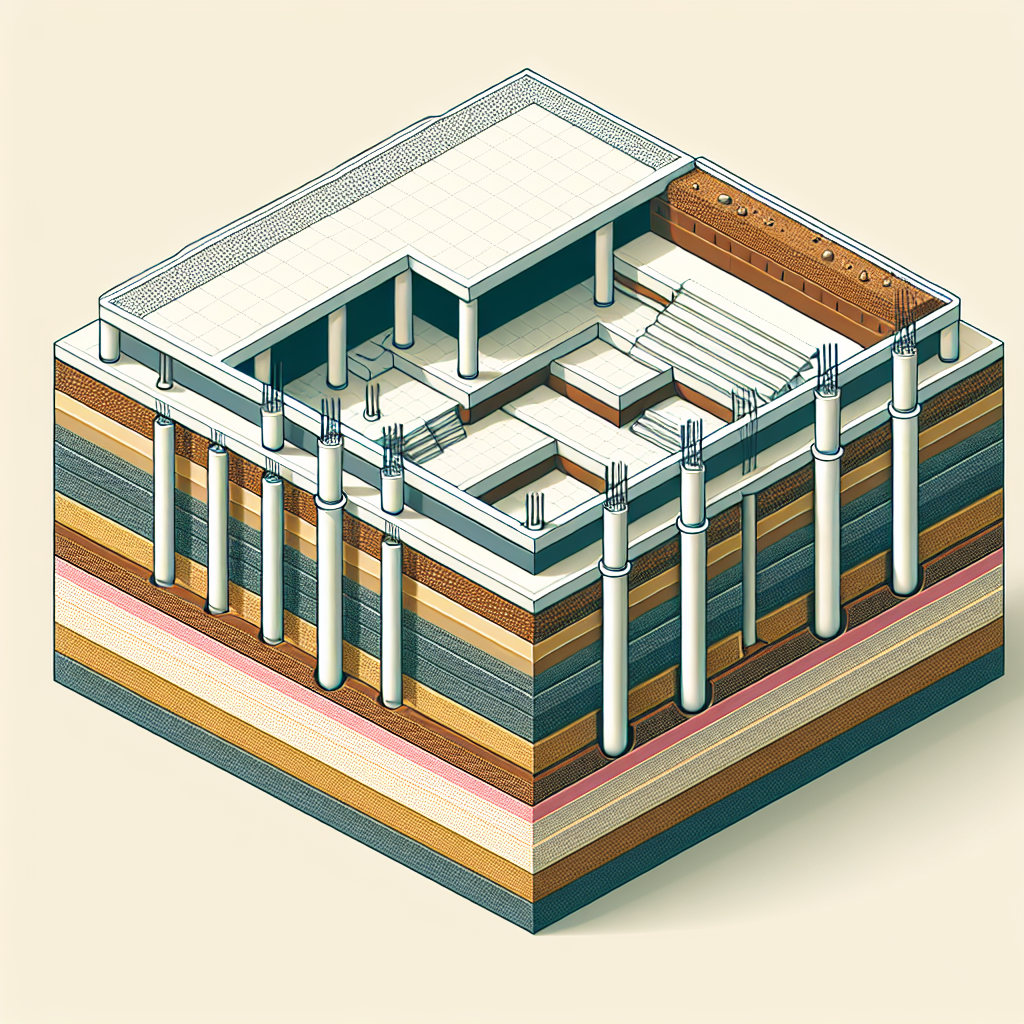
A mat foundation is a continuous slab that supports several columns and walls together. It spreads building loads across a large area and can be a practical choice when soil conditions or column spacing make isolated footings less effective.
This article explains why this foundation type is often chosen, what benefits it offers, and what to watch for during design and construction. The goal is a clear picture of when a mat slab makes sense and how to get the most from it.
Why this foundation is often selected
When soil bearing capacity is low or loads are heavy, a single, thick slab can reduce differential settlement and simplify load transfer. That stability can protect finishes and structural elements above.
Designers also favor this approach when column spacing is tight or basements and underground spaces require a large, stiff floor that can act as both foundation and slab.
Site conditions that point to a mat slab
Sites with variable soils, high water tables, or soft layers near the surface are typical candidates. A large slab evens out pressure and can reduce costly ground improvement work.
Building types that use this slab
Medium to high-rise buildings, warehouses with heavy point loads, and structures with basements often benefit. The slab can also serve as a floor system in some layouts.
Key benefits and practical gains
A mat slab brings several practical advantages that can affect schedule, budget, and long-term performance. These gains often add up to a simpler construction approach on challenging soil.
Even load distribution
Because the slab covers a wide area, it spreads loads from columns and walls over the entire footprint. This lowers unit pressures on the soil and reduces the risk of localized failure.
Less concentrated pressure means smaller variations in settlement. That helps maintain level floors and reduces cracking in non-structural elements.
Reduced differential settlement
By tying columns together, the slab forces the foundation to move more uniformly. This uniform movement is easier for the structure above to tolerate than uneven sinking of isolated footings.
Fewer repairs and realignments of finishes are needed when settlement is controlled this way.
Construction speed and coordination
Pouring one continuous slab can be faster than installing many individual footings. Fewer formwork setups and less excavation staging simplify site logistics.
Concrete delivery, reinforcement placement, and curing can be organized in larger, more efficient batches, often saving labor hours.
Cost effects
Although the initial concrete volume may be higher, overall costs can fall by avoiding deep excavations, piling, or extensive soil replacement. Material and labor savings often offset the slab area.
Maintenance costs may be lower too, thanks to improved long-term stability.
Design and construction considerations
Good outcomes require careful design and a clear plan for construction. The slab must handle bending, punching shear, and long-term loading without excessive cracking.
Coordination among structural, geotechnical, and construction teams pays off. Early choices influence both cost and performance.
Thickness and reinforcement
Thickness depends on loads, soil properties, and the need to resist punching around columns. Design codes set minimums, but many projects need thicker sections and extra reinforcement around concentrated loads.
Continuous reinforcement meshes and localized cages near columns help control stresses and limit crack widths.
Punching shear around columns
Punching shear is a common limit state when columns pass through slabs. Designers use shear reinforcement, thicker slabs, or drop panels to increase capacity locally.
Detailing at these zones is critical. Proper anchorage and stirrups reduce the risk of brittle failures.
Soil investigation and interaction
A thorough subsurface study informs slab thickness, expected settlements, and whether ground improvement is needed. Poor data can lead to conservative or underperforming designs.
Interaction with the soil also affects cracking and moisture movement. Designers may specify membranes or drainage to protect the slab and reduce long-term risks.
Drainage and waterproofing
When the slab also forms a basement floor, waterproofing becomes part of structural planning. Membranes, relief drains, and protective layers must be coordinated with slab finishing and exterior grading.
Ponding water on or around the slab increases risk of moisture problems and can change loading if soil softens.
Cost, lifecycle, and sustainability
Evaluating value over the life of a building is a better approach than simply comparing initial costs. A mat slab can reduce future repair needs and can support flexible use of interior spaces.
Sustainability choices in materials and construction method influence lifetime carbon and energy use.
Material quantities and optimization
Concrete and steel take up bulk of cost. Optimization techniques—such as varying thickness, adding high-strength concrete near columns, or using post-tensioning—can cut material use without sacrificing performance.
Careful design can also reduce embodied carbon by minimizing cement content and using alternative binders where appropriate.
Maintenance and long-term performance
Mat slabs tend to need less foundation maintenance if designed correctly. Even settlement reduces the likelihood of serviceability issues that require intervention.
Crack control and corrosion protection of reinforcement preserve slab integrity over decades.
When piling or ground improvement still makes sense
There are situations where a mat slab is not enough. Very weak soils, heavy dynamic loads, or extremely tall structures may still need piles or soil columns to limit settlement.
Hybrid solutions are common: a shallow mat combined with localized piling under heavy columns gives both uniform support and added stiffness where needed.
Practical tips for a smoother build
Small decisions on site layout, sequencing, and temporary works can save time and reduce risks. Planning these aspects before excavation begins avoids costly delays.
Good communication between concrete suppliers, reinforcement crews, and testing teams keeps the schedule predictable.
Sequencing concrete pours
Long pours need careful control of temperatures and joints. Cold joints must be planned; otherwise, uncontrolled cracking and weak planes can form.
Using pours of manageable size and maintaining curing regimes helps concrete achieve its intended strength and durability.
Quality control and testing
Routine testing of concrete strength, reinforcement placement checks, and settlement monitoring are practical ways to catch issues early.
Simple monitoring points across the slab can show trends and trigger corrective action before problems grow.
Coordination with other trades
Embedded services, drainage, and waterproofing need exact locations before concrete placement. Mistakes here are costly to fix later.
Provide detailed layouts and hold coordination meetings to confirm that sleeves and in-slab items are placed accurately.
Conclusion
A large, continuous foundation slab offers clear technical and practical advantages when soil or load conditions make isolated footings impractical. It spreads loads, limits differential settlement, and can speed construction in many cases.
Successful use of this foundation type depends on solid geotechnical input, proper structural detailing, and tight construction control. When those pieces come together, the slab can be a durable and efficient base for a wide range of buildings.
Frequently Asked Questions
Below are common questions and straightforward answers to help clarify key points about using a mat slab in building foundations.
What is the main advantage of a mat slab?
The main advantage is its ability to spread loads over a large area, which reduces pressure on weak soils and limits uneven settlement between columns. This makes the structure above more stable and reduces repair needs.
How does a mat slab compare to individual footings?
A mat slab ties columns together and distributes loads evenly, while individual footings support columns separately. The slab can be cheaper and more effective where soils are weak or column spacing is close.
When should piling be preferred instead?
Piling is preferred when soil near the surface cannot safely support loads even when spread out, or where very heavy, dynamic, or variable loads require deep, stiff support to limit settlement.
Can a mat slab act as a basement floor?
Yes. Many projects use the slab as both foundation and basement floor. In such cases, waterproofing, drainage, and insulation become part of the structural planning.
What are common failure modes to watch for?
Punching shear around columns, excessive cracking from temperature or shrinkage, and unexpected settlements due to poor soil data are common issues. Proper design detail and testing reduce these risks.