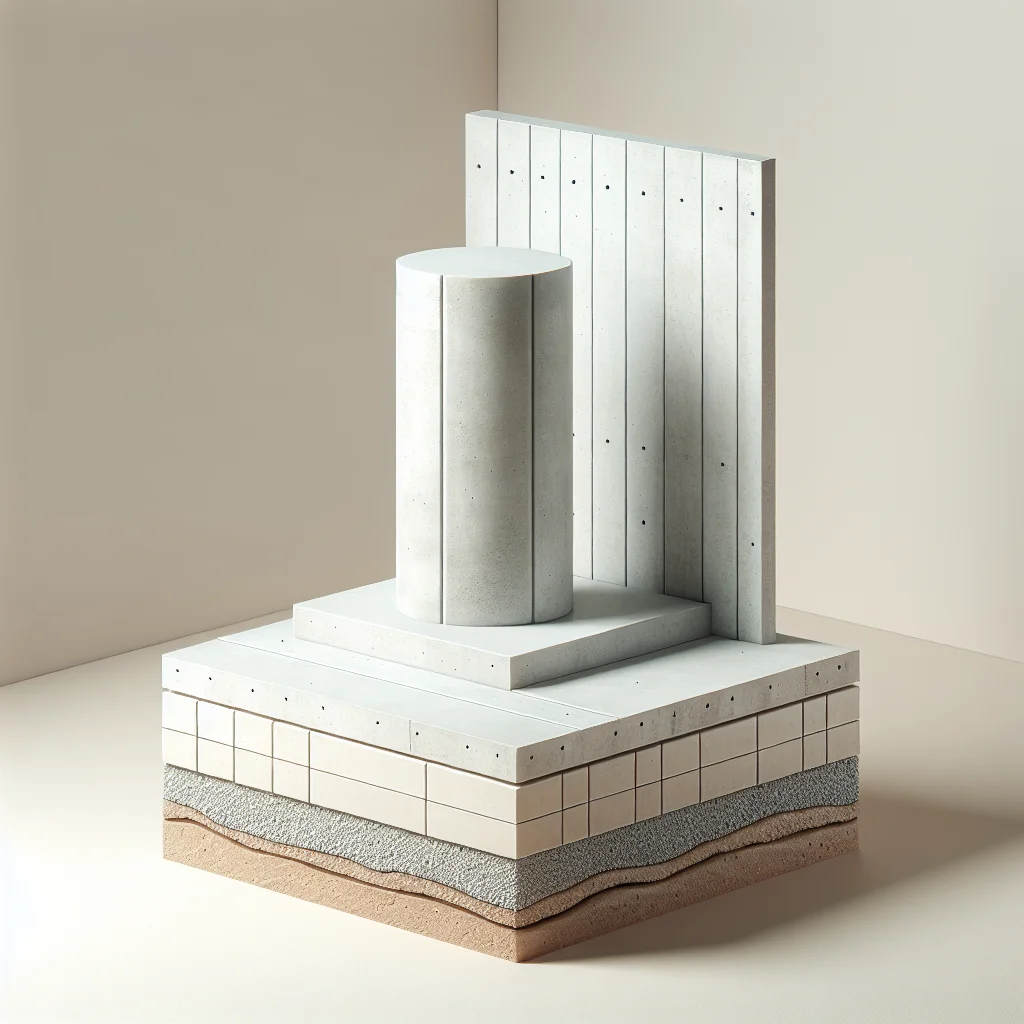
Designing footings under columns is a balance between soil capacity, loads and practical detailing. A clear process reduces the risk of excessive settlement and uneven bearing that can affect the whole structure.
This article breaks down the main checks and common footing types, and explains reinforcement and detailing choices in plain terms so you can make smarter design decisions.
Why correct footing matters
Footings transfer loads from columns into the ground. If a footing is undersized or poorly detailed, it can lead to uneven settlement, cracking or costly repairs.
Beyond strength, attention to load distribution, soil conditions and construction tolerances helps avoid problems that are expensive to fix after the concrete hardens.
Calculating loads and soil checks
Start with accurate column loads. Include dead loads, live loads and any lateral or eccentric effects that shift the pressure distribution under the footing.
Parallel to loading, a proper soil assessment defines allowable bearing capacity and settlement expectations. Weak or compressible soils change the approach dramatically.
Estimating column loads
List the vertical loads from slabs, beams and superstructure for each column. Add self-weight of the column and any concentrated live loads.
Consider combinations that produce maximum design forces. If a column carries hoists, heavy equipment or unusual live loads, factor those in separately.
Soil investigation essentials
A site-specific soil report is ideal. At minimum, obtain borehole data, water table depth and a basic classification of the near-surface layers.
Allowable bearing pressure and expected settlement are the two numbers that change footing size and type. Lower bearing capacity usually means a larger or combined footing.
Working with shallow vs deep conditions
If suitable bearing is found near the surface, shallow footings such as isolated pads or strap footings are efficient. If usable soil is deep, costs may push toward piles or a raft foundation.
High groundwater, compressible fill or expansive clays often require deeper solutions or soil improvement before a conventional footing is safe.
Common footing types and reinforcement
Footing selection depends on column spacing, load magnitude and soil bearing. Each type has typical reinforcement patterns and detailing considerations.
Below are the most common options and how to think about reinforcement and sizing without getting lost in dense formulas.
Isolated pad footings
Isolated pads are square or rectangular slabs under single columns. They spread load until soil pressure is acceptable.
- Size is set so average bearing pressure stays below allowable limit.
- Top reinforcement handles negative moments near the column; bottom reinforcement resists positive bending toward edges.
- Check punching shear near the column face, especially for slender pads under heavy loads.
Combined and strap footings
When columns are too close for separate pads or when adjacent columns have different loads, combined footings tie them into a single element.
Strap footings link an heavily loaded column to a lighter one using a beam to balance eccentricities without enlarging the lighter column’s footing overly.
Strip and continuous footings
For rows of load-bearing walls or closely spaced columns, a continuous footing distributes load along its length. Reinforcement runs longitudinally to resist bending.
Design checks include uniform pressure and bending along the strip, plus shear at concentrated load points.
Raft or mat foundations
When soil is weak or column loads are dense, a raft spreads loads across a large area. A mat can be rigid or constructed with beams and slab zones.
Reinforcement is heavier and typically arranged in two directions, with special attention to punching shear around concentrated columns.
Design checks and detailing
After choosing the footing type and preliminary size, perform checks for bending, shear and settlement. Detailing finishes the design and ensures constructability.
Practical detailing reduces construction errors and improves long-term performance.
Bending and reinforcement layout
Calculate bending moments at critical sections. Place main bars where tensile stresses occur and provide adequate cover to protect against corrosion.
Keep bar spacing practical for placing concrete. Use standard bar sizes and avoid over-congested zones that hinder compaction.
Punching shear and column strips
Punching shear is a common failure mode around columns in slab-like footings. Provide sufficient thickness or shear reinforcement if the column load produces shear demand near the critical perimeter.
Increase thickness or add stirrups/shear heads where punching capacity is marginal, especially for heavy concentrated loads.
Settlement and differential issues
Compute immediate settlement from elastic theory or use empirical charts tied to soil properties. Where settlements exceed limits, change footing type or improve the soil.
Design to minimize differential settlement between adjacent footings. Uneven sinking causes structural distress even if each footing is individually adequate.
Construction and control details
Mark control lines and check column locations before excavation. Shallow errors are often costly to correct after concrete placement.
- Specify concrete strength and required slump for proper placement.
- Indicate minimum cover and corrosion protection, especially in wet sites.
- Show bar anchorage lengths and lap positions clearly on drawings.
Conclusion
Solid footing design starts with realistic loads and a clear understanding of soil behavior. From that base, choose a footing type that balances economy and safety.
Reinforcement layout, punching shear checks and settlement control are the practical steps that complete the design and reduce risk during construction and life of the structure.
Frequently Asked Questions
Common practical questions often come up when designing and building footings. Short answers help clarify typical decisions and pitfalls.
How is footing size chosen from soil data?
Divide the column load by allowable soil bearing pressure to get a starting area. Adjust shape and size to maintain uniform pressure and control eccentricity. Consider increasing size for low bearing values or uneven loads.
When should a combined footing be used?
When columns are close and separate pads would overlap or when adjacent columns have significantly different loads that require load sharing. Combined footings also control differential settlement between nearby columns.
How do you check punching shear around columns?
Calculate shear force inside a critical perimeter around the column and compare it to the slab or footing punching shear capacity. Increase thickness or add shear reinforcement if the demand exceeds capacity.
What reinforcement spacing is practical in pads?
Keep spacing within standard limits so concrete can flow between bars. Avoid tight spacing that prevents compaction. Use commonly available bar sizes and lay reinforcement in two directions where bending occurs both ways.
How does groundwater affect footing design?
High water tables can reduce effective bearing capacity, increase buoyancy effects during construction and raise corrosion risk. Consider dewatering, higher concrete grades or deeper foundations when groundwater is present.
When should settlement trigger a different foundation choice?
If computed settlement or expected long-term compression exceeds acceptable limits for the structure, consider piling, soil improvement or a raft foundation to spread loads and limit differential movement.