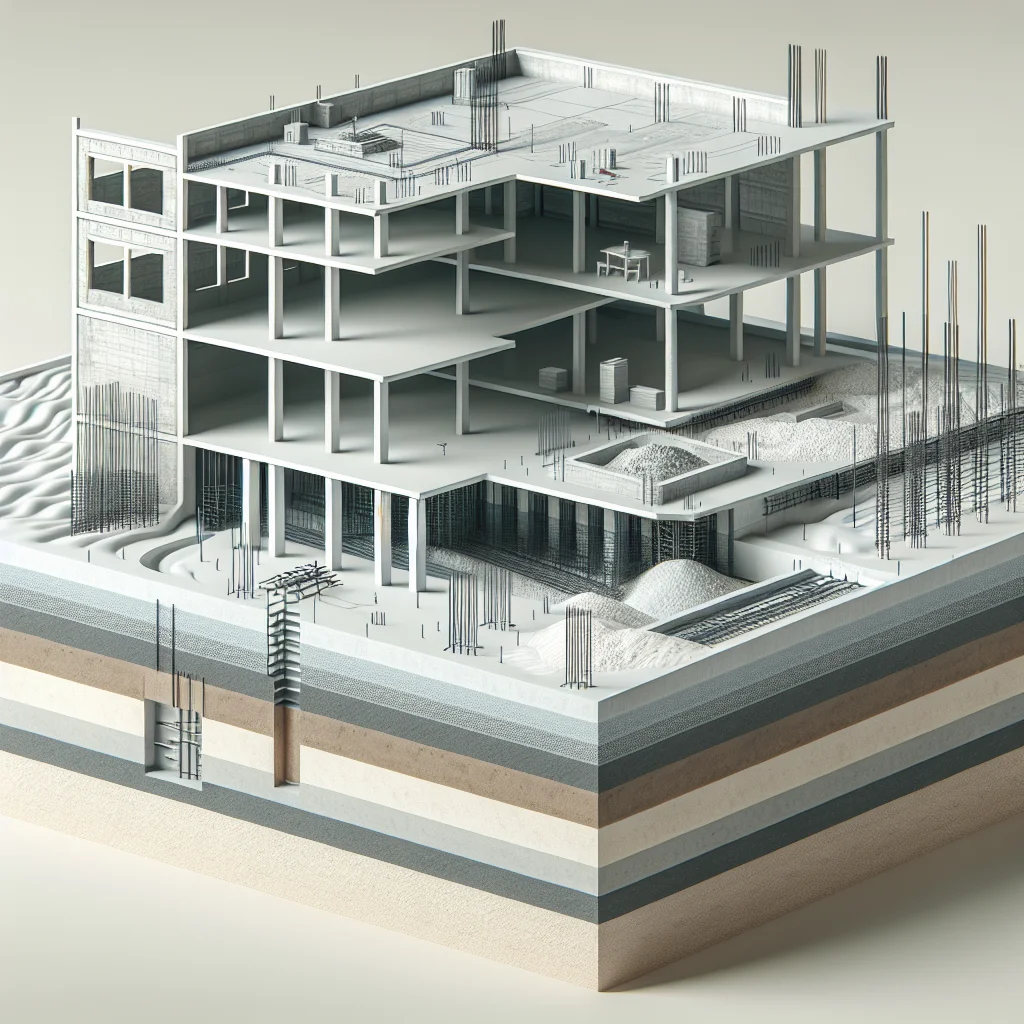
Choosing the right footing thickness is one of the most important decisions when creating a strong, durable foundation. A well-sized footing prevents excessive settlement, controls cracking, and spreads building loads evenly to the ground.
This article explains the core ideas behind footing thickness, the main factors that affect it, simple calculation approaches you can use, and common errors to avoid. The goal is clear, practical information you can apply on small and medium projects.
Why footing thickness matters
Footing thickness determines how loads from a structure are transmitted to the soil below. If the footing is too thin, stress concentrations can cause the soil to compress unevenly, leading to settlement or tilt.
Too thick a footing increases material costs and may be unnecessary if soil conditions are adequate. The right thickness balances safety, durability, and cost.
Load distribution and bearing
Footings spread column or wall loads over a larger area so the bearing pressure remains within the soil’s capacity. Thickness affects the rigidity of the footing and how uniformly the pressure spreads.
Stiffer footings reduce bending and shear stresses. For point loads like columns, both width and thickness work together to control stress transfer.
Crack control and reinforcement cover
A thicker slab helps control cracking from bending and shrinkage. It also provides required concrete cover for reinforcement, protecting steel from corrosion.
Local standards often set minimum cover and thickness rules to ensure durability in different exposure conditions.
Key factors that influence thickness choice
Several site and design variables guide thickness decisions. Consider each early in the design process to avoid costly revisions later.
Common variables include soil properties, applied loads, footing type, groundwater conditions, and local codes. Each changes how the load is spread and what thickness is needed.
Soil bearing capacity
Soil bearing capacity is the most critical factor. Soils with low bearing strength require larger area and often thicker footings to reduce stress per unit area.
A geotechnical report gives allowable bearing pressure. If unavailable, conservative estimates based on standard soil types can be used for preliminary planning.
Applied loads and load patterns
Heavy point loads, such as columns supporting multi-storey buildings, need thicker footings than continuous wall loads. Dynamic or eccentric loads also demand greater thickness and reinforcement.
Light loads from small extensions or garden walls often allow minimal thickness specified by codes, but soil checks are still important.
Footing type and shape
Spread footings, combined footings, mat foundations and strip footings each behave differently. Mats distribute loads over a large area and sometimes require less local thickness, while isolated footings focus stresses locally.
Square and rectangular footings are easier to design for bending and shear. Irregular shapes may need localized thickening or additional reinforcement.
Depth of frost and groundwater
In cold climates, footings must extend below frost depth to prevent frost heave. That often increases the effective thickness or depth of the foundation system.
High groundwater can reduce effective soil strength and affect concrete curing. Drainage or waterproofing considerations might influence thickness and reinforcement details.
Simple approaches to estimate thickness
Several practical methods give a reasonable starting thickness for preliminary design. Final values should always be checked against codes and, if needed, geotechnical data.
Below are simple rules, followed by a basic calculation method for isolated footings under column loads.
Code-based minimums
Building codes and standards commonly define minimum thicknesses for different footing types. For example, many authorities set a minimum of 150 mm to 200 mm for strip footings and slightly more for isolated pads.
These minimums protect against shrinkage cracks, ensure adequate cover for reinforcement, and handle light loads safely. They are a good baseline for small structures.
Rule-of-thumb values
As a quick check, small isolated footings often use a thickness equal to 1⁄8 to 1⁄6 of the footing width. For example, a 1200 mm wide pad might be 150–200 mm thick in routine soil conditions.
For continuous strip footings under load-bearing walls, thickness usually ranges 200–300 mm depending on wall loads and soil strength.
Basic bending check for isolated pad
A simple bending check treats the footing as a one-way slab spanning half the distance to adjacent footings. Use bending moment from column reaction and compare with concrete section capacity.
Steps:
- Estimate footing area = column load / allowable soil pressure.
- Assume a width and compute lever arms for bending.
- Choose a thickness that provides enough moment capacity with reasonable reinforcement (typically Ø10–Ø16 bars).
These calculations ensure the slab will resist bending without excessive deflection or cracking.
Materials, reinforcement and detailing tips
Material quality and detailing influence how thin a footing can be while remaining safe. Good detailing extends life and reduces maintenance needs.
Concrete strength, reinforcement layout, and proper compaction of bedding all affect final performance.
Concrete strength and mix
Higher-strength concrete increases flexural capacity, meaning you may use a slightly thinner section while maintaining safety. However, compaction and curing are equally important for durability.
Use mixes that resist local conditions. For example, sulfate-prone soils or marine exposure require more durable mixes and adequate cover for reinforcement.
Reinforcement layout
Place reinforcement in the zone where tensile stresses are expected. For pads, this often means a mesh at the bottom face and top reinforcement near columns to resist hogging moments.
Maintain minimum clear cover as per local rules. Bent-up bars or stirrups may be needed at edges to resist punching and shear near concentrated loads.
Edge and corner treatment
Edges and corners of footings are stress concentrators. Slight thickening at corners, or extending reinforcement beyond edges, reduces risk of cracking and chipping during construction.
Punching shear around columns can be a problem in thin pads. Increase thickness or add shear reinforcement if column reactions are high relative to pad dimensions.
Common mistakes and how to avoid them
Avoiding typical pitfalls saves time and money. Some errors show up only years later as settlement, cracking or moisture problems.
Check these common issues during planning, site work and inspection stages.
Skimping on site investigation
Underestimating soil conditions leads to undersized footings. Even shallow projects benefit from a basic soil probe or test pits to confirm assumptions.
When geotechnical data is unavailable, adopt conservative bearing pressures and consider additional factors of safety.
Poor compaction and bedding
Loose or poorly compacted fill under a footing can cause differential settlement. Compact layers properly and remove organic material before placing concrete.
Well-compacted bedding reduces the need for extra thickness to counter settlement issues.
Ignoring drainage and water table
Water weakens many soils and increases settlement risk. Ensure proper site drainage and, where needed, lower the groundwater or use drainage layers below the footing.
Moisture control also prevents long-term deterioration of concrete and steel when cover is inadequate.
Conclusion
Determining the correct footing thickness blends soil knowledge, load understanding, and sound detailing. Start with code minimums, refine using soil data, and check bending, shear and punching shear where needed.
Practical rules and simple calculations provide solid starting points, but always adjust the design to the local site conditions and exposure. Good construction practice and proper reinforcement detailing ensure the footing performs as intended.
Frequently Asked Questions
Below are short answers to common questions about footing thickness and related checks. These clarify typical decisions made on small to medium projects.
How do I find the right thickness for a single column pad?
Start by determining the required pad area from column load divided by allowable soil pressure. Use standard rules of thumb so thickness is at least 1⁄8 to 1⁄6 of the pad width, then check bending and punching shear. Adjust reinforcement and thickness as needed.
Is a 150 mm thickness ever acceptable?
Yes, 150 mm can be acceptable for light walls or small slabs in good soil and when code minimums allow it. Ensure adequate cover for reinforcement and that loads are modest. For columns and heavier loads, greater thickness is usually required.
When should a mat foundation be chosen over isolated footings?
A mat is preferable when loads are high, column spacing is close, or soil is weak and uniform settlement control is needed. Mats spread loads across a large area, often reducing local thickness but requiring more overall concrete and reinforcement planning.
How does frost depth affect footing thickness?
Frost depth determines minimum footing depth below ground to prevent heave. While it may not change the slab thickness directly, it affects how low the footing extends and can require stepping or additional material below the footing.
Can poor compaction be fixed by increasing thickness?
Thicker footings do not replace good compaction. Proper site preparation and compaction are essential. Increasing thickness may mask settlement temporarily but does not solve the underlying issue.