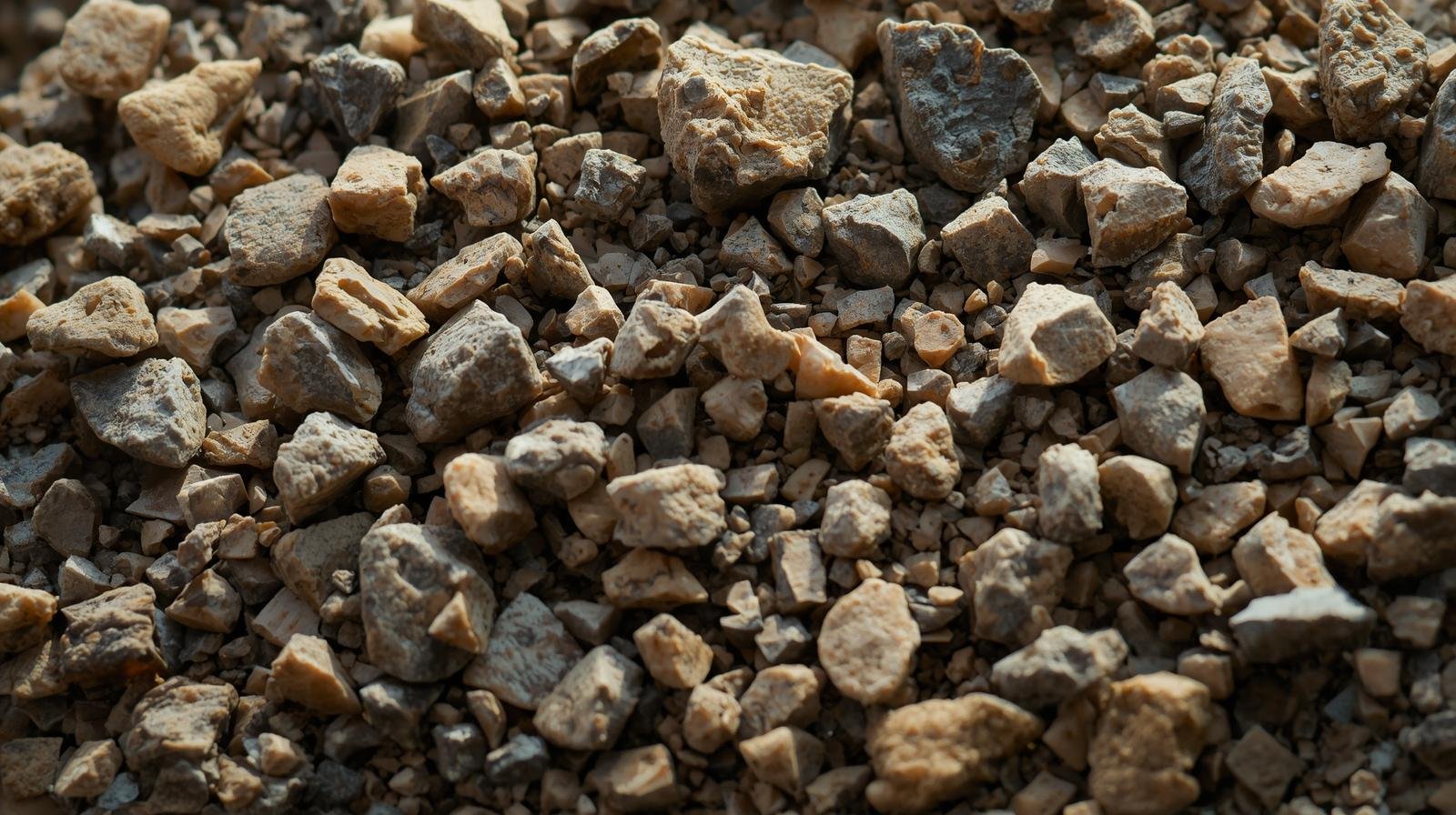
Coarse aggregate is a fundamental component in concrete and construction materials, providing bulk, strength, and stability to the finished product. It consists of granular materials typically larger than 4.75 mm (No. 4 sieve) and plays a critical role in the mechanical and durability properties of concrete. This comprehensive article delves into the nature, types, properties, processing, testing, and applications of coarse aggregate in construction, along with sustainability considerations and quality control measures.
What is Coarse Aggregate?
Coarse aggregate refers to inert granular materials greater than 4.75 mm in size used in construction, primarily as a constituent of concrete, mortar, and road base. It usually comprises crushed stone, gravel, or recycled concrete and constitutes approximately 60 to 75 percent of the total volume of concrete.
Role of Coarse Aggregate in Concrete
- Provides Volume and Bulk: Coarse aggregates constitute the major volume of concrete, reducing the amount of cement paste required.
- Enhances Strength: They contribute significantly to the compressive strength and load-bearing capacity of concrete.
- Reduces Shrinkage: Large aggregates reduce plastic shrinkage and thermal cracking.
- Improves Durability: Dense, strong aggregates improve resistance to weathering and mechanical wear.
- Controls Economy: Using aggregates effectively reduces costs by minimizing cement use.
Types of Coarse Aggregate
Coarse aggregates can be classified based on source, shape, size, and processing.
Natural Coarse Aggregate
Natural aggregates are obtained by crushing weathered rocks or collecting rounded gravel and stones from riverbeds, glacial deposits, or quarries.
- Gravel: Rounded particles typically obtained from riverbeds and naturally weathered.
- Crushed Stone: Angular particles produced by mechanically crushing rock, providing better interlock and strength.
Manufactured Coarse Aggregate
Manufactured aggregates are produced by crushing larger rock pieces or recycled concrete to specific sizes. They are widely used due to depletion of natural sources.
- Crushed Rock: Produced from quarry rock, usually angular and rough-textured.
- Recycled Concrete Aggregate (RCA): Obtained by crushing demolished concrete, offering sustainability benefits.
Lightweight Aggregate
Lightweight aggregates such as expanded clay, shale, or slag are produced by heating raw materials to reduce density. They reduce concrete weight for specific applications.
Physical Properties of Coarse Aggregate
The quality and characteristics of coarse aggregate significantly influence concrete behavior. Key physical properties include:
Particle Size and Gradation
Aggregate size is classified by sieve sizes, typically ranging from 4.75 mm to 40 mm or larger. Proper gradation ensures good packing density, reducing voids and cement paste requirement.
Shape and Texture
- Shape: Aggregates can be rounded, angular, sub-angular, flaky, or elongated. Angular aggregates provide better mechanical interlock but may reduce workability.
- Texture: Rough textured aggregates improve bonding with cement paste but increase water demand.
Specific Gravity
Specific gravity is the ratio of aggregate density to water density. It affects the weight and volume calculation in mix design.
Bulk Density
Bulk density includes the aggregate and the void spaces between particles. It influences the volume of aggregates required.
Water Absorption
Water absorption measures porosity and influences the amount of mixing water required.
Strength and Toughness
Aggregates must withstand crushing and abrasion forces without degradation during concrete service life.
Soundness
Soundness tests evaluate resistance to weathering, freeze-thaw cycles, and chemical attack.
Chemical Properties of Coarse Aggregate
- Alkali-Silica Reactivity: Some aggregates react with cement alkalis causing expansion and cracking. Testing and selection minimize this risk.
- Impurities: Clay, silt, salts, and organic matter can weaken concrete and affect hydration.
- pH and Chemical Stability: Aggregates should be chemically inert to prevent deterioration of concrete.
Standards and Specifications for Coarse Aggregate
International and national standards regulate quality requirements for coarse aggregates, including:
- ASTM C33: Standard specification for concrete aggregates (USA).
- IS 383: Specification for coarse and fine aggregates from natural sources (India).
- BS EN 12620: Aggregates for concrete (Europe).
Key Requirements
- Particle size distribution and grading limits
- Maximum limits for impurities and deleterious materials
- Physical and mechanical property thresholds
- Testing protocols for compliance
Processing and Preparation of Coarse Aggregate
Extraction
Aggregates are extracted from quarries, riverbeds, or reclaimed from demolished concrete. Quarrying involves drilling, blasting, and excavation.
Crushing and Screening
Large rock pieces are crushed to desired sizes using jaw crushers, cone crushers, or impact crushers. Screening separates aggregates into size fractions.
Washing
Washing removes dust, clay, and organic impurities to improve quality.
Stockpiling and Handling
Proper stockpiling prevents contamination and segregation, maintaining aggregate quality.
Testing Methods for Coarse Aggregate
Quality control testing ensures aggregates meet specifications:
- Sieve Analysis: Determines particle size distribution and grading.
- Specific Gravity and Water Absorption: Measures density and porosity.
- Bulk Density and Voids: Evaluates packing and void content.
- Aggregate Crushing Value (ACV): Measures resistance to crushing under load.
- Los Angeles Abrasion Test: Assesses aggregate toughness and abrasion resistance.
- Soundness Test: Assesses durability against weathering agents like freeze-thaw cycles.
- Alkali-Aggregate Reactivity Test: Detects potential chemical reactions affecting durability.
Role of Coarse Aggregate in Concrete Mix Design
Coarse aggregate content and properties influence mix proportioning and concrete performance:
Workability
Angular, rough aggregates increase water demand and reduce workability compared to rounded, smooth aggregates.
Strength
Proper gradation and strong aggregates improve compressive and tensile strength by providing good interlock and load transfer.
Durability
Dense, sound aggregates reduce permeability, improving durability against chemical attack and freeze-thaw damage.
Economy
Using well-graded coarse aggregates optimizes cement usage, reducing costs.
Challenges Associated with Coarse Aggregate
Depletion of Natural Resources
Excessive quarrying and mining cause environmental damage and resource depletion, necessitating recycling and alternative materials.
Quality Variability
Aggregate quality varies by source, requiring rigorous testing and processing.
Environmental Impact
Mining affects ecosystems, water resources, and landscape; sustainable practices are essential.
Use of Recycled Aggregates
Recycled crushed concrete aggregates face challenges like lower strength and higher absorption but promote sustainability.
Sustainability and Environmental Considerations
Use of Recycled Aggregate
Recycling concrete waste reduces landfill and raw material demand, supporting green construction.
Alternative Materials
Industrial byproducts like blast furnace slag and expanded clay serve as lightweight or supplementary aggregates.
Environmental Management
Sustainable quarrying, reclamation, and dust control mitigate environmental impacts.
Best Practices for Selection and Use of Coarse Aggregate
- Select aggregates conforming to relevant standards.
- Conduct comprehensive testing for grading, strength, and impurities.
- Wash and process to remove deleterious materials.
- Adjust mix design to accommodate aggregate characteristics.
- Monitor moisture content to maintain mix water accuracy.
- Employ recycled and sustainable aggregates when feasible.
Case Studies and Applications
High-Strength Concrete
High-quality, well-graded coarse aggregates contribute significantly to achieving compressive strengths above 50 MPa.
Infrastructure Projects
Durable aggregates are critical in bridges, highways, and dams exposed to aggressive environments.
Lightweight Concrete
Use of lightweight aggregates reduces structural loads in high-rise buildings and long-span bridges.
Conclusion
Coarse aggregate is a vital component of concrete, providing bulk, strength, durability, and economy. Understanding its types, properties, processing, and testing ensures production of high-quality concrete suited to specific structural and environmental demands. As natural resources become scarce, the construction industry increasingly adopts recycled and manufactured aggregates to promote sustainability.
Proper selection, processing, and quality control of coarse aggregate are essential to achieving durable, strong, and economical concrete structures. Ongoing innovation and environmental stewardship will shape the future of aggregate use in construction.