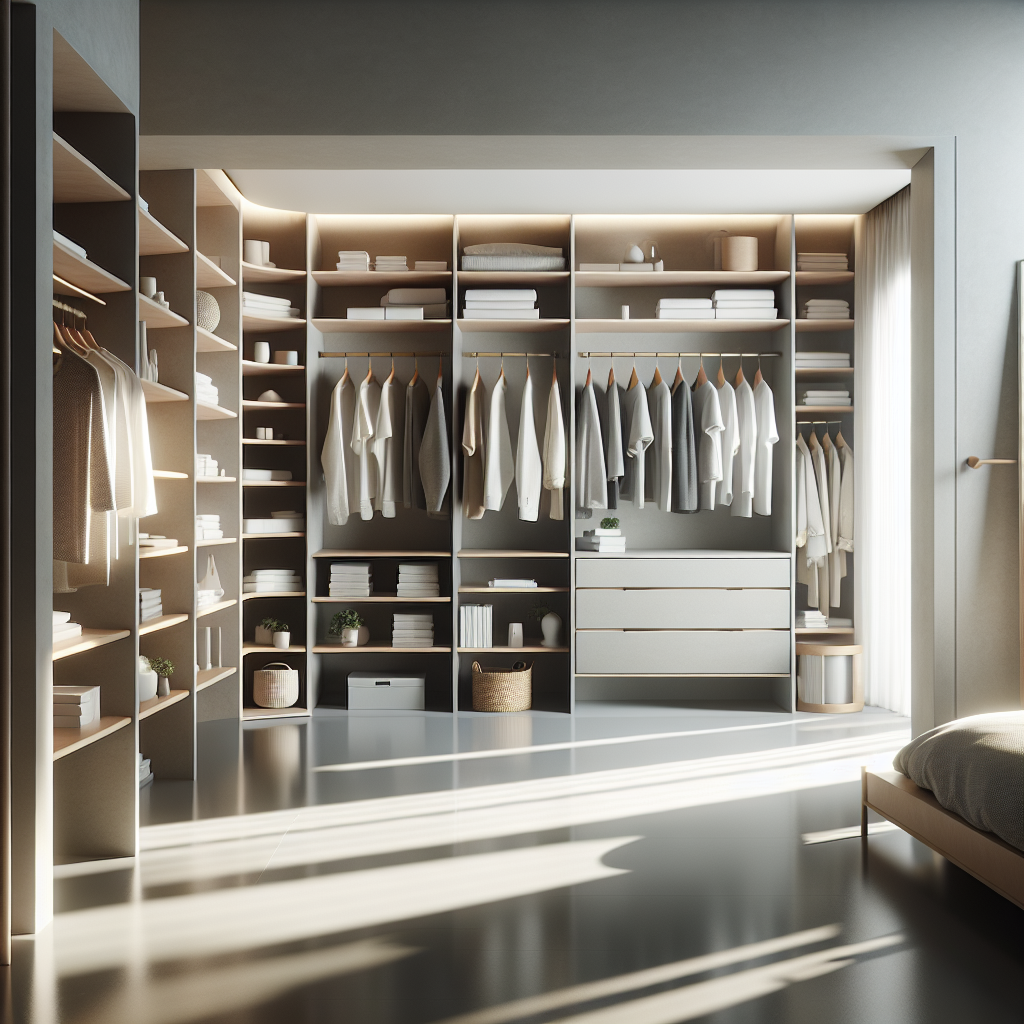
Many homeowners face the same question when rethinking storage: what size should a closet be to work well? Knowing common measurements makes it easier to plan functional storage that fits the room and your belongings.
This article breaks down typical closet sizes, how to measure existing space, and practical ways to fit shelving, rods, and drawers without wasting space. It focuses on real-life measurements you can use during renovation or when choosing a closet system.
Types of Closets and Typical Sizes
Closets come in several familiar styles. Each style has a range of common measurements that affect how much you can store and how accessible items will be.
Reach-in closets
Reach-in designs are the most common in bedrooms and hallways. They usually have a single opening and a shelf or rod across the back.
- Common widths: 3 to 8 feet.
- Typical depth: 24 inches for hanging clothes, 18 inches for shelves only.
- Ceiling height: often matches room height; higher ceilings allow stacked storage.
Walk-in closets
Walk-ins provide standing room and multiple storage zones. Sizes vary widely based on available square footage.
- Small walk-ins: 4 x 4 feet minimum for a single user.
- Comfortable layouts: 6 x 8 feet or larger for more hanging and shelving.
- Ideal depth for runs: at least 24 inches so hangers sit comfortably.
Wardrobe and freestanding closets
Mobile wardrobes are useful in rental homes or rooms without built-ins. Their size follows the furniture piece rather than the room.
- Typical widths: 24 to 60 inches.
- Depths: often 18 to 24 inches.
- Height: varies; many pieces are 72 to 84 inches tall.
Measuring Existing Space Accurately
Accurate measurements prevent costly mistakes. Take a methodical approach to capture usable space and obstacles like baseboards or trim.
What to measure first
Start with the full width of the opening from inside trim to inside trim. Then measure depth from the wall behind to the face of the opening.
- Height: measure from finished floor to ceiling.
- Trim and baseboards: subtract if you plan internal shelving flush with walls.
- Floor irregularities: note any sloping or raised thresholds.
Accounting for doors and access
Door type affects usable depth and layout. Sliding doors save swing space but limit depth access near the door track.
- Swing doors: require clearance for opening.
- Bi-fold doors: reduce access width when folded.
- Sliding doors: best for shallow storage and narrow rooms.
Planning Shelves, Rods, and Drawers
Storage elements must match both the size of items and typical human reach. Dimension choices impact how efficiently you can store daily wear versus seasonal gear.
Shelf depth and spacing
Shelf depth depends on the items you store. Deeper shelves work for bulky items but can waste shallow spaces.
- Clothing and folded items: 12 to 16 inches deep.
- Shoes on shelves: 10 to 12 inches per shelf if stored toes out.
- Adjustable shelving: allows flexibility for different items.
Hanging rod placement
Hanging zones are usually split between long and short lengths to accommodate coats and shirts separately.
- Single rod height: 66 to 72 inches from floor for long garments.
- Double rod setup: top rod at 80 to 84 inches, lower rod at about 40 to 44 inches for shirts and pants.
- Allow 20 to 24 inches of depth to avoid crowding hangers.
Drawer and accessory spacing
Drawers and pull-out organizers add function. Plan their height and placement around other zones.
- Shallow drawers: 4 to 6 inches high for small items.
- Deeper drawers: 8 to 12 inches for bulkier items.
- Leave a 1/2 inch gap between moving parts to prevent binding.
Optimizing Depth and Height
Closet depth and height are strong determinants of what fits. A few smart choices maximize capacity without crowding access.
Depth trade-offs
Deeper closets hold more but require space in the room. Shallow closets can be very efficient when well organized.
- 24-inch depth: ideal for hanging clothes on standard hangers.
- 18-inch depth: best for folded storage and shallow shelving.
- 12-inch depth: suitable for shoes or open shelving where hangers are not used.
Using vertical space
Ceiling height often goes unused. Adding higher shelves or a second hanging rod can turn wasted height into storage.
- Top shelf height: 84 to 96 inches for seasonal items.
- Stepladders or pull-down rods help reach upper zones safely.
- Stack accessories vertically to create distinct zones.
Small Spaces and Creative Layouts
When square footage is limited, layouts that mix storage types can make a big difference. Small changes often unlock more usable space.
Narrow closet tactics
In tight widths, prioritize what you use most. Thin shelving and single rods keep access open.
- Use vertical shoe racks or hanging organizers.
- Install narrower drawers to keep walking clear.
- Consider partitioning a wider wall into multiple shallow sections.
Corner and L-shaped closets
Corners can become dead space unless planned. L-shaped layouts work for small walk-ins effectively.
- Use corner shelving or rotating carousels to access items.
- Place shorter hanging in corner runs and longer hanging on straight runs.
- Keep the entry area free to avoid congestion.
Materials, Hardware, and Weight Considerations
Material choices affect durability and how much weight shelves can carry. Match hardware to expected loads to avoid sagging.
Shelf materials
Solid wood, plywood, and engineered boards each have trade-offs in cost, strength, and appearance.
- Solid wood: strong and attractive, but can be costly.
- Plywood: good strength-to-cost ratio, resists sag when supported.
- MDF/particleboard: economical but heavier and may sag under load.
Hardware and supports
Proper brackets, wall anchors, and closet systems extend lifespan and improve safety.
- Use heavy-duty brackets for long spans to prevent bending.
- Anchor rails into studs when possible for hanging systems.
- Adjustable systems reduce the need for permanent fixes.
Costs and Practical Choices
Budget influences whether you choose custom builds, modular systems, or simple shelving. Each fits different needs and price points.
Modular systems
Prefabricated units are affordable and quick to install. They work well in standard openings and can be adjusted.
- Easier to replace parts when needs change.
- Many come with standard widths that match common openings.
Custom solutions
Custom options fit odd spaces perfectly and offer tailored storage, but they cost more and take longer.
- Best when irregular walls or ceilings limit options.
- Often the best choice for maximizing storage in luxury builds.
Conclusion
Knowing common closet measurements helps you plan storage that feels natural and works every day. Focusing on depth and hanging heights first makes layout decisions clearer.
From reach-in to walk-in, simple changes like adding a second rod or shifting shelf depths can unlock significant capacity. Thoughtful measurement, appropriate materials, and a clear priority list for what you store deliver the best results.
Frequently Asked Questions
What is the minimum usable width for a closet?
For a functional reach-in closet, aim for at least 36 inches of width. This allows enough room for a rod and some shelving while keeping access comfortable.
How deep should shelves be for folded clothes?
Shelves 12 to 16 inches deep work well for folded garments. They provide space for stacks without letting items get lost at the back.
Can I use a 18-inch deep closet for hanging clothes?
Yes, 18-inch depth can work for shirts and lightweight items, but it may crowd hangers. For jackets and bulkier garments, 24 inches is preferable.
What is an efficient layout for a small walk-in?
A compact L-shape with hanging on one wall and shelving or drawers on the other maximizes storage while keeping the center clear for movement.
How high should a second hanging rod be placed?
Place the lower rod around 40 to 44 inches from the floor for short garments, with the upper rod at about 80 to 84 inches. This split allows two tiers of hanging without overlap.