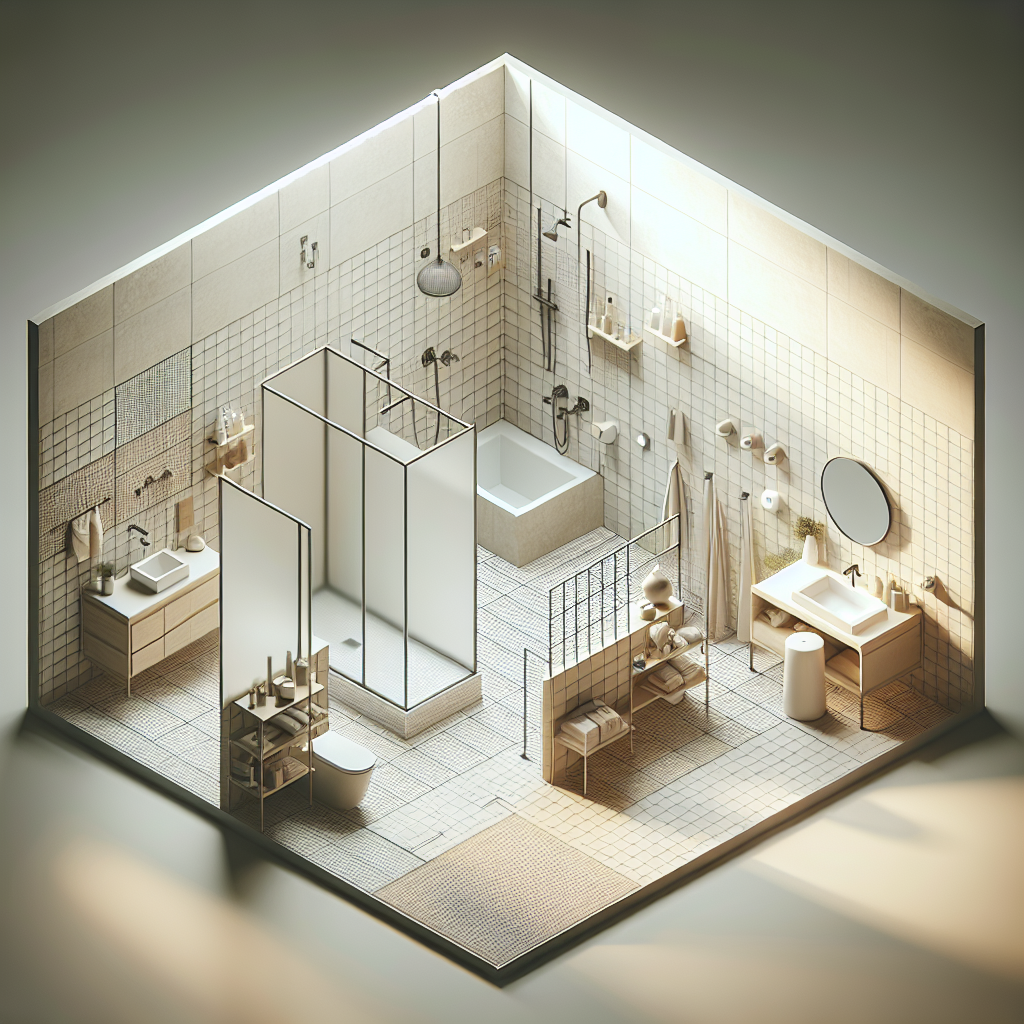
Choosing the right shower size shapes comfort and function in a bathroom. Whether you work with a tight footprint or have extra room, measurements affect movement, fixtures, and drainage.
This article breaks down typical shower sizes, planning steps, layout options, and how fixtures change usable space. Read practical details to make informed decisions about dimensions and layout choices.
Common shower sizes and what they mean
Shower sizes vary by type and use. Small wet areas save space but limit movement, while larger stalls offer room for seats, multiple heads, or a bench.
Below are common dimensions and what each typically provides in real use.
32 x 32 inches (compact stalls)
This is often the smallest practical stall. It fits in tiny bathrooms and guest rooms but offers limited movement.
Best for quick showers and when space is at a premium. Expect a tight feel and limited room for accessories.
36 x 36 inches (comfortable single shower)
This size is a common choice for small full bathrooms. It allows a person to turn and move without feeling confined.
There’s room for a wall-mounted niche or a corner shelf and standard door options like hinged or sliding.
48 x 36 inches (roomy rectangular)
A popular mid-size option, this layout gives more shoulder room and space for a small bench or seat. It suits couples or those who want extra movement space.
Rectangular footprints are flexible for different door types and can fit both low curbs or curbless thresholds depending on layout.
60 x 36 inches and larger (luxury or shared use)
These larger dimensions support multiple shower heads, built-in benches, and storage niches. They are common in master bathrooms.
If planning this size, think about drainage and slope, as larger floors need careful drainage design to avoid pooling.
Walk-in and curbless layouts (variable dimensions)
Walk-in showers can be very flexible. Often they start at about 36 inches wide and extend to much larger footprints depending on room layout.
Curbless designs require a slope in the floor and may need slightly more depth to fit linear drains or sloped slabs.
Measuring and planning your shower space
Accurate measurements prevent surprises during installation. Start with the overall bathroom footprint, then check clearances around doors and fixtures.
Consider door swings, clearance for towel bars, and nearby doors that could interfere with a shower entry.
Measuring the rough opening
Measure wall-to-wall dimensions and note any irregularities like notches or columns. Record finished wall thickness if you plan tile walls or shower panels.
Always measure at several points because walls may not be perfectly straight or plumb.
Door types and required clearances
Hinged doors need a clear swing area outside the shower. Sliding doors save outside space but require a slightly wider stall to accommodate tracks.
Frameless glass doors often need more precise tolerances and thicker glass, which can affect the visual size of the shower.
Drain location and slope
A standard rule is a 1/4 inch per foot slope toward the drain. For larger floors or curbless showers, a linear drain along one side simplifies slope design.
Think about where plumbing can run under the floor. Moving drains can add complexity and cost.
Clearances around fixtures
Allow at least 24 inches of clear space in front of fixtures like sinks and toilets to maintain good flow in the bathroom.
When a shower sits next to a toilet or vanity, plan an offset or small wall to prevent splashing and provide privacy.
Layout options and accessibility considerations
Layout choices affect daily comfort and long-term usability. Consider whether mobility needs or aging-in-place plans will influence the design.
Simple changes like a wider entry or a lower threshold can make a big difference without increasing footprint greatly.
Single entry versus dual entry
Single entry showers concentrate plumbing and often fit into an alcove. Dual entry or pass-through showers can connect a master bath to a closet area, but need careful waterproofing.
Dual entries can improve circulation and create a spa-like feel in larger spaces.
Curbless and low-threshold options
Curbless showers remove the step into the shower, making access easier for wheelchairs and walkers. They require precise slope and a reliable drain solution.
Low-threshold pans are a good compromise when full curbless construction isn’t possible due to slab or plumbing constraints.
Grab bars, seats, and reach ranges
If accessibility is a priority, plan space for a built-in seat or fold-down bench. Standard seat heights are around 17 to 19 inches.
Grab bars should be mounted into solid backing. Plan their placement during framing or wall preparation to avoid retrofit problems.
Materials, fixtures, and their impact on usable space
The materials you choose influence depth, maintenance, and perceived size. Tile can be laid to the edge; prefabricated pans limit layout but install faster.
Fixtures like controls, niches, and shower heads affect where the user stands and how the space functions.
Tile walls versus shower panels
Tile gives a custom look and allows for niches and benches with continuity. Walls built from tile will add thickness to the footprint if the base wall layer is substantial.
Panels are thinner, quicker to install, and reduce the risk of grout maintenance, but they limit customization.
Shower heads and control placement
Wall-mounted shower heads are the simplest, but overhead rain heads require more vertical clearance and a clear path for water fall.
Place controls in a reachable spot outside the direct flow so the user can turn the water on and adjust temperature before stepping in.
Built-in seating and shelving
A small seat typically needs at least 15 x 15 inches to be useful. A longer bench needs deeper footprints or creative placement along the wall.
Recessed niches save space and keep bottles off the floor, but they require waterproofing behind the wall.
Practical tips that save space without losing comfort
Small showers can feel larger with the right details. Visual tricks and smart fixture choices improve usability in tight footprints.
Focus on movement zones and sightlines rather than only raw square inches.
Use glass to open sightlines
Clear glass panels let light pass and reduce the feeling of enclosure. Frosted or patterned glass can offer privacy while keeping brightness.
Frameless panels reduce visual clutter and often make narrow bathrooms feel wider.
Choose a sliding or pocket door
Sliding doors free up outside space. Pocket doors tuck away entirely, maximizing usable floor area outside the shower entry.
These doors need space in the wall cavity, which should be planned early in a remodel or new build.
Consider a corner or neo-angle layout
Corner showers fit well into odd spaces and can open up the central area of a bathroom. Neo-angle layouts use a diagonal face to reduce footprint while offering adequate standing room.
They work best when the room plan has unused corner space that would otherwise be wasted.
Conclusion
Choosing the right shower dimensions balances space, function, and user needs. Small stalls conserve floor area, while larger showers add comfort and flexibility.
Measure carefully, plan drain and door clearances, and select fixtures that match how the shower will be used. Thoughtful choices reduce surprises and make daily use easier.
Frequently Asked Questions
Below are short answers to common measurement and layout questions that come up when planning a shower.
What is the minimum shower size that still feels usable?
Many consider 32 x 32 inches the smallest practical size. It fits in tight spaces, but 36 x 36 inches provides a noticeably better sense of comfort and mobility.
How much space does a walk-in shower need?
Walk-in showers can be as small as 36 inches wide, but a comfortable walk-in is often at least 36 x 48 inches. Larger walk-ins allow seating and multiple fixtures.
Can a bench fit in a compact shower?
A small seat of about 15 x 15 inches can fit in many mid-size stalls. For a full-length bench, plan extra depth such as 36 x 48 inches or larger.
Are curbless showers harder to install?
Curbless installations require precise floor slope and waterproofing to prevent leaks. They are more complex than pre-sloped pans but offer superior accessibility and a seamless look.
How far should the showerhead be from the user?
Showerheads should be positioned so the water spray falls within the standing area without hitting controls directly. Overhead rain heads need enough vertical space to avoid a cramped water column.