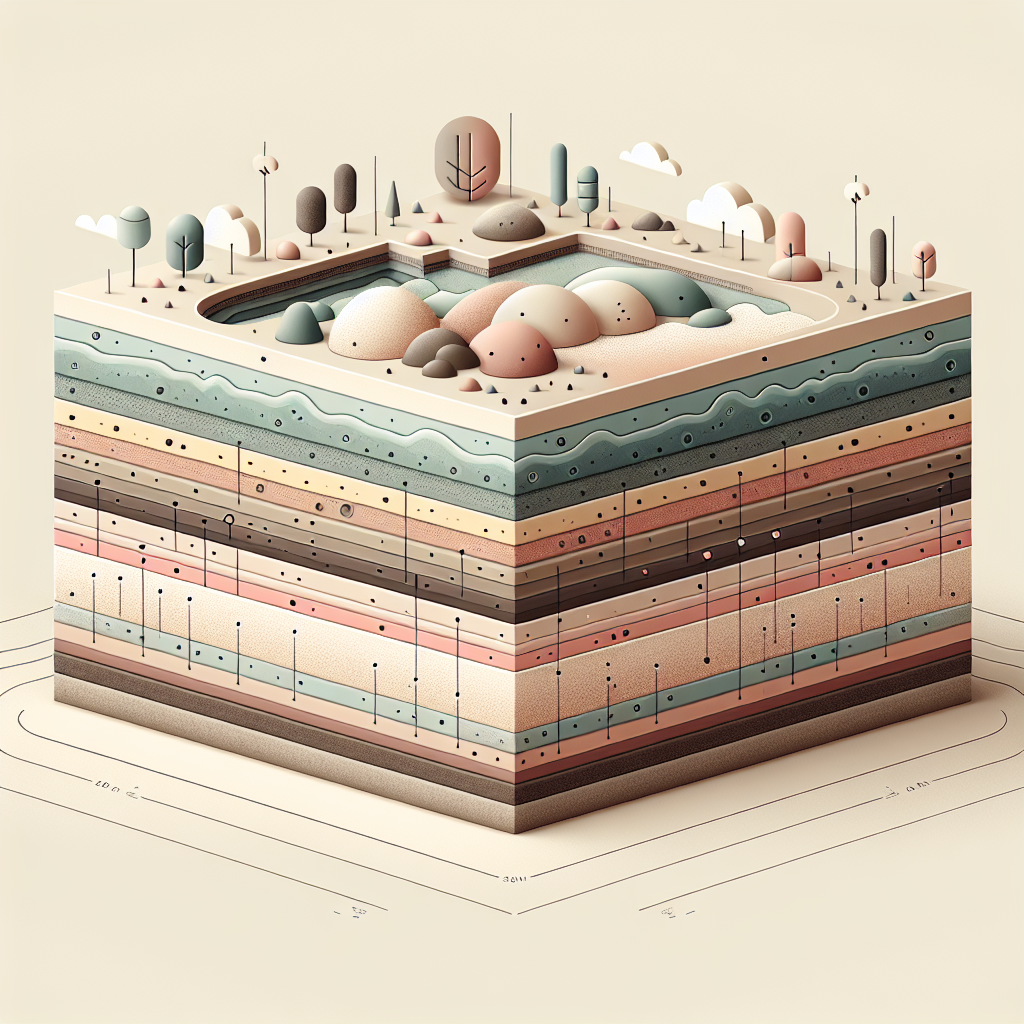
Soil is the hidden, living support beneath every building. Knowing how different soils behave helps predict settlement, drainage performance, and the type of foundation that will last decades.
This article outlines common soil kinds, their traits, how they influence foundation choices, and the simple tests used on site and in the lab. Read on to understand practical signs and typical concerns you might encounter.
Understanding soil behavior
Soil is a mix of mineral particles, organic matter, water and air. Its performance under load depends on particle size, structure, moisture content and how the grains pack together.
Two basic behaviors matter most: strength (how much load it can carry) and compressibility (how much it will settle). Drainage and frost sensitivity are also critical in many climates.
Common soil types and their traits
Most soils you meet on a site fall into a few clear categories. Each has typical strengths and common pitfalls to watch for during construction.
Clay
Clay is made of very fine particles and holds water tightly. When wet, it can become soft and weak; when it dries, it shrinks and cracks.
Key traits: low permeability, high plasticity, and considerable volume change with moisture. Clay often requires deeper or specially designed footings to control settlement.
Silt
Silt particles are finer than sand but coarser than clay. Silty soils can feel smooth or floury and may appear cohesive when moist.
Silts can be prone to erosion and lose strength when saturated. In cold regions they may also be prone to frost heave if saturated near the surface.
Sand
Sand consists of coarse granular particles and drains well. It has good strength when dense, but loose sand can settle significantly under load.
Sands are usually stable if well compacted. The key concerns are bearing capacity of loose sand and liquefaction risk in seismic areas.
Gravel
Gravel is coarse, highly permeable, and provides excellent drainage and bearing capacity. It is one of the most reliable bases for shallow foundations.
When properly compacted, gravel layers reduce frost action and limit settlement. Mixed soils with significant gravel content are often easier to work with on site.
Peat and organic soils
Organic soils and peat are dark, lightweight and can compress a great deal under load. They usually have low strength and high compressibility.
These soils often require removal, deep foundations, or soil replacement. Their unpredictable behavior can lead to uneven settlement if left untreated.
Rock and weathered rock
Bedrock provides excellent bearing capacity but can be uneven or heavily fractured. Shallow rock near the surface can also complicate excavation.
Weathered rock behaves somewhere between soil and solid rock. Foundations on rock need careful leveling or stepped footings to handle irregularities.
How soil affects foundation decisions
Soil type influences the choice between shallow and deep foundations, the need for ground improvement, and drainage strategies.
Engineers consider load, groundwater, frost depth and long-term settlement when matching a foundation to the ground conditions.
Shallow foundations
Shallow footings, such as strip or pad footings, rest near the surface and work well on stable, well-draining soils like dense sand and gravel.
If the surface soil is soft or compressible, a shallow foundation may experience excessive settlement and require soil replacement or compaction.
Deep foundations
Piles and piers transfer loads to stronger layers below weak topsoil. They are common where clays, peat, or loose fill cannot safely support loads.
Deep foundations also help where groundwater is high or where differential settlement would threaten the structure’s integrity.
Ground improvement and drainage
Options include compaction, soil replacement, geotextiles, stone columns and preloading. These methods increase strength or reduce settlement without deep foundations.
Proper drainage prevents saturation that weakens many soils. Simple grading, subdrains, and gravel layers often improve performance substantially.
Field testing and simple checks
Before any design, basic field observations and tests reveal important clues about soil behavior. Many decisions start with a few practical checks.
Tests vary from quick on-site measures to detailed lab analyses; both have a role in establishing safe foundation strategies.
Visual inspection and manual tests
Look at color, layering, and obvious organic content. Feel a sample: sand will feel gritty, silt smooth, and clay sticky when wet.
A simple pocket penetrometer or hand-probing can indicate relative strength. Note the groundwater level and any signs of past ponding or erosion.
Standard Penetration Test (SPT)
The SPT measures resistance of soil to a driven sampler and gives a rough estimate of density and bearing capacity in sands and gravels.
SPT results help judge whether shallow footings are possible or whether deeper support is needed.
Atterberg limits and plasticity
Atterberg tests quantify how fine soils behave with changing moisture. Liquid limit and plastic limit classify clays and silts by plasticity.
Higher plasticity often signals greater volume change and the need for careful moisture control around foundations.
Grain size and permeability
Grain-size analysis (sieving and hydrometer) reveals proportions of sand, silt and clay. Permeability tests show how quickly water drains through the soil.
Combine these results to decide on drainage, backfill materials, or need for dewatering during construction.
Practical steps on typical sites
Small changes in preparation often prevent larger problems later. Even modest effort on site selection and simple fixes improves long-term performance.
The next points summarize practical actions commonly used on residential and small commercial projects.
- Remove unsuitable topsoil and organic layers before placing foundations.
- Use compacted granular fill beneath slabs to create a stable platform and improve drainage.
- Place footing bases below frost depth and in firm material to avoid frost heave and surface thaw effects.
- Install perimeter drains where groundwater or poor drainage is present to keep foundations dry.
- Where high settlement risk exists, consider deeper foundations or lightweight structural systems to reduce load.
Conclusion
Understanding soil types and their behavior is a practical step that shapes foundation choice, budget and long-term performance.
Simple observations and a few targeted tests usually reveal whether the site is straightforward or needs deeper investigation and specialist solutions.
Frequently Asked Questions
What soil is best for support?
Coarse, well-graded materials like compacted gravel and dense sand offer the best natural support because they drain well and have high bearing capacity.
How can I tell if soil will settle?
Look for loose fill, thick organic layers, soft clays, or evidence of past disturbance. Field tests like SPT and lab compressibility tests give clearer estimates.
Do I always need a soil test?
For small, light structures on known-good ground, minimal checks may be enough. When risk of settlement, high groundwater, or unknown fill exists, testing is essential.
Can drainage improve poor soil?
Yes. Lowering the water table and preventing saturation often restores strength to many soils and reduces the risk of excessive settlement.
When is a deep foundation necessary?
Deep foundations are used when surface soils are too weak or compressible to carry loads, or when strong layers are far below the ground surface.