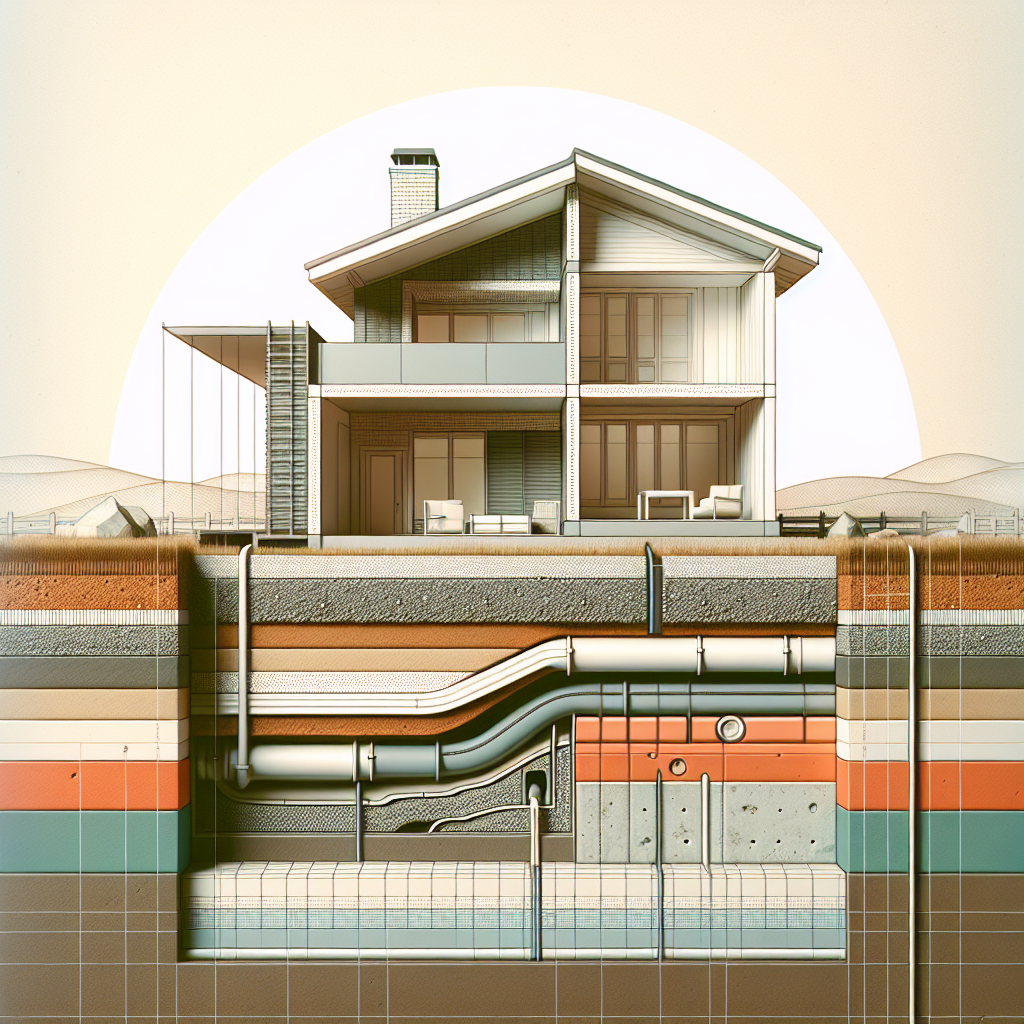
Clay soils can be unpredictable. They expand when wet and shrink when dry, and that movement puts unique demands on any structure that sits on them.
This article explains how clay behaves, how to evaluate a site, what foundation approaches work best, and what construction steps reduce risk. The tone stays practical and clear so you can weigh options without getting lost in jargon.
Understanding clay soil behavior
Clay holds water tightly and changes volume as moisture fluctuates. That swelling and shrinking creates pressure beneath slabs and footings, which can cause cracking, uneven floors, and stuck doors.
Not all clay is the same. Some clay layers are shallow, while others extend deep. The thickness, plasticity, and drainage capacity determine how aggressive the soil will be toward a structure.
Common clay characteristics
Clay particles are tiny and plate-like. They can retain a lot of water, which increases cohesion when wet and stiffness when dry. High plasticity clays show larger volume changes.
How moisture changes impact foundations
Seasonal wetting from rainfall or irrigation and drying from heat or landscape changes can shift moisture balance. Roots from trees and shrubs can also draw moisture unevenly, causing localized settling.
Assessing site conditions before construction
Early assessment reduces surprises. A few straightforward observations and simple tests help identify risks and inform the best foundation approach.
Document existing vegetation, surface drainage, and any past movement in nearby structures. Note wet areas, perched water tables, and exposure to irrigation or leaking utilities.
Quick field checks
- Hand feel test: work a soil sample between fingers to detect stickiness and plasticity.
- Pocket penetrometer or simple pocket knife test: estimate firmness and resistance.
- Observe cracking in nearby pavements, tilt in fences, or gaps around doors as clues to active movement.
When to bring a soil specialist
If the site shows deep clay, high plasticity, or signs of historical movement, a professional soil assessment can provide laboratory classification, swell potential, and bearing capacity. That data supports confident design choices.
Foundation options and design strategies
Selecting the right solution balances cost, performance, and available site remedies. Options range from conventional shallow footings with mitigation to deeper systems that bypass problematic layers.
Each approach targets a different risk: controlling moisture near the structure, strengthening the soil, or transferring loads below active clay zones.
Shallow footings with moisture control
Simple footings can work if the clay layer is thin and moisture can be stabilized. Key measures include continuous perimeter drainage, careful landscape planning, and rigid slabs that tolerate some movement.
Design details often include reinforced slabs and isolated footings placed on a compacted subgrade treated to reduce moisture variation.
Deep foundations
Piles and piers transfer loads to stable strata below active clays. This is effective where clay is thick or when high swell potential makes shallow systems risky.
Common pile types include driven concrete or steel piles and drilled shafts. The choice depends on access, load, and noise or vibration limits.
Mat or raft foundations
Mats spread loads across a larger area to reduce differential settlement. They can be combined with under-slab moisture barriers and engineered fill layers to improve performance.
Thicker mats with strategic reinforcement are useful for structures with heavy or uneven loads.
Soil improvement techniques
Stabilizing or replacing problematic soil can deliver long-term benefit. Methods include lime or cement mixing, geosynthetics, and structural compaction of selected fill.
- Lime or cement treatment reduces plasticity and swell potential.
- Geogrids and geotextiles distribute loads and improve resiliency.
- Controlled replacement with compacted granular material creates a more predictable layer.
Construction best practices to limit movement
Even the best design can fail without careful execution. The construction stage is where moisture control and material quality matter most.
Consistent oversight during excavation, drainage installation, and backfill placement keeps the project aligned with the intended performance.
Manage surface and subsurface water
Direct runoff away from foundations with graded slopes, gutters, and downspouts. Avoid placing irrigation close to the foundation where possible.
Perimeter drains reduce hydrostatic pressure and limit water infiltration into the supporting soils beneath slabs and footings.
Control moisture under slabs and near footings
Install vapor barriers and capillary breaks under slabs. Seal joints and maintain consistent ground cover around the foundation to limit rapid moisture swings.
For exterior landscapes, prefer drought-tolerant plantings and keep large trees well away from foundations where roots will be seeking moisture.
Compaction and backfill techniques
Use well-graded, low-plasticity fill in lift layers properly compacted to the specified density. Avoid uncontrolled placement of wet clay backfill that will later shrink and settle.
Document moisture content and compaction effort during backfill to ensure uniform support and reduce future differential movement.
Material and structural detailing
Reinforcement details that improve flexibility and crack control help slabs and footings tolerate some soil movement without serious damage.
Consider movement joints where slabs meet other structures and durable sealants that can endure repeated small displacements.
Monitoring and long-term maintenance
Foundations on clay benefit from an ongoing attention to moisture patterns and small changes. Early detection of movement saves cost and preserves structural function.
Simple regular checks and a few installed monitoring devices can reveal trends before damage becomes extensive.
Routine inspections
Look for new cracks, sticking doors, uneven flooring, and changes in gaps around windows. Note whether damage seems seasonal or progressive.
Take photographs and measurements over time to detect slow shifts that might otherwise go unnoticed.
Simple monitoring approaches
- Place crack monitors or simple telltales across significant cracks to see if they widen or close.
- Install moisture probes in critical areas to track changes near the foundation.
- Measure elevations at a few points if settlement is a concern.
When repair becomes necessary
Repair strategies range from underpinning individual footings to stabilizing the surrounding soil and correcting moisture sources. The correct method depends on the pattern and rate of movement.
Repair often pairs structural fixes with moisture control to avoid repeating the same problem later.
Conclusion
Clay soils present a predictable set of challenges: movement driven by changing moisture. With a careful site assessment, appropriate foundation selection, and strict moisture control during construction and beyond, buildings can perform well for decades.
Plan proactively, monitor conditions, and use construction practices that reduce moisture variation immediately around the foundation. Those steps will minimize risk and protect long-term value.
Frequently Asked Questions
Below are common questions about foundations on clay and concise, practical answers to help with immediate concerns.
How much does clay movement typically affect a small home?
Impact varies widely. Shallow clays with modest plasticity may cause only hairline cracks, while thick, high-plasticity clays can lead to notable settlement or heave. Local testing gives the best estimate.
Can landscape changes make a foundation problem worse?
Yes. Adding irrigation, planting water-loving trees near the house, or changing drainage patterns can alter moisture distribution and accelerate movement under a foundation.
Are shallow footings ever acceptable on clay?
They can be when the clay layer is thin, swell potential is low, and moisture is controlled. Reinforced slabs and good perimeter drainage improve the chance of success.
What are signs that a foundation needs repair?
Widening cracks, persistent sticking doors, sloping floors, and gaps at window frames are common signals of foundation distress. Monitoring trends helps prioritize action.
How does adding a crawl space affect performance on clay?
A well-ventilated or conditioned crawl space with proper grading can protect structures by keeping moisture more constant. However, poor drainage beneath a crawl space can worsen problems.