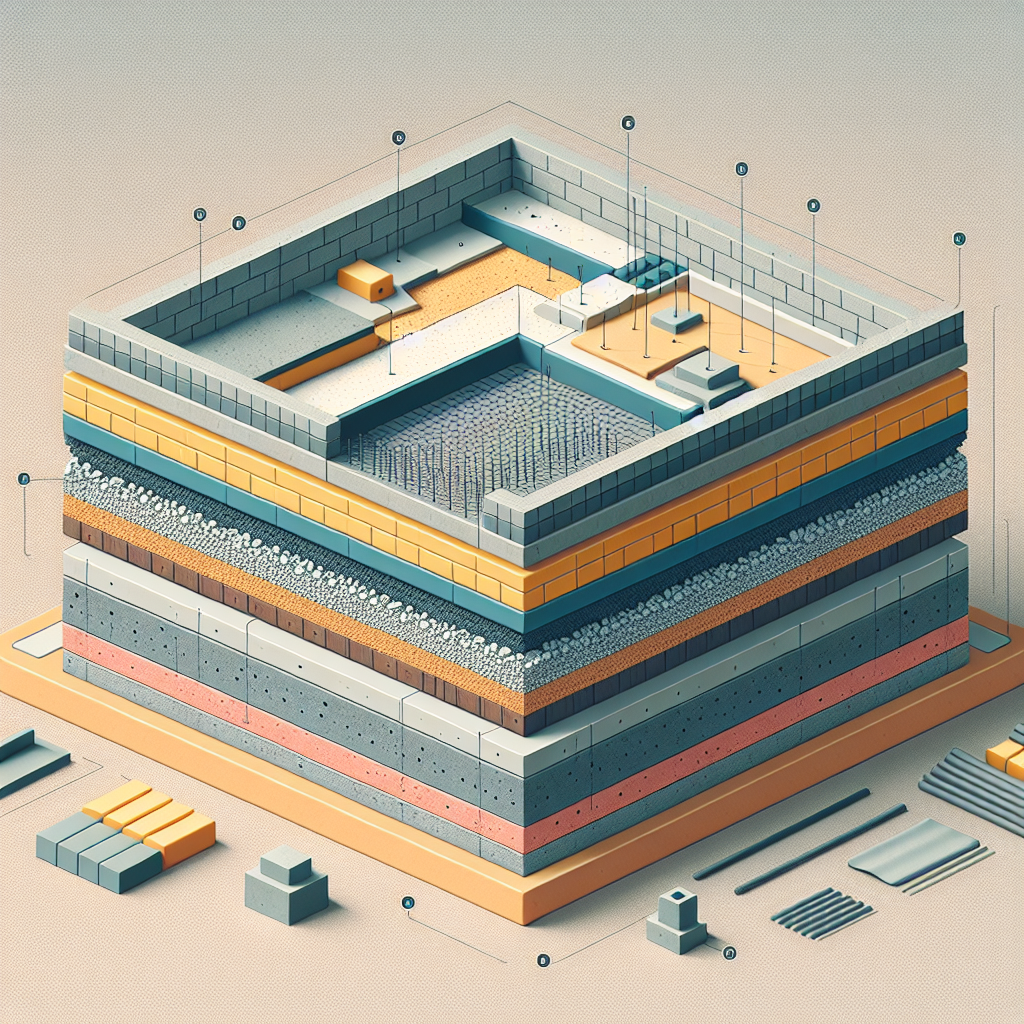
A solid slab base is one of the most efficient ways to support a structure when soil and climate conditions allow. Knowing how a slab works, what to plan, and which details matter reduces costly repairs later.
This article breaks down practical design points, step-by-step construction practices, reinforcement options, and common problems with straightforward fixes. The goal is to help you make confident decisions about slab systems and long-term performance.
Understanding slab systems
Slab systems put the building load directly onto a continuous concrete plane cast at ground level. They are often chosen for level sites and warm climates, but the right preparation is essential in many regions.
Key benefits include speed of construction and reduced need for a crawlspace. Downsides appear when drainage, soil movement, or thermal control are neglected.
Types of slab bases
There are a few common slab types to consider: monolithic slabs, where footing and slab are poured together; slab-on-grade with separate footings; and post-tensioned slabs that use tensioned cables to control cracking.
Each type responds differently to ground movement and load distribution. Choosing the right one depends on soil, loads, and budget.
When a slab is the right choice
A slab is appropriate when the ground is stable, the frost depth is shallow, and the building loads are within the slab’s capacity. It often suits smaller residential buildings and simple commercial structures.
Sites with expansive clay, high water table, or deep frost may still use slabs but usually need extra mitigation like deeper excavation, insulation, or engineered soils.
Key design elements
Good design focuses on load paths, reinforcement, drainage, and thermal behavior. Each factor affects long-term durability and maintenance.
Design decisions should be guided by local codes, soil reports, and realistic assessments of use and loads.
Subgrade preparation and compaction
Prepare the subgrade by removing organic material and soft spots. Uniform compaction prevents differential settlement that leads to cracking.
Typical practice includes proof-rolling the site and using a compacted granular fill where needed. Pay attention to moisture content during compaction for consistency.
Thickness, reinforcement and joints
Slab thickness is determined by load, soil bearing capacity, and floor usage. Common residential slabs range from 3.5 to 6 inches, thicker where concentrated loads occur.
Reinforcement controls cracking and distributes loads. Options include welded wire mesh, rebar, or post-tensioning. Joints—control, isolation, and construction—manage where and how cracks form.
Edge details and footings
Edge thickening or integrated footings provide bearing for walls and concentrated loads. A turned-down perimeter footing is common when walls sit on the slab.
Design the edge so it resists soil pressure and frost heave while providing adequate bearing area for load transfer.
Insulation and moisture control
Insulation under the slab improves energy performance and reduces frost risk. Rigid foam is commonly used beneath the slab and along edges to preserve thermal continuity.
Vapor barriers reduce moisture migration from the ground. Proper placement and overlap of polyethylene sheets prevent damp floors and finish failures.
Construction process
Careful sequencing and quality control during construction make the difference between a durable slab and one that develops problems quickly.
Follow a logical flow from site work to finishing, and inspect key steps before moving on.
Site layout and excavation
Start by marking exact slab limits and excavation depths. Remove unsuitable soils and set elevations for final slab height, accounting for finish floor thickness.
Protect adjacent structures and utilities during excavation to avoid surprises during concrete placement.
Sub-base, vapor barrier and formwork
Place and compact the granular sub-base to specified density. A stable base prevents uneven settlement and provides drainage under the slab.
Install a continuous vapor barrier with taped seams and sealed penetrations. Set formwork at the correct elevation, ensuring straight edges and secure anchorage.
Reinforcement and mechanicals
Place reinforcement at the right elevation—often on chairs or supports—to ensure it sits near the slab’s mid-height where bending stresses are highest.
Embed sleeves and conduits for plumbing and electrical work. Protect pipes from crushing and provide continuous sleeves where they pass through the slab.
Concrete placement and finishing
Place concrete consistently to avoid cold joints. Consolidate the mix and use screeds to reach the desired elevation and flatness.
Timing of finishing matters: too early and bleed water will trap beneath the surface; too late and workability is lost. Use curing methods—membranes, wet coverings, or curing compounds—to preserve moisture during strength gain.
Curing, protection and backfill
Maintain curing for at least several days depending on mix and weather. Proper curing increases strength and reduces shrinkage cracks.
Protect the slab edge and surface from traffic until adequate strength is reached. Backfill around foundations only after drainage and waterproofing measures are in place.
Common issues and remedies
Even with good plans, problems can arise. Early identification and appropriate fixes prevent escalation and costly repairs.
Address issues by diagnosing root causes rather than treating symptoms.
Cracking: patterns and solutions
Small hairline cracks from shrinkage are common and usually not structural. Larger or misaligned cracks often point to subgrade movement, inadequate reinforcement, or poor joint placement.
Solutions range from sealing and epoxy injection for non-structural cracks to underpinning or slab replacement when settlement is severe.
Settlement and uneven floors
Localized settlement often follows poor compaction or organic material left in the subgrade. Differential settlement shows as slope or cracking near one area.
Minor issues can be fixed by mudjacking or polyfoam injection to lift and re-level the slab. Major failures may require excavation and rebuilding with proper compaction.
Moisture through slab and efflorescence
High moisture can cause floor covering failures and white salt deposits on concrete. A missing or damaged vapor barrier is a common cause.
Repair by improving drainage, adding vapor retarders on top of the slab where possible, and using breathable finishes. For persistent water, investigate and address groundwater or plumbing leaks.
Frost heave and edge damage
In cold climates, frost can lift edges if insulation and drainage are inadequate. Signs include cracked edges and raised corners.
Fixes include adding edge insulation, improving subgrade drainage, and extending footings below frost depth where practical.
Conclusion
A slab base can be an economical and durable choice when design and construction match site conditions. Attention to subgrade work, reinforcement, joints, and moisture control pays off over the life of the structure.
Quality starts with accurate site assessment and continues through careful placement, curing, and periodic inspection to catch small issues early.
Frequently Asked Questions
How thick should a residential slab be?
Typical thickness ranges from 3.5 to 6 inches depending on soil bearing capacity and expected loads. Areas with heavy point loads, like garage columns or machinery pads, often need thicker sections or local thickening.
Do I always need rebar in a slab?
Reinforcement reduces crack width and helps distribute loads. Light residential slabs sometimes use welded wire mesh, while heavier loads or longer spans benefit from rebar or post-tensioning. Local codes and structural needs determine the final choice.
Is a vapor barrier necessary under the slab?
Yes, a continuous vapor barrier is strongly recommended where moisture-sensitive finishes or indoor humidity control are required. It helps prevent moisture migration from the ground into the floor system.
What causes a slab to heave at the edges?
Frost action below the slab edge, combined with saturated soils and poor insulation, usually causes edge heave. Improving edge insulation and drainage can prevent reoccurrence.
Can settled slabs be lifted back to level?
Often yes. Techniques like mudjacking or injecting expanding polyurethane can lift settled slabs. The success depends on the cause and extent of settlement; hire a qualified contractor to evaluate the best method.