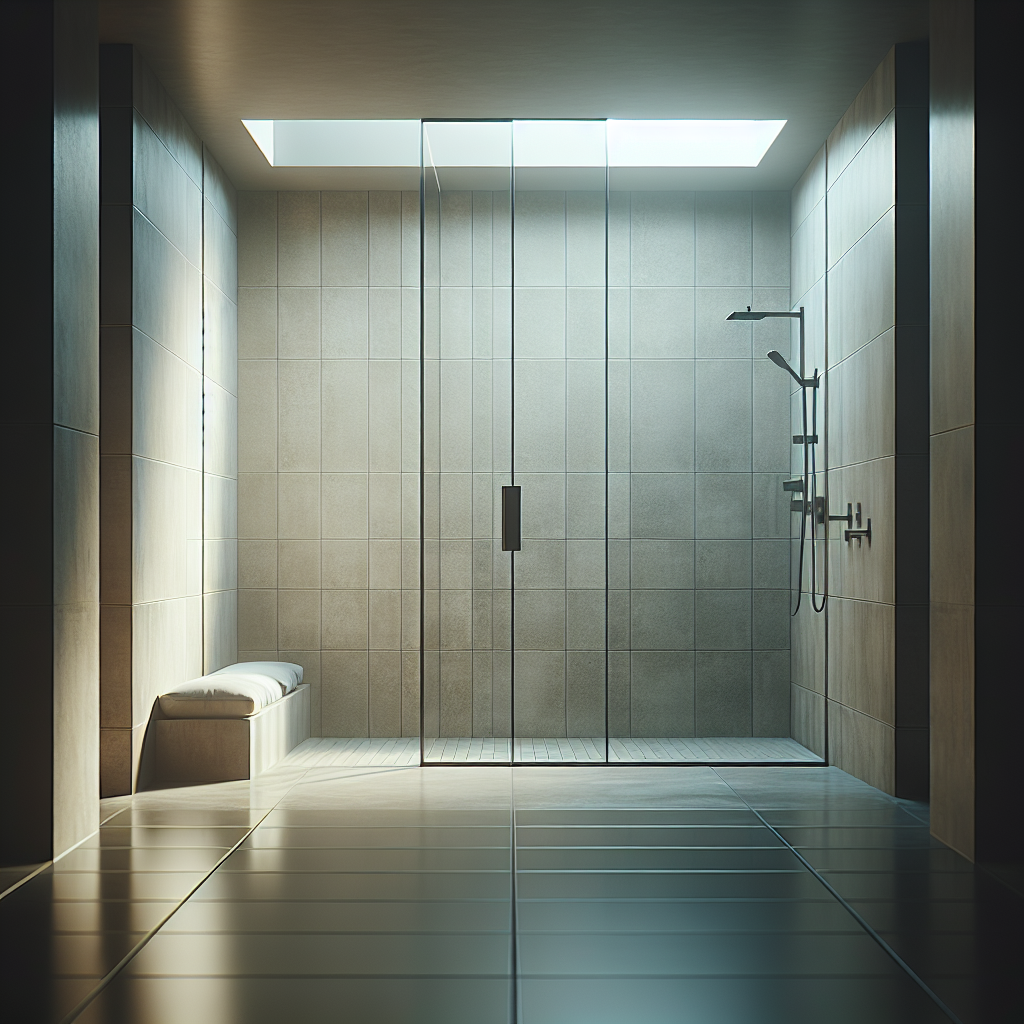
Choosing the right size for a walk-in shower affects comfort, safety, and how the bathroom feels. Knowing common dimensions helps you plan plumbing, doors, and fixtures without surprises.
This article breaks down typical measurements, accessibility options, and layout choices so you can visualize what fits in your space and why certain sizes work better than others.
Common dimensions and what they mean
Most showers fall into a few clear size ranges that balance comfort and efficient use of space. Understanding the footprint, door swing, and clearance needs avoids cramped or awkward layouts.
Below are standard footprints and quick notes on what each size feels like in daily use.
Small footprints (32″ x 32″ to 36″ x 36″)
These compact layouts work well in tight bathrooms or secondary baths. They fit most basic shower fixtures but leave limited room for movement.
Expect to use a single shower head and minimal shelving. Curbless designs can make a small shower feel larger visually.
Mid-size layouts (36″ x 48″ to 42″ x 60″)
This is the most common choice for master and main baths. It accommodates larger showerheads, a small bench, and niche storage without crowding.
These dimensions allow a comfortable standing area and space to install grab bars or a handheld spray easily.
Larger and luxury footprints (60″ x 60″ and up)
Larger walk-in showers can include benches, multiple shower heads, and room for two people. They create a spa-like feel but require more water management and ventilation planning.
Consider separate zones for a rain head and a handheld spray, and plan drain placement to handle increased flow.
Layout factors that affect size choices
A clear plan includes the shower footprint plus surrounding clearance, door swing, and plumbing locations. These small details change what fits comfortably.
Think about how the shower relates to the vanity, toilet, and door openings so the space flows and feels balanced.
Entry types and clearance
Doors can be hinged, sliding, or there may be no door at all. Each option changes required clearances.
- Hinged door: Allow at least 24″ of clear floor space in the swing path.
- Sliding door: Saves swing space but needs wall tracks and clearance next to the opening.
- Doorless (open) walk-in: Requires a larger clear area inside to prevent splashing; often needs a partial glass panel or curb.
Drain location and slope
Proper slope ensures water flows to the drain and avoids pooling. The typical slope is about 1/4″ per foot toward the drain.
Central drains let tile slope in multiple directions; linear drains work well along a wall or curb and simplify the slope layout.
Accessibility and aging-in-place considerations
Designing a shower that serves people of all abilities often means slightly larger clearances and specific features like benches and grab bars.
Even if mobility aids aren’t needed now, planning for easy access makes the space more flexible and future-proof.
Wheelchair-accessible dimensions
To accommodate a wheelchair, a minimum clear area of 60″ x 60″ is common. Turning radius and door widths need careful attention.
Curbless entries, a flush threshold, and a linear drain along the edge help make the shower easy to enter and exit.
Bench size and placement
A comfortable bench is typically 15″ to 18″ deep and 17″ to 19″ high. It should be placed where it does not block the main spray or door swing.
Consider a folding seat in tighter spaces or a built-in bench in larger footprints for a cleaner look.
Grab bars and fixture reach
Install grab bars at 33″–36″ above the floor where users naturally reach for support. Place them near entries, benches, and controls.
Controls should be reachable from a seated position—typically 38″–48″ above the finished floor—and placed away from direct water spray to reduce accidental scalding.
Materials, waterproofing, and floor choices tied to size
The material you choose affects how easy it is to slope the floor, waterproof details, and maintenance. Tile, stone, and prefabricated pans each have trade-offs.
Think about slip resistance, grout upkeep, and how drains integrate when picking finishes for different footprints.
Tile and grout considerations
Small tiles allow better slope transitions because grout lines add traction and flexibility for curved slopes toward a central drain.
Larger tiles can look cleaner in bigger showers but may require a linear drain and careful installation to maintain slope.
Prefabricated bases vs. custom pans
Prefabricated shower pans simplify installation and ensure correct slope, but they limit drain placement and size options.
Custom mortar beds allow full flexibility in shape and drain location but need skilled installation and more drying time.
Planning tips and common pitfalls
Small missteps during planning lead to costly fixes. Measure multiple times and visualize patterns, clearances, and fixture reach before finalizing.
Consider how cleaning, maintenance, and lighting will work once the shower is built. Small changes in placement can make a big difference.
Check door swing and sight lines
Test door swings with tape on the floor to ensure they won’t hit fixtures or block walkways. Visual flow matters in a small room.
Frosted or partial glass walls keep privacy while allowing light; full glass creates a more open feel.
Avoid underestimating storage
Niches and corner shelves keep shampoo and soap off benches and the floor. Plan niches at reachable heights—around 38″ to 48″ for standing use.
Ensure niches have proper slope or weep holes if tiled to prevent water buildup behind the shelf.
Conclusion
Choosing the right walk-in shower size depends on available space, who will use it, and the look you want to achieve. Standard ranges give a reliable starting point.
Careful attention to entry type, drain layout, accessibility, and materials ensures the final space performs well and feels spacious.
Frequently Asked Questions
What is the minimum comfortable walk-in shower size?
A commonly accepted minimum that still feels usable is about 36″ x 36″. Anything smaller may feel tight and limit fixture options.
How much clearance do I need outside the shower door?
Allow at least 24″ of clear floor space in front of a hinged door. Sliding doors reduce that need but require wall space for the track.
Are curbless showers practical in small bathrooms?
Yes, but they require precise slope and waterproofing. Curbless entries improve accessibility and visual space but need careful drainage planning.
How high should shower controls be placed?
Controls are typically located between 38″ and 48″ above the finished floor. Position them so they can be reached from a seated position if accessibility is a concern.
Can I use large format tile in a walk-in shower?
Large tiles work well in larger shower footprints. For smaller showers, smaller tiles or mosaics make it easier to create the necessary slope and offer better slip resistance.