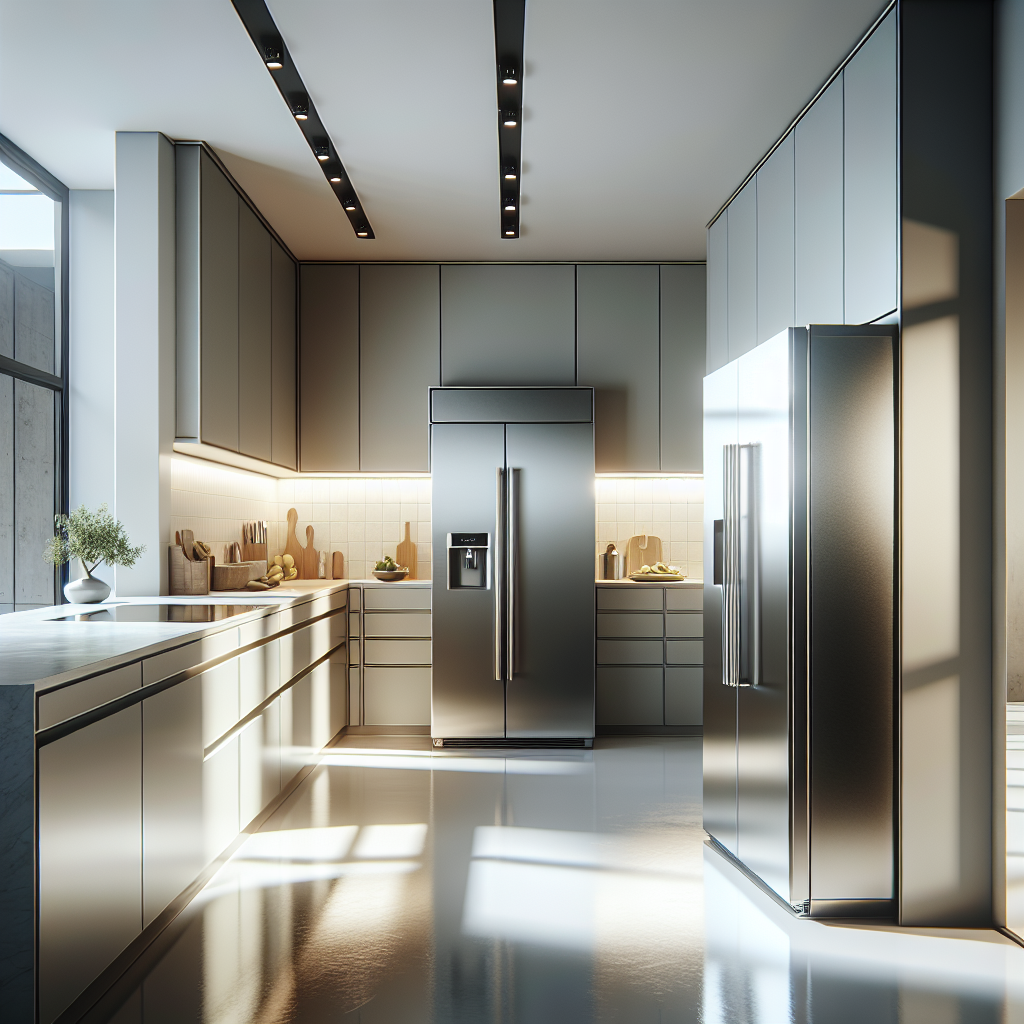
Choosing the right refrigerator means matching its size to the kitchen layout, doorway access and storage needs. A mismatch can lead to costly returns or awkward gaps that affect how the appliance performs.
This article breaks down common width, height and depth ranges, explains clearance needs, and gives measurement checks to make sure a new unit fits comfortably into a space.
Common width, height and depth ranges
Refrigerators come in predictable size groups, which helps narrow selections. Knowing typical ranges makes it easier to shop and to plan opening clearance and ventilation.
Top-freezer and basic units
Top-freezer models are among the most compact. Widths usually fall between 24 and 30 inches (61–76 cm). Heights range from about 60 to 66 inches (152–168 cm), and depths are commonly 28 to 34 inches (71–86 cm) including handles.
Bottom-freezer and single-door styles
Bottom-freezer layouts often add a little height and width to improve storage. Expect widths of 28–33 inches (71–84 cm), heights near 67–70 inches (170–178 cm), and similar depths to top-freezer units.
Side-by-side refrigerators
Side-by-side designs split fresh and frozen compartments vertically. These typically begin at 32 inches (81 cm) wide and extend up to 36 inches (91 cm). Heights commonly sit between 65 and 70 inches (165–178 cm). Depths can be deeper, especially when ice and water dispensers are included.
French door models
French door refrigerators blend wide single-door widths with roomy freezer drawers below. Standard widths often land around 30–36 inches (76–91 cm). Heights commonly reach 68–71 inches (173–180 cm), with counter-depth and deeper options available.
Compact and apartment-size units
Compact refrigerators are ideal for tight spaces. Widths can be as narrow as 18–24 inches (46–61 cm), heights vary from countertop height to tall slim units around 60 inches (152 cm), and depths are typically shallower to save floor space.
Depth choices and placement options
Depth affects aesthetics and traffic flow more than width does. There are three practical depth categories: standard, counter-depth, and built-in depth. Each serves a different design need and impacts how the fridge sits relative to cabinetry.
Standard-depth units
Standard-depth refrigerators usually extend past counters. Typical overall depths range from 30 to 36 inches (76–91 cm), placing the doors slightly forward of the counter edge. This extra volume can be useful, but it changes the kitchen sightline.
Counter-depth models
Counter-depth refrigerators are designed to align closely with counters for a streamlined look. They generally measure 24–30 inches (61–76 cm) deep without handles, making them less bulky in small kitchens. Expect slightly less internal storage than a deeper model of similar width.
Built-in and flush installations
Built-in appliances are deeper into the cabinetry footprint and often require custom panels. Their depth is usually similar to counters when installed, but planning must include ventilation gaps and service access behind the unit.
How much clearance does a refrigerator need?
Leaving the right space around a refrigerator keeps it working efficiently and makes door opening smooth. Clearance needs differ by model and installation type.
Top and rear ventilation
Most freestanding refrigerators need 1–2 inches (2.5–5 cm) behind for airflow; some larger or high-performance models require more. Built-ins and under-cabinet installations might need ventilation at the toe kick or through cabinetry instead.
Door swing and side clearance
Doors require room to open fully. A standard fridge door can need 90–120 degrees of clearance, plus space for handles and water/ice dispensers. Think about fridge placement near islands, counters, and adjacent walls to avoid blocked drawers or cabinet doors.
Plinth and toe-kick access
Keep a small gap under and around the unit for leveling legs and to access the condenser area. This is typically 1/2 to 1 inch (1.3–2.5 cm) but varies by model. If a fridge sits directly on flooring with no gap, cleaning and service become harder.
Measuring and practical checks before purchase
Accurate measurements are the most reliable way to avoid problems. A quick checklist helps ensure the new unit reaches its final position without obstacles.
Measure the opening carefully
Measure width, height and depth at multiple points because floors and ceilings aren’t always level. Note the narrowest width and the lowest height. Subtract about 1 inch (2.5 cm) to allow for ease of installation and airflow unless the manufacturer states otherwise.
Check pathways and doorways
Measure all doorways, halls and stair landings the fridge must pass through from delivery to placement. Account for diagonal turns and the angle needed to tilt the appliance. Removing doors or door frames during delivery is sometimes necessary.
Account for handle and hinge projections
Handles add to overall width; hinges and door stops add to depth. Review the product specifications for full dimensions including handles and protrusions so you won’t be surprised during delivery.
Capacity, layout and how it affects sizing choices
Cubic feet tells the general storage volume, but layout determines how usable that space is. Two fridges with the same cubic feet can feel very different depending on shelves, drawers and freezer arrangement.
Understanding cubic feet and usable space
Cubic feet is a useful starting point: small apartments often need 10–14 cu ft, families may prefer 18–26 cu ft or more. But internal layout, shelf depth and bin design change how much you can actually store.
Shelves, drawers and organization features
Adjustable shelves, sliding drawers and door bins increase flexibility. If you buy a narrower model, look for clever storage features like split shelves or convertible compartments to maximize functionality.
Ice makers and dispensers reduce usable space
Built-in ice makers, water filters and dispensers take internal room. If cold storage capacity is a priority, compare net usable volume with and without these extras.
Situations and sizing tips
Different living situations call for different approaches. Common scenarios include small apartments, large family kitchens, or integrating a fridge into custom cabinetry.
Small kitchens and apartments
Prioritize width and depth. A counter-depth narrow model can prevent traffic blockage while preserving working counter space. Look at 18–24 inch wide models when space is extremely tight.
Large households and entertaining
Wider fridges with greater cubic footage suit heavy food prep and entertaining needs. Consider 30–36 inch models with French doors or side-by-side access for easy organization and frequent opening.
Integrating into cabinetry
If the appliance sits flush with cabinets, allow the builder or cabinetmaker’s specs to shape the final choice. Built-ins often require clearances above and behind for service panels and cooling systems.
Energy, performance and size trade-offs
Larger refrigerators typically consume more energy, but modern models offer better insulation and efficient compressors. Choosing the right size balances daily needs with energy considerations.
Size vs efficiency
A fridge that’s too large will cycle less efficiently when lightly loaded. Opting slightly smaller than your maximum need can save power without impacting daily life, especially if you organize well.
Placement influences performance
Positioning away from heat sources such as ovens or direct sun helps efficiency. If the unit sits in a warm garage or unconditioned space, select a model rated for that environment or expect higher energy use.
Conclusion
Picking a refrigerator is about matching dimensions to space and lifestyle. Measure opening widths and pathways, consider clearances for door swing and ventilation, and compare internal layouts.
With a clear sense of width, height and depth ranges, plus attention to capacity and installation needs, it’s possible to choose an appliance that fits both physically and functionally.
Frequently Asked Questions
What width is most common in modern kitchens?
Widths around 30–36 inches (76–91 cm) are very common, especially for French door and side-by-side models. Narrower units in the 24–28 inch range are also popular in compact kitchens.
How much clearance should I leave behind the unit?
Allow at least 1–2 inches (2.5–5 cm) behind a freestanding refrigerator. Check the manufacturer’s specs; some models require more space for coils or airflow.
Can I fit a counter-depth fridge in an older kitchen layout?
Yes. Counter-depth units are often chosen to align with existing counters and create a cleaner look. Just check that internal capacity meets your needs and that handles don’t interfere with adjacent cabinets.
Is it better to choose a deeper model for more storage?
Deeper models give extra volume but can protrude into the kitchen walkway. If space allows and you need capacity, a deeper refrigerator may be helpful; otherwise counter-depth options keep the profile tidy.
What should I measure before delivery?
Measure the fridge opening width, height and depth at multiple points. Also measure doorways, halls, and any tight corners along the path. Account for handles, hinges, and clearances to ensure a smooth delivery and installation.