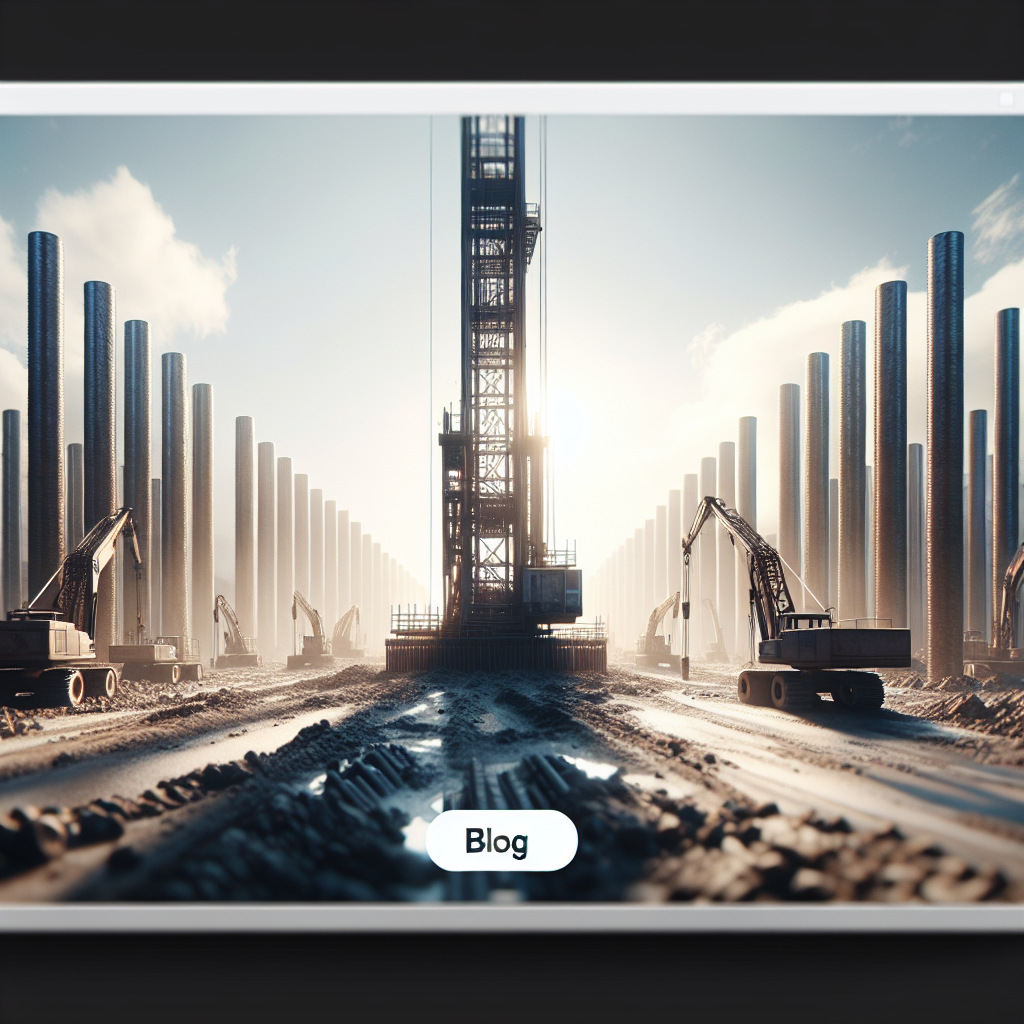
Choosing the right foundation is a critical step in any construction project. Deep solutions reach stable soil layers or bedrock to support heavy loads when shallow options can’t deliver the needed strength or settlement control.
This article breaks down common deep foundation types, what they do, and the practical factors that affect selection, cost, and long-term performance.
When deep solutions are needed
Not every site requires deep support. Shallow footings work where surface soils have sufficient strength and low settlement risk.
Deep foundations become necessary when surface soils are weak, compressible, or when structures impose very large loads. They also suit waterfront sites, reclaimed land, and locations with high groundwater.
Major types and how they work
Several deep foundation methods are commonly used. Each transfers load differently and suits particular soil and load conditions.
Pile foundations
Piles are long, slender elements driven, jetted, or drilled into the ground. They carry loads by end-bearing on a firm layer, by skin friction along the shaft, or a combination of both.
- Material options include precast concrete, steel H-piles, and timber in limited situations.
- Installation methods vary: driving with hammers, vibrating, or casting in drilled holes.
Advantages of piles include speed of installation for driven types, suitability in deep soft layers, and flexibility for retrofit under existing structures. Drawbacks include vibration and noise for driven piles, and the need for access and equipment for larger diameters.
Drilled shafts (bored piles)
Drilled shafts are large-diameter cast-in-place concrete elements formed by drilling a hole, placing reinforcement, and pouring concrete. They work well where high capacity is needed with minimal vibration.
- Typical diameters range from about 0.6 m to several meters.
- They perform well in layered soils, rock sockets, and where ground disturbance must be minimized.
Drilled shafts offer high axial and lateral capacity and can be combined with base-in-socket strategies in rock. They require careful control of borehole stability and concrete placement, especially below water.
Caissons (open and pneumatic)
Caissons are large, often watertight structures sunk into place, commonly used in bridge piers and waterfront foundations. Open caissons are excavated internally as they sink.
- Pneumatic caissons allow workers to excavate under compressed air for deep, water-bearing soils.
- They can reach firm strata while keeping water out of the working area.
Caissons are suitable where large footings are required under water or soft deposits. They are complex and require experienced crews and strict safety measures due to pressure-related hazards.
Micropiles
Micropiles are small-diameter, high-strength elements installed by drilling and grouting. They offer high load capacity per unit and can be installed in confined sites with limited access.
- Common uses include foundation underpinning, seismic retrofits, and sites needing low vibration.
- They adapt well to variable ground and can be angled to resist lateral loads.
Micropiles are often preferred for repair or strengthening work because installation disrupts existing structures minimally and can be done from above ground.
Soil-mixed and displacement methods
These methods alter in-place soils to create structural elements. Techniques include deep soil mixing, soil-cement columns, and displacement piles that compact surrounding soils.
- Benefits include improving weak layers without removing them and combining ground improvement with load transfer.
- They can reduce settlement and increase bearing capacity over large areas.
Soil-mixed elements are useful where widespread improvement is needed and when managing groundwater or contamination is a concern.
Design and construction considerations
Selecting a deep solution depends on site conditions, loads, project constraints, and environmental factors. A few core items guide the choice.
Early site investigation data and load estimates are essential. Construction access, noise limits, and adjacent structures also influence the chosen method.
Site investigation and soil data
Accurate soil profiles, lab tests, and groundwater measurements form the basis of design. Information on compressible layers, bearing strata, and variability reduces risk.
- Borehole logs, SPT/CPT data, and laboratory strength tests guide capacity estimates.
- Identifying hard layers or rock near the surface helps choose between driven and drilled options.
Load capacity and settlement
Design must consider axial capacity, lateral resistance, and predicted settlement under service loads. Group effects and interaction with surrounding soil can change behavior.
Serviceability often controls design when differential settlement could harm finishes or connected systems.
Installation methods and constraints
Site access, available equipment, and environmental controls shape the chosen installation method. Driven piles require drop zones and cranes; drilled methods need borehole rigs and slurry or casing management.
Vibration-sensitive areas or sites near historic buildings may favor low-vibration options like drilled shafts or micropiles.
Groundwater and dewatering
High water tables increase the complexity of casting below water. Measures such as casing, tremie concrete placement, or temporary dewatering are common.
Environmental permits may limit groundwater discharge or require treatment, which affects schedule and cost.
Cost, schedule and long-term care
Budgeting and timing depend on method, soil conditions, and site logistics. Some approaches are material-intensive, others are labor and equipment driven.
Lifecycle costs should include inspection and possible remedial work. Access for maintenance and repair plays into initial choices.
Key cost drivers
Major cost components include material, labor, specialized equipment, and ground conditions that slow progress.
- Rock sockets and difficult drilling raise per-unit rates significantly.
- Working in confined urban sites can add mobilization and traffic control expenses.
Scheduling impacts
Driven piles can be fast but may be limited by noise and vibration curfews. Drilled shafts take longer per element but avoid impact loads.
Unexpected obstructions, like boulders or old foundations, can cause delays and unplanned costs.
Inspection, testing, and maintenance
Load tests, integrity checks, and routine inspections help ensure long-term performance. Non-destructive methods such as sonic logging or low-strain testing detect defects.
Maintenance needs are typically low, but corrosion protection for steel elements and monitoring of settlement are prudent practices.
Conclusion
Deep foundation types offer proven options when shallow solutions can’t meet structural needs. Choice depends on soil, load, access, and long-term performance expectations.
Understanding how each method transfers load, its installation impacts, and lifecycle considerations leads to better outcomes and fewer surprises during construction.
Frequently Asked Questions
Below are common questions and concise answers to help clarify typical concerns about deep foundations and their applications.
What factors determine the ideal deep option?
Key factors include soil stratigraphy, depth to competent strata, structure loads, site access, environmental limits, and nearby sensitive structures.
Cost and schedule constraints also shape the choice, as do local contractor experience and available equipment.
How is load capacity verified on site?
Verification methods include static load testing, dynamic pile testing, and integrity tests like low-strain or crosshole sonic logging.
Results are compared with design predictions; adjustments are made if tests show lower-than-expected performance.
Are drilled shafts better than piles?
Neither is universally better. Drilled shafts suit high-capacity needs with low vibration, while driven piles can be faster and cost-effective in many soils.
Site constraints, noise limits, and ground conditions determine the relative advantage.
Can deep foundations be used for retrofits?
Yes. Micropiles, drilled shafts, and pile underpinning techniques are commonly used to strengthen or support existing structures.
These methods can be applied with minimal disturbance and tailored to the existing load paths.
What are common risks during installation?
Potential issues include unexpected obstructions, borehole collapse, poor concrete placement, and vibration impacts. Weather and groundwater can also create challenges.
Thorough site investigation, good supervision, and contingency planning reduce these risks.