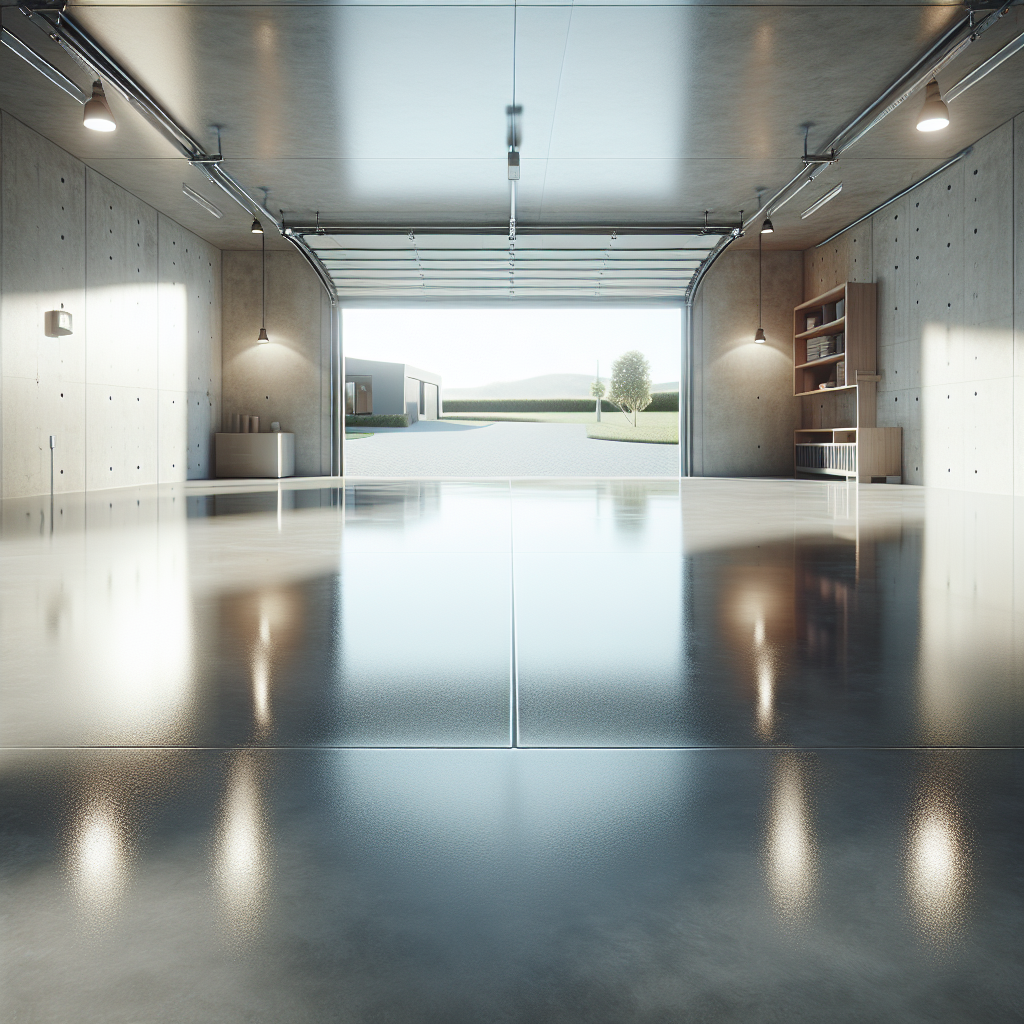
Epoxy applied to concrete turns a bare slab into a tough, stain-resistant surface. From residential garages to busy warehouses, epoxy coatings add protection and a cleaner look without hiding the strength of the slab beneath.
This article breaks down how epoxy works, the common types and uses, what matters during application, and realistic expectations about lifespan and upkeep.
How epoxy bonds with concrete and why preparation matters
Epoxy is a two-part coating that cures into a hard film when resin and hardener react. The bond to concrete depends less on adhesion to paint and more on mechanical contact with the slab surface.
That means the most important step is preparing concrete so the epoxy can grab into pores and texture instead of sitting on dust or a weak surface layer.
Why clean, sound concrete is essential
Concrete must be free of loose material, oils, or release agents. Contaminants block adhesion and lead to blistering or peeling later.
Common cleaning methods include pressure washing, degreasing, and mechanical grinding or shot blasting. Acid etching can work on small jobs but doesn’t replace mechanical profile for heavy-duty floors.
Moisture and vapor drive — the hidden enemy
Moisture coming up through the slab can push coatings off even when the surface looks dry. A simple plastic sheet test helps identify excessive vapor drive.
If moisture tests fail, consider moisture-mitigating primers or systems designed to tolerate higher vapor pressures before applying epoxy.
Common epoxy types and where each performs best
Not all epoxy products are the same. Differences in solids content, additives, and formulation change how they look, feel, and perform.
Choosing the right type depends on traffic, chemical exposure, UV exposure, and desired appearance.
100% solids epoxy
These have no solvents or water and cure to a thick, durable film. They are common in industrial areas because they resist heavy wear and chemicals.
They often require professional application because of viscosity, working time, and sensitivity to temperature during cure.
Water-based and solvent-based epoxies
Water-based options are lower odor and easier to use inside occupied spaces, but they typically deliver thinner films and reduced chemical resistance compared with 100% solids.
Solvent-based formulas fall between water-based and 100% solids in performance, with stronger smell and faster cure than water-based products.
Epoxy mortars and toppings
When the slab has gouges or needs a thicker wearing surface, epoxy mortars mix aggregate for filling and heavy wear. These are commonly used where impact resistance is needed.
Mortars are troweled or pumped and are ideal for patching or creating a new wearing surface over damaged concrete.
Applying epoxy: practical steps and common mistakes
Application involves a few predictable stages: surface prep, priming, mixing, rolling or broadcasting, and topcoat. Each stage has pitfalls that shorten lifespan if skipped or done poorly.
Understanding pot life, temperature windows, and recoat windows prevents many failures.
Mixing and timing
Epoxy systems have a limited working time after parts are combined. Overmixing can introduce air; undermixing leaves soft spots. Follow manufacturer ratios closely.
Apply within the pot life and maintain ambient and surface temperatures in the recommended range to ensure proper cure.
Rolling, broadcasting, and topcoats
Thin roller coats are common for base layers; some jobs broadcast colored chips into the wet epoxy to hide imperfections and increase slip resistance.
A clear or pigmented topcoat can protect decorative layers and improve UV resistance if the formulation includes it.
Top application mistakes to avoid
Skipping mechanical prep and relying on acid etch alone is a frequent cause of failure. Another is ignoring ambient humidity or applying in cold conditions, both of which affect cure.
Applying too thick in one pass or failing to use a primer on porous slabs also causes bubbling and poor adhesion.
Longevity, routine care, and realistic expectations
A well-prepared and correctly applied epoxy floor can last many years, but lifespan varies widely with use and environment.
Understanding daily care and small repairs keeps a floor serviceable longer and prevents full recoats that are costly and time-consuming.
What affects how long an epoxy floor lasts
- Surface preparation quality — best single predictor of durability.
- Traffic type and volume — forklifts, heavy loads, and sharp impacts shorten life.
- Chemical exposure — solvents, strong acids, and prolonged oil contact degrade some formulas.
- UV exposure — many epoxies yellow and chalk in sunlight unless UV-stable topcoats are used.
Routine maintenance
Daily or weekly cleaning keeps grit and chemicals from abrading the surface. Use pH-neutral cleaners and avoid harsh solvents on pigmented or decorative finishes.
Promptly remove spills and use protective mats under heavy equipment to reduce localized wear.
Repair and recoat options
Minor chips and scratch marks can be filled with small epoxy patches or touch-up kits. Larger worn areas may require grinding and reapplication of the coating system.
When recoating, proper profiling and cleaning ensure new material bonds to the old rather than flaking off later.
Conclusion
Epoxy coatings extend the usability and appearance of concrete when the right product and application method match the environment.
Investing time in preparation and matching product properties to use conditions yields a durable surface that balances cost and performance over years.
Frequently Asked Questions
How long does an epoxy coating typically last on concrete?
In residential settings with light traffic, epoxy can last 8 to 15 years. In industrial environments with heavy loads and chemicals, life spans vary from 3 to 10 years depending on product choice and prep.
Can epoxy be applied over existing coatings or paint?
It is risky to apply epoxy over unknown coatings. Paints that are well-adhered and compatible can sometimes be coated, but the safest approach is to remove old coatings or roughen them to ensure mechanical bonding.
Will epoxy seal concrete and stop dusting?
Yes, epoxy forms a dense film that eliminates dusting on the surface and blocks many stains. However, it is not a structural repair for delaminated or crumbling concrete.
What temperature and humidity are best for epoxy application?
Most epoxies cure best between 60°F and 85°F (15°C–29°C) with moderate humidity. High humidity can cause amine blush or blush-related adhesion problems in some formulations.
Is epoxy safe indoors during application?
Many epoxies have strong odors and volatile compounds during cure. Adequate ventilation, respirators, and gloves are recommended. Low-odor water-based options reduce exposure but may not match the durability of 100% solids systems.
How do I prevent yellowing from sunlight?
Choose UV-stable topcoats or polyurethane clear coats designed to block UV effects. Pigmented systems and polyaspartic topcoats are common solutions where sunlight exposure is high.
Can epoxy be used in basements or on slabs with minor dampness?
Minor surface dampness can be tolerable if a moisture-tolerant primer is used and vapor transmission is within the product limits. Significant hydrostatic pressure or trapped moisture requires specialized systems.
Does epoxy make floors slippery?
Epoxy can be slippery when wet. Adding non-slip aggregates or broadcast chips into the top layer reduces slipperiness while improving traction.