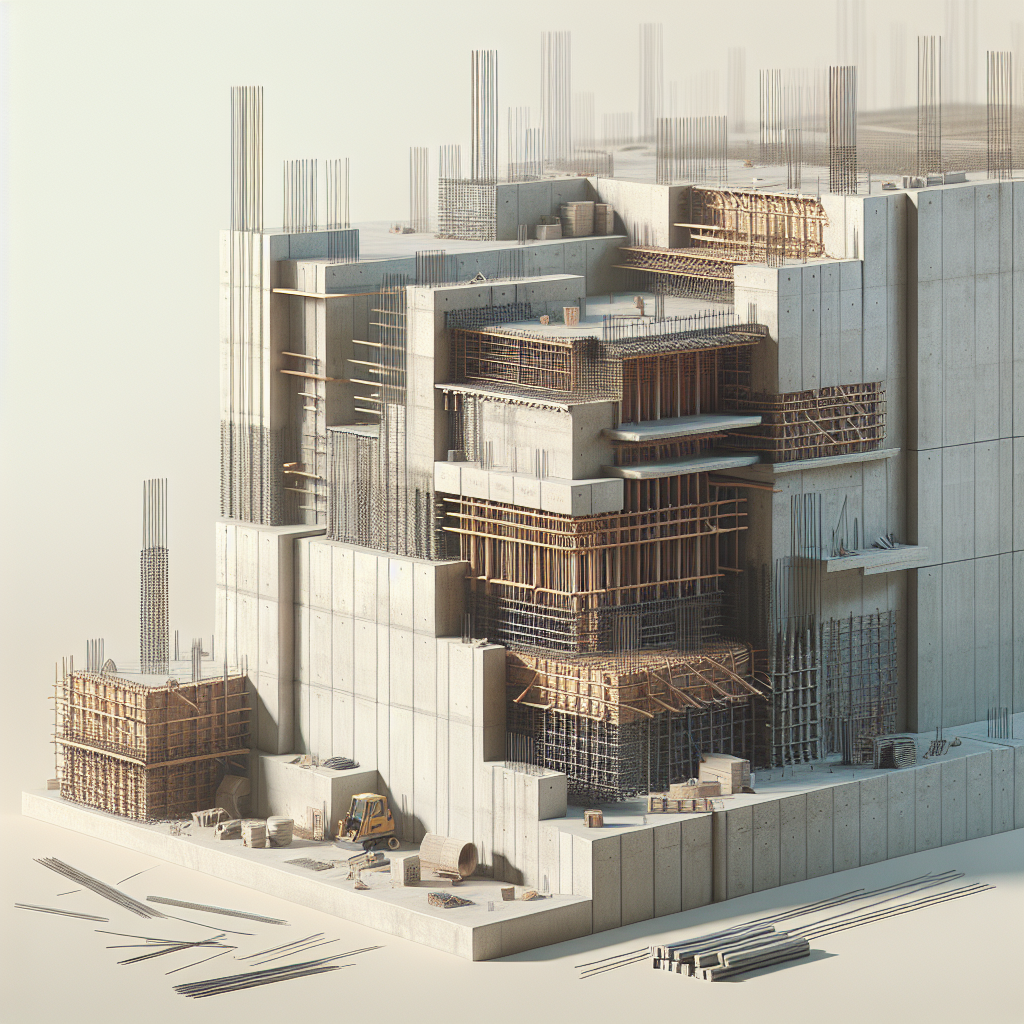
Concrete walls are a core element in modern construction. They act as structural supports, retaining elements and protective barriers that last decades when built well.
This article explains common types, material choices, key construction steps and upkeep essentials so you can understand how concrete walls perform and what affects their lifespan.
Common types and where they work
Concrete walls vary by purpose and how they are made. Choosing the right type depends on load needs, site conditions and finishing expectations.
Below are the main types you will encounter on building sites and in infrastructure work.
Cast-in-place reinforced walls
These walls are formed on site with plywood or metal formwork and filled with concrete. Steel reinforcement bars give them strength against bending and shear.
They suit foundations, building cores and basement walls where continuity and monolithic behavior matter.
Precast concrete walls
Precast panels are manufactured in a factory and lifted into position. Quality control is higher and on-site time is shorter.
They work well for facades, sound barriers and repeatable elements on commercial projects.
Retaining walls
Retaining walls resist soil pressure and need careful drainage design. They can be gravity types, cantilevered reinforced designs or mechanically stabilized earth systems.
Proper footing depth and backfill compaction are critical for long-term stability.
Masonry or composite concrete walls
Concrete is often combined with masonry blocks or insulation layers. Composite assemblies can improve thermal performance and reduce cost.
Attention to joint sealing and moisture control prevents damage where dissimilar materials meet.
Materials, mix and reinforcement choices
Material selection sets the baseline for strength, durability and workability. Concrete is a mix of cement, aggregates, water and sometimes admixtures.
Steel reinforcement and protective additives improve load capacity and resistance to environmental damage.
Concrete mix basics
Concrete strength is defined by its compressive rating, typically 20 to 40 MPa in many building walls. Specify strength based on structural calculations and exposure class.
- Aggregate grading affects finish and pumpability.
- Water-cement ratio controls strength and shrinkage; lower ratios improve durability.
- Admixtures such as plasticizers enhance flow without adding water.
Steel reinforcement layout
Rebar placement must follow design drawings to resist bending, shear and axial loads. Cover thickness protects steel from corrosion.
- Use ties and chairs to hold bars in position before pouring.
- Lap lengths, anchorage and stirrups are detailed in structural documents.
- Corrosion-resistant options include epoxy-coated or stainless steel where exposure is severe.
Additives, waterproofing and insulation
Chemical admixtures, water repellents and integral waterproofing reduce permeability. Choose systems that match expected service conditions.
Insulation and thermal breaks keep interior surfaces comfortable and prevent thermal bridging in exterior walls.
Construction, performance and upkeep
Practical construction steps and attention to detail determine how well a wall performs. Small errors in formwork, compaction or curing can cut life expectancy.
Inspection and simple upkeep extend service life and keep repair costs low.
Planning and site setup
Begin with accurate layout, stable footing conditions and clear drainage paths. Remove organic material and compact soil under footings.
- Verify reinforcement and embedded items before pouring.
- Plan access for concrete delivery and vibration equipment.
Formwork and pouring
Formwork must be rigid, leak-proof and aligned. Use bracing to prevent movement under concrete pressure.
During pouring, consolidate concrete with internal or external vibration to remove voids and ensure contact with reinforcement.
Compaction and finishing
Proper compaction prevents honeycombing and improves strength. For exposed finishes, timing of strike-off and troweling affects texture.
- Wood forms give a warmer texture; steel forms give smooth finishes.
- Control joints should be planned to manage shrinkage cracking.
Curing and early protection
Curing maintains moisture and temperature for the first days after placement. Methods include wet burlap, curing compounds or continuous water spray.
Protect fresh concrete from rapid drying, freezing, or heavy load until adequate strength develops.
Joints, movement and detailing
Provide expansion and contraction joints where thermal and moisture changes will create movement. Sealants and backer rods keep joints watertight.
Transitions at windows, doors and penetrations need flashing and compressible seals to maintain continuity.
Drainage and backfill
Retaining walls and below-grade walls require drainage systems to avoid hydrostatic pressure. Use gravel drains, weep holes or drainage membranes as appropriate.
Backfill in layers and compact evenly to reduce settlement and lateral loads on the wall.
Inspection points and quality checks
Key checks include rebar placement, concrete slump and mix verification, form alignment and curing coverage.
Documenting test results like compressive strength tests helps track performance over time.
Conclusion
Understanding types, materials and the construction sequence helps achieve durable concrete walls that perform as intended. Good planning and attention to detail reduce common problems.
Simple maintenance and timely repairs extend service life and preserve structural safety and appearance.
Frequently Asked Questions
What thickness should a typical load-bearing concrete wall have?
Thickness varies by design loads and height. Many low-rise load-bearing walls start at 150 to 200 mm, but structural calculations often require thicker sections with reinforcement.
How long should concrete cure before heavy loading?
Concrete gains most of its early strength in the first few days. A common rule is to avoid heavy loading for at least 7 days, and wait 28 days for near-design compressive strength, unless tests show otherwise.
How are waterproof basements built with concrete walls?
Waterproofing uses good mix design, proper cover, external membranes or coatings, drainage layers and careful joint detailing. Combined measures reduce the chance of leaks.
When is precast better than cast-in-place?
Precast suits repetitive elements, tight schedules and controlled factory conditions. Cast-in-place is preferred for monolithic parts and complex shapes that need on-site adaptation.
What are common signs of concrete wall damage?
Look for cracking patterns, spalling, rust stains, bulging or persistent damp patches. Each sign points to different causes like shrinkage, corrosion, movement or water ingress.
How can corrosion of reinforcement be limited?
Use adequate concrete cover, low-permeability mixes, corrosion-resistant bars in aggressive environments and maintain good drainage to limit chloride and moisture exposure.
Are thermal breaks necessary in concrete walls?
Yes, in exterior walls thermal breaks or insulation layers reduce energy loss and limit condensation. Details at junctions must prevent thermal bridging.
What maintenance keeps concrete walls in good condition?
Regular inspections, cleaning drainage paths, resealing joints, repairing small cracks and maintaining protective coatings or membranes are effective upkeep actions.