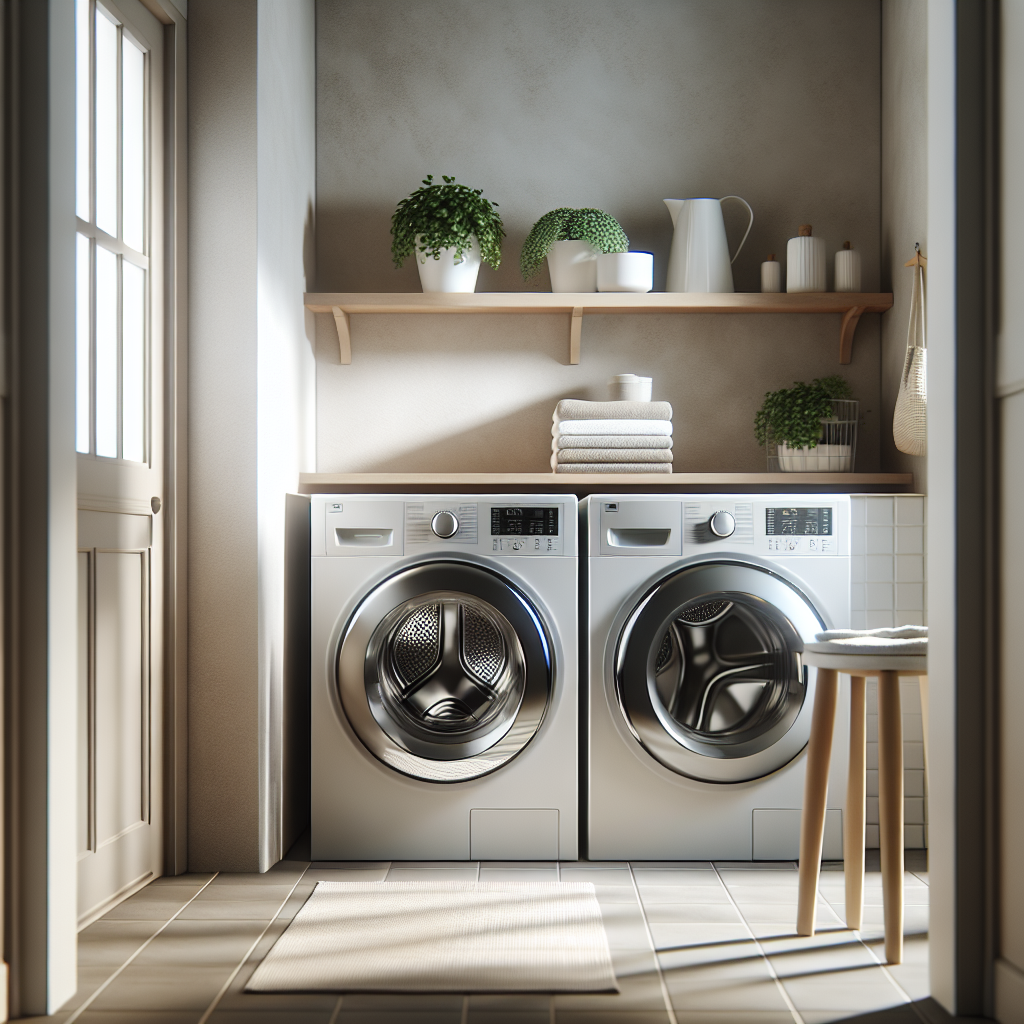
Choosing the right appliance sizes saves time, money, and frustration when fitting machines into tight spaces. This article breaks down common washer and dryer measurements and practical spacing needs to help you plan with confidence.
Read on for clear size ranges, mounting and clearance tips, stacked and compact model notes, and layout ideas for closets, alcoves, and utility rooms.
Typical front-load and top-load sizes
Washers and dryers come in several standard widths, heights, and depths. Knowing the usual ranges helps set expectations when shopping or measuring an installation area.
Below are typical dimensions for common styles and capacity levels. These are averages; always check specific model specs before final decisions.
Front-load washers
Most full-size front-load washers are about 27 inches wide. Heights usually sit between 36 and 40 inches, depending on control placement and whether a pedestal is used.
Depth ranges are often 28 to 34 inches including door and knobs. Allow extra depth for hoses and connections behind the machine.
Top-load washers
Traditional top-load models tend to be wider or similar in width at 27 inches, but some compact top-load units are 24 inches wide. Heights can be shorter or taller depending on lid style.
Depth for top-load washers typically sits around 26 to 30 inches, but allow clearance for opening the lid and accessing controls.
Standard dryer sizes
Full-size dryers commonly match washer width at 27 inches. Heights vary from 36 to 43 inches depending on front controls, stacked configuration, or pedestal use.
Dryers often have slightly larger depths to accommodate vents and tumblers, with common ranges from 28 to 34 inches. Electric and gas models can differ slightly in rear clearances and vent placement.
Depth, height and clearance considerations
Measurements on boxes rarely include the full clearance needed for hoses, vents, and door swing. Planning for these extras prevents installation headaches.
Consider the full usable footprint, not just the appliance shell size.
Door swing and ventilation
Front-load washers need space in front for the door to open fully. Most doors swing 180 degrees or close to it, so leave at least 20–30 inches of clear front space for loading and unloading.
Dryers require venting space at the rear. A straight vent run keeps the machine efficient; allow 4–6 inches behind the dryer for the vent and electrical outlet, and factor in extra if a 90-degree elbow is needed.
Plumbing and electrical clearances
Standard water hookups sit behind the washer and usually require a recessed box or accessible space. Allow 2–4 inches behind the washer for hoses and the water box, more if using a deep washer.
Dryers need proper electrical access: 240V outlet for electric models or gas line and 120V outlet for gas dryers. Keep cords and lines reachable without crimping them behind the unit.
Stacked, compact, and apartment models
Small living spaces often use stacked or compact models. These save floor area but need careful measurement of height, clearance, and ventilation paths.
Stacked units may require adapter kits and minimum clearances around the stack to meet safety and serviceability needs.
Stacked unit dimensions
Stacked combinations usually use 24- or 27-inch-wide machines. Combined height often ranges from 70 to 80 inches, depending on spacing between machines and stacking kit thickness.
Ensure you have at least 1 to 2 inches between the stacked units and any surrounding walls or cabinets to reduce vibration transfer and allow air circulation.
Compact and portable units
Compact stackable or all-in-one washer-dryers are typically 24 inches wide and 24–26 inches deep. Heights vary, but many fit under standard counters or inside cabinetry with minimal modification.
Portable washers can be shallower and lighter, but they often need nearby sinks for drainage. Check weight limits of countertops if planning to place a compact machine above cabinets.
Planning the laundry layout
A thoughtful layout reduces strain and makes laundry tasks faster. Start by measuring the exact space and locating utilities, then map appliance footprints plus clearances.
Consider workflow: placement of detergent, sorting bins, and folding surfaces affects daily ease of use.
Closet and alcove sizing
Closet-style laundry spaces require doors that clear machines. Bifold or sliding doors work well where front clearance is tight, but doors must not hit knobs or vents.
- A closet for side-by-side units should be at least 60 inches wide for two 27-inch appliances plus small clearances.
- An alcove depth should be about 36 inches to allow for appliance depth plus rear connections and minor breathing room.
- Stacked units fit in narrower closets, but allow for a tall opening and secure stacking hardware.
Utility room tips
If you have a larger utility or mudroom, create an efficient triangle: washer, dryer, and a flat folding surface. Keep detergents and supplies at arm’s reach.
Floor drains, nearby sinks, and overhead cabinets influence appliance placement. Keep heavy foot traffic paths clear of the laundry work area.
Shopping and installation checklist
Before buying or installing appliances, run through a short checklist to avoid surprises. Measuring more than once is a practical habit.
Include dimensions, access routes, and service clearances when planning delivery and placement.
Essential measurements to take
- Width, depth, and height of the installation space including baseboards and trim.
- Distance from the wall to the nearest obstruction and the door swing area.
- Location and height of electrical outlets, gas hookups, water inlets, and drains.
- Vertical clearance for stacked units and any overhead cabinets or shelving.
Installation best practices
Use a recessed hookup box where possible to save rear clearance. Install anti-vibration pads if the floor transmits noise to living spaces.
Level machines carefully. Improper leveling causes noise, wear, and poor spin performance. Double-check hoses and vents for kinks before running a cycle.
Conclusion
Knowing typical appliance dimensions and the extra clearance they need makes selecting and installing washers and dryers far easier.
Measure carefully, account for hookups and door swing, and match machines to your space and workflow to get a functional laundry area that lasts.
Frequently Asked Questions
Below are common questions about appliance sizing and placement, answered clearly so you can plan without second-guessing.
What is the average width of a full-size washer?
The typical width for a full-size washer is about 27 inches. Some models are 24 inches wide for compact spaces, but 27 inches is the most common size for front- and top-load machines.
How much space is needed behind the washer for hoses?
Plan on 2 to 4 inches behind a washer for hoses and the water hookup box. If you have a recessed box or thicker hoses, allow a bit more space to prevent pinching.
Can I stack any washer and dryer?
Not all models are stackable. Stackable appliances are designed with matching sizes and have compatible stacking kits. Always use a manufacturer-approved kit and check the combined height and weight limits.
How deep should a closet be for side-by-side machines?
An alcove depth of about 36 inches is comfortable for most side-by-side units. This gives room for standard appliance depth plus hose and vent clearance. Shallower spaces may work with recesses or compact machines.
Do gas and electric dryers need different clearances?
The main differences are in venting and gas line access. Gas dryers need a gas supply and 120V outlet; electric dryers need a 240V outlet. Both need space for ventilation and service access, typically 4–6 inches at the rear.
What should I check before delivery?
Confirm precise appliance dimensions, measure doorways and stairways on the delivery route, and ensure hookups are in the right place. Keep a few inches extra for maneuvering during installation.