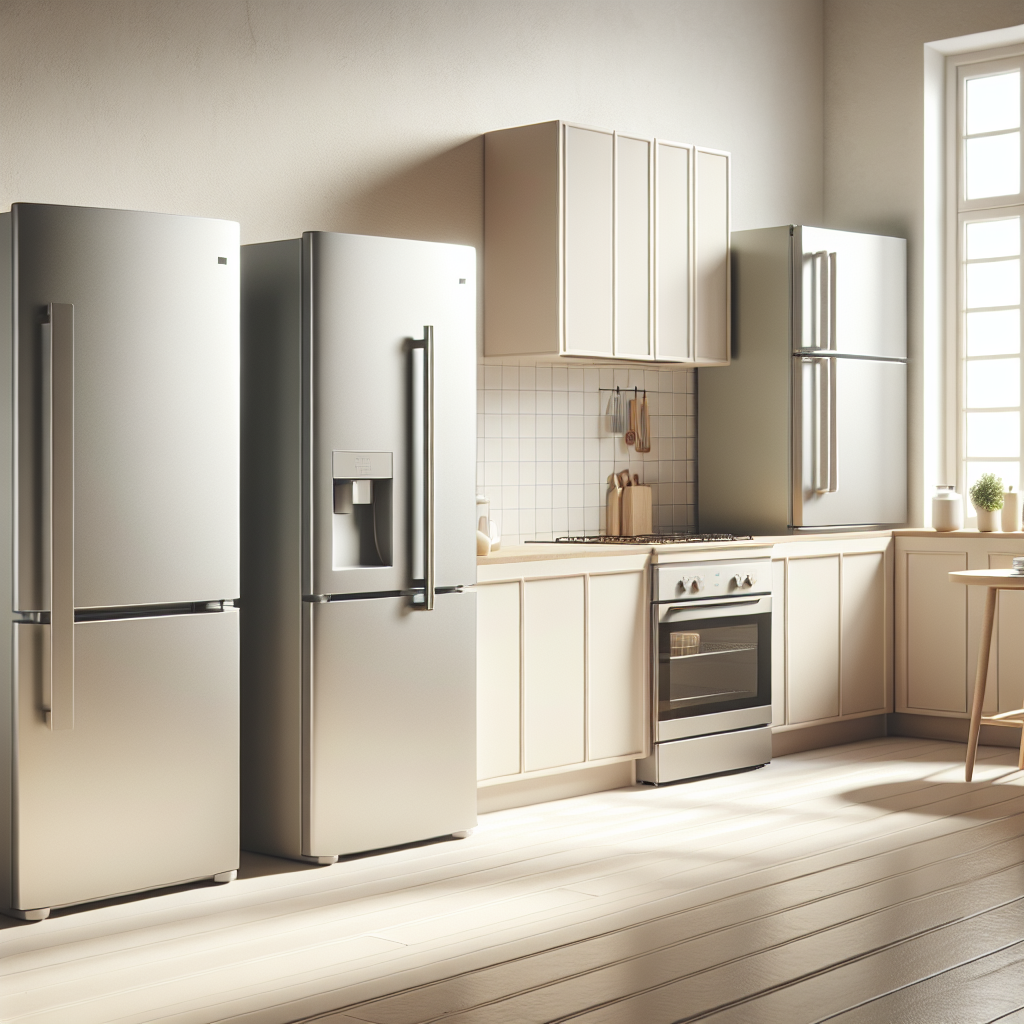
Picking the right refrigerator size affects how your kitchen looks and how well it works. Knowing typical measurements helps you plan cabinetry, door swings, and delivery access without surprises.
This article outlines common widths, heights, and depths across styles, plus clearance needs and practical tips to match a unit to your space and daily routines.
Typical sizes and measurements
Appliances come in predictable size ranges. Knowing those ranges lets you narrow choices quickly and compare models by usable capacity rather than just exterior numbers.
Below are common ranges for widths, heights, and depths that many manufacturers follow. Use these as a baseline when measuring your space.
Width ranges
Most residential refrigerators fall into a few width groups that affect storage and how they fit kitchen openings.
- Compact models: 18–24 inches wide, suited for small kitchens or secondary fridges.
- Standard single-door and top-freezer: 28–32 inches wide, common in many homes.
- Side-by-side and larger bottom-freezer units: 32–36 inches wide, providing generous storage and drawer space.
- Wide French-door and professional-style: 36–48 inches wide, often used in open-plan kitchens or as centerpiece appliances.
Height and depth variations
Height and depth determine fit with upper cabinets and worktops. Measure ceiling height and cabinet overhangs before choosing a taller unit.
- Heights: Compact units can be under 60 inches; most full-size fridges range from 65–72 inches.
- Depths: Counter-depth models typically sit around 24–30 inches deep, aligning with counters; full-depth units extend 30–36 inches and offer more internal volume.
Usable capacity vs external size
Exterior measurements don’t always reflect how much you can store. Internal shelving, door bins, and freezer layouts matter.
When comparing models, check the stated cubic feet of refrigeration and freezer compartments, not just footprint.
Common types and their footprints
Style affects where a refrigerator fits and how doors open. Each type has typical size patterns worth knowing before shopping.
Below are the most popular styles and what their measurements mean in practice.
Top-freezer models
These classic designs usually have the smallest footprints while offering straightforward storage. They’re a practical choice when space and budget are limited.
- Typical width: 28–32 inches.
- Typical height: 60–66 inches.
- Typical depth: 28–34 inches.
Bottom-freezer models
With the fridge section at eye level, these units make frequently used items easier to reach. Heights are often taller to accommodate the freezer drawer.
- Typical width: 30–36 inches.
- Typical height: 67–72 inches.
- Typical depth: 30–36 inches.
Side-by-side designs
Side-by-side units split fridge and freezer vertically. They usually have narrower doors, which can be helpful with limited swing clearance.
- Typical width: 32–36 inches.
- Typical height: 65–71 inches.
- Typical depth: 30–34 inches.
French-door refrigerators
These combine wide storage with flexible freezer configurations and are popular in modern kitchens. They often sit wide but can be counter-depth to blend with cabinets.
- Typical width: 30–36 inches (some premium models up to 42 inches).
- Typical height: 68–72 inches.
- Typical depth: 24–36 inches depending on counter-depth or full-depth design.
Installation clearances and planning
Proper clearances ensure airflow, door operation, and easy maintenance. Measure both the intended location and path from entry to final position.
Consider ventilation requirements, door swing, and any nearby obstacles like islands or walls.
Side and back clearance
Manufacturers generally recommend a few inches of space around the sides and back for ventilation and to prevent over-tight fits.
- Back clearance: Usually 1–2 inches to allow airflow and room for cords and hoses.
- Side clearance: Often 1/8–1 inch on each side, though built-in installations may need more precise gaps.
Top clearance and ceiling height
Top clearance keeps vents unobstructed and provides room to lift the unit during installation. Check cabinet depth above the fridge if it will sit under overheads.
- Minimum top gap: Typically 1 inch, but follow the model’s instructions.
- Tall ceilings: If a unit is taller than existing cabinets, allow extra room for leveling feet and lifting.
Door swing and pathway
Door swing clearance impacts adjacent cabinets, counters, and traffic flow. Some units allow reversible doors, which can help placement.
- Measure the full arc of the door to ensure it clears counters and handles.
- Check delivery path dimensions: hallways, stair turns, and elevator sizes may limit options.
Space-saving options and customization
When kitchen space is tight, several approaches reduce the appliance’s footprint without sacrificing function. Consider the layout and daily habits before altering space.
Options range from scaled-down models to built-in installations that match cabinet lines.
Counter-depth choices
Counter-depth units align closely with counters for a streamlined look. They trade some internal volume for a shallower profile.
- Benefits: Sleeker appearance and easier traffic flow in narrow kitchens.
- Trade-offs: Less storage space compared with full-depth models of the same width.
Narrow and compact units
Smaller widths and under-counter fridges work well as secondary units or in studio apartments. They can be tucked under counters or inside pantry spaces.
- Widths from 18–24 inches fit tight spots.
- Energy-efficient compact models can handle most essentials when space is limited.
Built-in and panel-ready options
Built-in units slide into cabinetry for a seamless look but often require precise measurements and more installation space.
- Panel-ready fridges match surrounding cabinets for a cohesive aesthetic.
- Allow for ventilation channels and service access when planning built-in installations.
Conclusion
Knowing common widths, heights, and depths makes choosing a refrigerator simpler and prevents costly mistakes. Measure the space, consider traffic and door swings, and compare usable capacity across models.
Whether you choose a compact unit, a wide French-door model, or a counter-depth option, clear measurements and proper clearance planning lead to a better fit and longer appliance life.
Frequently Asked Questions
Below are common questions homeowners ask when sizing and placing a refrigerator. Short answers help clarify measurement and installation basics.
How much clearance do I need behind a refrigerator?
Most models need at least 1–2 inches at the back for airflow and connection space. Built-in units may require different clearances; always check the manufacturer’s recommendation.
Can a refrigerator fit through a standard doorway?
Measure the fridge’s height and width and compare with the doorway’s clear opening. Remove doors or handles if needed. Also measure hallways and turns along the delivery route.
What is counter-depth and should I choose it?
Counter-depth units sit nearly flush with countertops for a cleaner look. Choose this if you want a built-in appearance and can accept slightly less internal storage than full-depth models.
Are there standard sizes for replacement fridges?
Yes. Many replacements follow common widths and heights, making swaps simpler. Still, check the current space, vents, and any custom cabinetry to ensure a smooth fit.
How do I measure for an integrated or panel-ready refrigerator?
Measure the cabinet opening precisely, including height to ceiling, width between cabinets, and depth to the cabinet face. Account for ventilation requirements and service access when planning the installation.