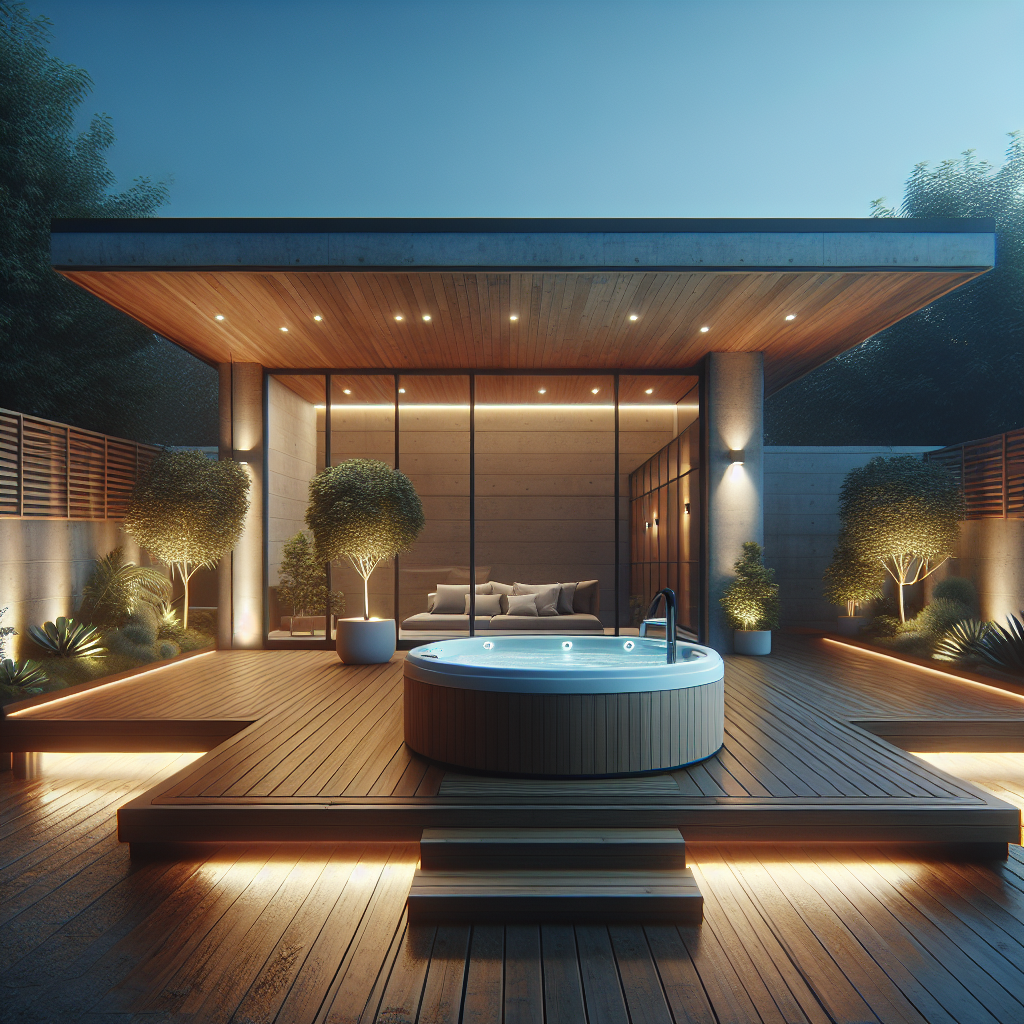
Choosing a hot tub means matching the unit to your space and lifestyle. Knowing typical dimensions helps you pick a model that fits a patio, deck, or indoor nook without surprises.
This article breaks down common sizes, seating layouts, clearance needs, and delivery considerations so you can plan placement with confidence and avoid costly adjustments.
Common hot tub sizes and shapes
Hot tubs come in predictable sizes and a few popular shapes. Manufacturers often use the same footprints so buyers can compare models by seat count and features rather than awkward measurements.
Understanding the most common footprints will make it easier to picture how a unit fits in a yard or on a deck and how many people it will seat comfortably.
Small models (2–3 people)
Small spas typically measure about 5 to 6 feet in diameter or length. Circular or compact square shapes are common. These units are ideal where space is tight and you want a lower fill volume and reduced energy use.
Expect internal floor space that lets two adults sit comfortably, with jets aimed for hydrotherapy rather than social seating.
Medium models (4–6 people)
Medium hot tubs usually run 6 to 7 feet in width or diameter and can be rectangular, square, or round. These are the most popular sizes because they balance seating with overall footprint.
They often include a mix of lounger and upright seats, giving more options for different users and making them versatile for families.
Large models (7+ people)
Large models are commonly 7 to 9 feet long in one direction and may be slightly narrower. They are often rectangular or square to maximize seating arrangements and internal bench space.
These units are designed for groups and can include multiple lounge seats and varied jet placements to serve several bathers simultaneously.
Seating capacity and space per bather
Seat count matters more than outer dimensions when planning use. Two tubs with the same footprint can feel very different depending on seat layout and jet arrangement.
Knowing how much room each person needs helps you estimate comfort and movement inside the spa.
How much space does each person need?
A comfortable seat usually takes about 18 to 24 inches of linear bench space. Lounger seats use more length but free up bench seating elsewhere.
If a tub lists seating for six, that often means a combination of narrow seats and one or two loungers. Expect some trade-offs between individual comfort and total capacity.
Lounger vs upright seats
Lounger seats let a user recline and typically require 60 to 80 inches of interior length. They use vertical and horizontal space differently, so a tub with a lounger may reduce the number of upright seats in the same footprint.
Choosing a lounger is about preference: therapy and relaxation vs. maximum seating. Think about who will use the tub most often and how.
Clearance, deck openings, and placement
Placement planning usually trips people up more than picking a size. Clearance around the unit affects maintenance, cover removal, and safe use.
Account for service access, circulation space, and whether the hot tub will be partially recessed into decking or fully freestanding.
Minimum clearance recommendations
Leave at least 24 inches of walkable space on one side for routine maintenance and cover handling. Some models need more room for equipment panels that must be removed during servicing.
If the tub sits against a wall, ensure the cover can be folded or removed without obstruction and that equipment doors are reachable.
Deck and footing considerations
Hot tubs are heavy: a filled tub with occupants can weigh several thousand pounds. Make sure the support structure can carry the load, and verify the deck or pad is level.
Concrete pads are common, but reinforced decking is often acceptable when built to proper load specifications. Check local codes and product weight specs before installation.
Measuring for delivery and access
Delivery and placement logistics often create last-minute headaches. Measure doors, gates, stairways, and hallways before committing to a model.
Delivery teams need a clear route from the street to the installation spot. Narrow passages or tight corners may require special lifts or modular delivery options.
Doorways and passage widths
Measure the widest and tallest point of the hot tub and compare it to the narrowest opening on the route. Remember to account for turning radius in confined spaces.
Even if a tub looks slightly larger than a doorway, skilled movers can sometimes angle it through, but do not rely on that without confirmation.
Stair and slope challenges
Stairs add complexity. A single step can change the angle needed to move a spa through an opening. If stairs are unavoidable, discuss options with the retailer or delivery crew early.
Some installations use cranes to lower a spa into place. That option costs more but removes the risk of damage to the unit or property.
Choosing the right size for your needs
Decide what matters most: therapy jets, social seating, energy efficiency, or footprint. Smaller tubs cost less to operate and heat, while larger tubs offer more social space and flexible seating.
Think about who will use the spa most often and how you want to use it — quiet therapy sessions, family time, or entertaining guests will suggest different sizes.
Energy and maintenance trade-offs
Larger volumes mean more water to heat and maintain. If usage is occasional, a smaller, well-insulated tub may be more cost-effective over time.
Also consider cover quality and insulation ratings when comparing operational costs across sizes and models.
Budget considerations
Beyond purchase price, include delivery, electrical work, decking or pad preparation, and potential crane rental. Those extras can push a small upfront savings into a larger total cost.
Factor ongoing costs like chemicals, filters, and energy when sizing the purchase to long-term affordability.
Conclusion
Matching hot tub dimensions to your space and needs prevents surprises and keeps installation smooth. Focus on seat layout and clearance as much as external measurements.
Measure access routes, check support structures, and weigh the trade-offs between capacity and operating cost. Thoughtful planning saves time and money.
Frequently Asked Questions
Here are common questions people ask when deciding on a hot tub size and placement. Short answers highlight practical considerations.
What is the average size of a family hot tub?
Many family models fall in the medium range, about 6 to 7 feet across or long, seating four to six people comfortably. These sizes balance social space with manageable operating costs.
How much clearance is needed around a hot tub?
At minimum, allow two feet of walkable space where possible. Some areas require more room for equipment access or cover removal. Always check the manufacturer’s service access requirements.
Can a hot tub fit through a standard door?
That depends on the tub’s widest point and the door dimensions. Many small spas can pass through a standard doorway, but larger models may need special handling or temporary door removal.
Is a concrete pad required for all hot tubs?
Concrete is a common solution but not the only one. Reinforced decking or other engineered supports can be acceptable if rated for the tub’s full weight when filled and occupied.
How do lounger seats affect overall capacity?
Loungers take up extra length and can reduce the number of upright seats. They offer more therapy and comfort but may lower total seating capacity in the same footprint.