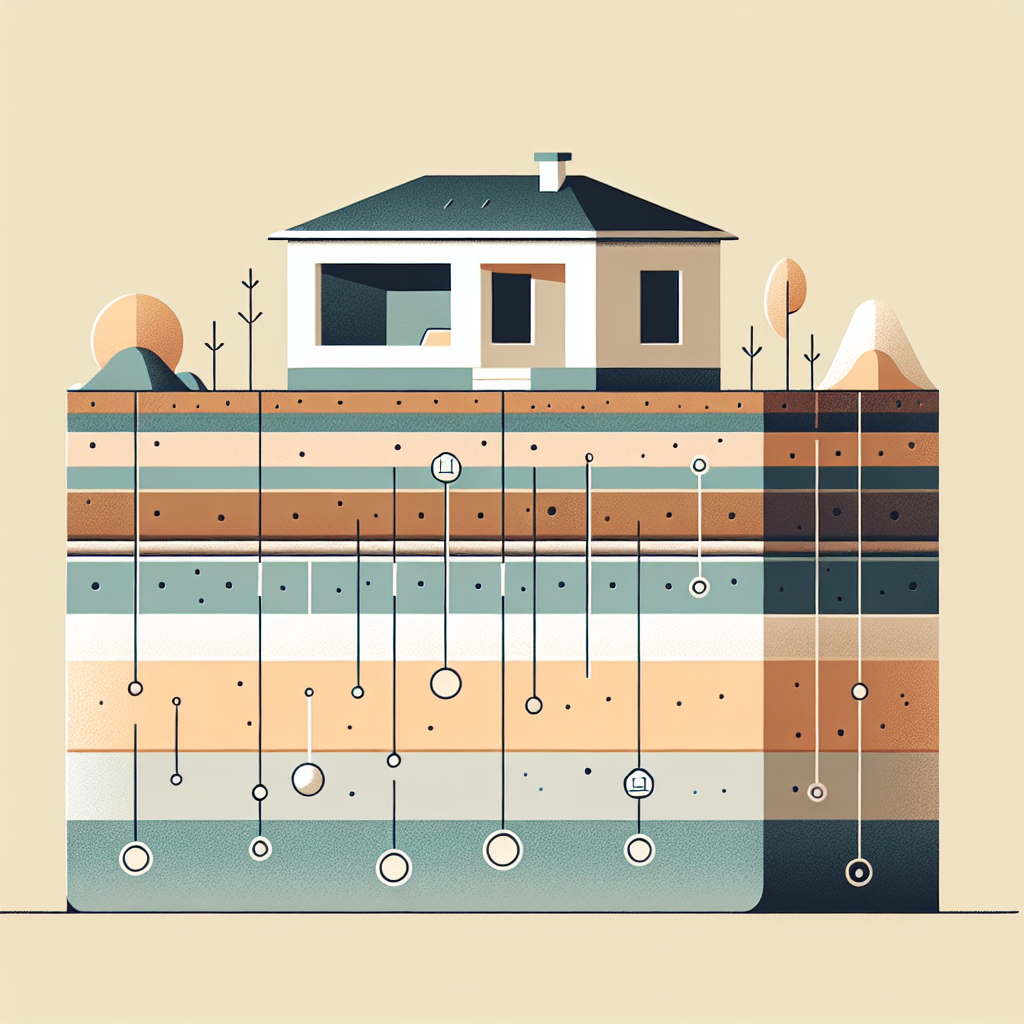
Choosing the right base for a home starts long before concrete is poured. The soil, water table, load from the structure and local weather all shape which foundation system will be safe, durable, and cost-effective.
This article breaks down common foundation choices used across Indian towns and cities, explains key site checks, and highlights cost and construction factors to help decide what suits a specific plot.
How soil and site conditions shape the decision
Soil type and site features are the major determinants of foundation selection. A compact sandy layer behaves very differently from expansive clay or weak organic deposits.
Water table level, slope, nearby trees and past land use also affect performance. A shallow foundation on poor soil risks uneven settlement, while an over-deep solution can increase cost unnecessarily.
Common soil types and implications
Clay: Expands and shrinks with moisture. Requires designs that reduce uneven movement.
Sandy soils: Good bearing but can shift under vibration and erosion; drainage matters.
Silty soils: Prone to compression; may need stabilization or deeper support.
Importance of on-site soil testing
A standard test includes boreholes and sometimes plate load or SPT (standard penetration test). These reveal bearing capacity and layering.
Reliable tests reduce surprises during construction and allow a foundation sized to the actual site, saving money and preventing future repairs.
Shallow foundation options and typical uses
Shallow foundations transfer building loads to soil near the surface. They suit low to medium-rise construction where bearing capacity is adequate.
These systems are usually faster and cheaper to build, but they demand careful site preparation and drainage control.
Strip footing
Continuous concrete strips under load-bearing walls. Ideal for small houses on soils with moderate bearing capacity.
Strip footings are simple to construct and allow straightforward load paths, but require attention to uniform soil conditions to avoid differential settlement.
Isolated or pad footings
Used under individual columns or piers, these are square or rectangular pads sized to spread column loads to the soil.
They’re efficient where column spacing is regular and soil capacity is consistent across the site.
Raft or mat foundation
A large concrete slab supporting the whole building footprint. Good for soft or uneven soils where loads must be spread broadly.
Rafts reduce differential settlement risks and are often used for basements or ground floors with heavy loads.
Deep foundation options and when they make sense
Deep systems transfer loads to stronger soil or rock layers well below the ground surface. These are chosen when shallow soils are weak, compressible, or when groundwater is high.
Deep foundations add cost but provide stability where shallow methods would fail or need excessive size.
Pile foundations
Piles are long elements driven or cast into the ground to carry loads to deeper strata. They work in loose sands, soft clays, or where nearby structures demand minimal settlement.
Types include driven precast piles, driven steel piles, and cast-in-place bored piles. Choice depends on noise limits, vibration concerns, and available machinery.
Bored piles and drilled shafts
Bored piles are made by drilling a hole, placing reinforcement and pouring concrete. They suit urban sites with limited vibration tolerance and larger load needs.
These piles allow precise placement and can be used in layered soils with varying conditions.
Well foundations
Used mainly for bridge piers or structures near water, well foundations are large-diameter shafts sunk into the ground. They are not common for typical houses but are relevant near riverbanks or in coastal plots.
Cost factors, construction steps, and common pitfalls
Budgeting a foundation requires more than material unit rates. Access, machinery, soil treatment, dewatering and skilled labour add to the final price.
Understanding typical steps helps anticipate time and cost: site clearance, excavation, subgrade compaction, formwork, reinforcement, concreting and curing.
Key cost drivers
- Excavation depth and disposal of spoil.
- Need for dewatering or soil stabilization methods.
- Type of reinforcement and concrete grade.
- Machinery hire for piling or drilling operations.
- Access constraints and labour availability in the locality.
Common construction mistakes
Ignoring proper compaction of the subgrade is a frequent cause of uneven settlement. Even well-designed foundations fail if the base is not prepared correctly.
Poor drainage planning around foundations lets water collect, saturating soils and accelerating movement or decay of materials.
Practical checks during construction
- Verify excavation depth and bottom level with independent surveys.
- Confirm reinforcement sizes and spacing match structural drawings.
- Ensure concrete mix and curing times are followed; avoid under-strength concrete.
- Keep records of any changed conditions and consult technical reports before altering the design.
Choosing what fits your region and budget
Different parts of India have recurring patterns: coastal areas often face high water tables and corrosive soils, while inland plains may have deep alluvial layers. Hilly regions add complexity with slopes and rock outcrops.
Matching a solution to local conditions and expected loads is the most economical approach over the life of a house.
Coastal and flood-prone plots
These sites typically need deeper foundations or rafts with careful use of concrete mixes and corrosion-resistant reinforcement details.
Elevating the floor slab and planning landscape to direct water away reduce long-term risk.
Alluvial plains and weak fills
Where soft deposits exist, rafts or piled solutions are common. Preloading or soil improvement methods such as vibro-compaction can be cost-effective alternatives in some locations.
Rocky and sloping land
Shallow footings on competent rock can be economical. On slopes, stepped foundations or retaining systems that control lateral loads are critical.
Conclusion
There is no single best foundation that fits every plot. The right choice balances soil behavior, building loads, available budget, and local construction conditions.
Start with reliable site investigation, then compare shallow and deep options against long-term performance rather than just initial cost. Thoughtful planning reduces repair risks and delivers better value.
Frequently Asked Questions
Below are concise answers to common concerns when choosing a foundation on residential sites.
How important is a soil test before choosing the foundation?
Essential. A soil test reveals bearing capacity, layering and groundwater level. Without it, designers must assume conservative solutions that can be costly or unsafe.
When is a raft preferable to strip foundations?
Use a raft when soil is weak or variable across the plot, or when loads are heavy and need spreading. Rafts reduce differential settlement risks compared to isolated footings.
Are pile foundations always more expensive?
Upfront costs are higher due to equipment and materials. But when shallow soils are inadequate, piles can be more economical than excessively large shallow footings and avoid long-term repair costs.
Can drainage problems cause foundation failure?
Yes. Poor drainage leads to saturated soils that lose strength and cause movement. Designing roof runoff, site grading and sub-surface drains is part of a sound foundation strategy.
How does nearby vegetation affect foundation choice?
Large trees can change moisture in clay soils, causing shrink-swell cycles. In such cases, deeper foundations or root barriers are considered to limit movement.
What should homeowners expect in terms of maintenance?
Foundations need minimal routine upkeep, but monitoring for cracks, persistent dampness, or drainage issues allows early action. Repairs are easier and cheaper when caught early.