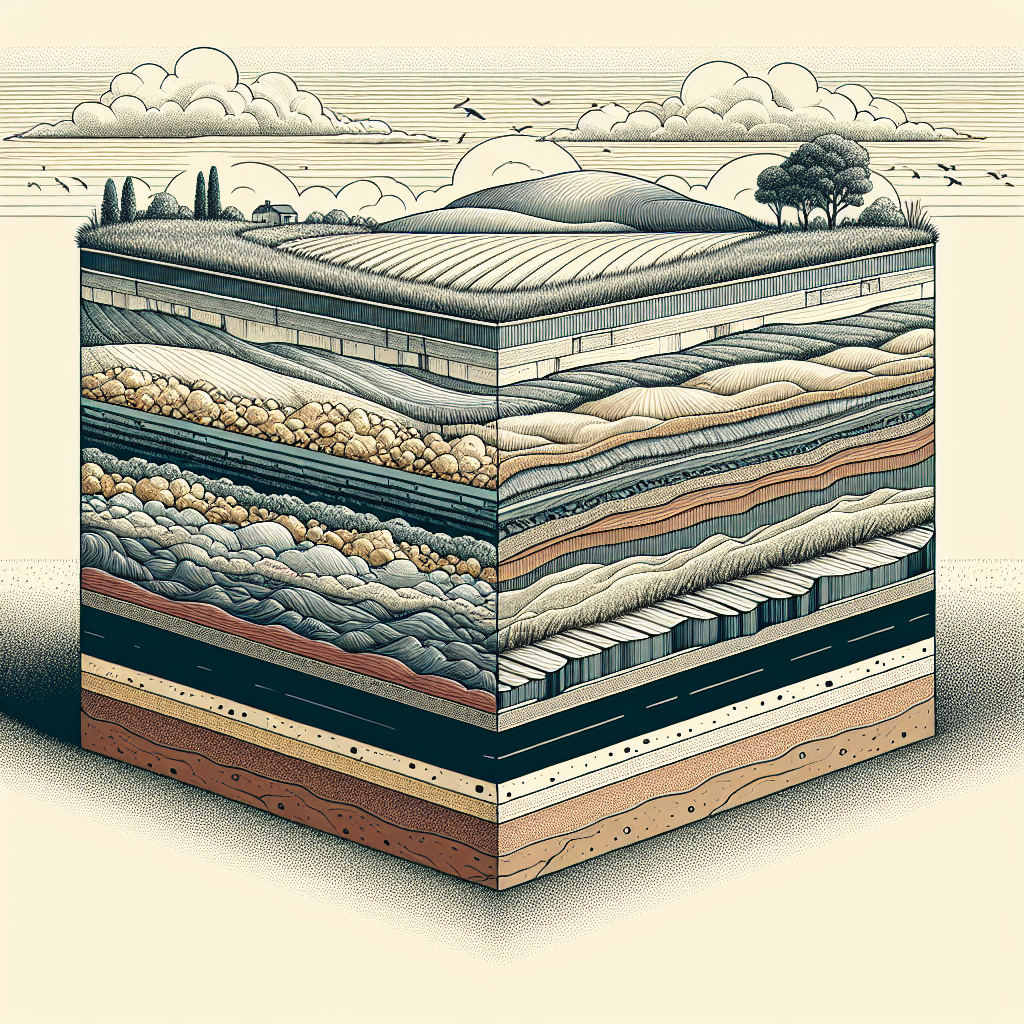
Every building starts at ground level. The strength and stability of that ground decide how long a structure will stand and how safe it will be.
This article explains what soil bearing capacity means, what changes it, and practical approaches to get reliable support under a foundation.
What soil bearing capacity actually means
Soil bearing capacity is a measure of how much load soil can carry without failing. It is not a single number that applies everywhere; it varies with soil type, depth, water, and how the soil is placed.
Understanding this concept helps predict settlement, reduce risk, and choose the right kind of foundation for a site.
Factors that influence bearing strength
Several physical and environmental factors change the way soil behaves under load. Some are natural and others depend on site use.
Recognizing these factors early can guide decisions about foundation type and ground improvement.
Soil type and grain size
Coarse soils like sand and gravel generally carry more load than fine soils such as silt and clay. Particle shape and distribution control how tightly the soil packs and how forces transfer.
Well-graded mixtures with a range of sizes tend to be stronger than uniformly graded ones because smaller particles fill gaps between larger grains.
Moisture content and groundwater
Water weakens many soils by reducing friction between particles and generating pore pressure. High water content can turn a firm layer into a soft one.
Groundwater near the foundation level often lowers bearing capacity and increases settlement risk until water is controlled or removed.
Density and compaction
Dense, well-compacted soil transmits loads better than loose soil. Compaction reduces voids, increases friction, and lowers settlement under load.
Construction practices that compact fill in thin lifts yield higher bearing values than uncontrolled fills left loose.
Depth and stratification
Soil properties often change with depth. A strong layer over a weak layer can mask potential problems because loads may pass through to the weak stratum and cause deep settlement.
Knowing the sequence of layers and the depth of competent soil is vital when sizing footings or deciding on deep foundations.
Organic material and soil age
Organic-rich soils and recent fills can compress a lot under load. They break down over time, leading to long-term settlement that is hard to predict.
Old, well-aged deposits tend to behave more predictably than newly placed or highly organic layers.
How bearing capacity is estimated in practice
Estimating capacity mixes observation, simple tests, and calculations. The choice depends on project risk, budget, and site variability.
Below are common methods used by site teams and soil technicians to get a reliable picture.
Field tests that reveal in-situ strength
Standard Penetration Test (SPT) and Cone Penetration Test (CPT) are among the most used. They give direct insight into relative stiffness and strength with depth.
Plate load tests are useful for surface verification. They apply load to a test plate and measure settlement, showing how a planned footing might behave.
Laboratory tests on collected samples
Samples taken from boreholes can be tested for grain size, Atterberg limits, density, and shear strength. These results feed into calculations that estimate capacity and settlement.
Triaxial and direct shear tests reveal the soil’s internal friction and cohesion—key inputs for many design models.
Analytical methods and empirical charts
Engineers use formulas like Terzaghi’s bearing capacity equation and Meyerhof’s adjustments to predict capacity. These link soil properties, footing size, and depth to expected performance.
Empirical charts and local experience are valuable when similar sites exist nearby; they often speed decisions when time is limited.
Design choices tied to soil support
Once you know how much load the ground can carry, you can match foundation type and size to that value. Choices affect cost, construction time, and long-term performance.
Here are common approaches used when soils vary in strength or when loads are heavy.
Shallow foundations and footing sizing
Shallow foundations like strip footings or isolated pads spread load near the surface. They work when a competent layer is close to the ground surface.
Footing area increases when bearing capacity is low. Designers often trade off footing size with depth or use reinforced concrete to control settlement and cracking.
When deeper support is required
Deep foundations such as piles or drilled shafts transfer loads past weak upper layers into stronger strata. They are used when foundations would otherwise be too large or settlement risk is high.
Pile capacity depends on shaft friction and end bearing. Detailed subsoil information is necessary to choose pile type and length.
Ground improvement methods
When native soil is weak but deep foundations are costly, improving the ground often makes sense. Techniques include compaction, stone columns, and grouting.
Soil replacement—removing poor material and replacing it with well-compacted fill—works in many low-rise projects where access allows excavation.
Common problems and how they show up
Even with care, issues can occur. Spotting typical signs early saves time and money during repair.
Understanding common failure modes helps in planning monitoring and preventive measures.
Excessive settlement and differential movement
Settlement becomes a problem when it is large or uneven. Doors and windows may stick, floors slope, or cracks appear in walls.
Differential settlement between parts of a building causes the most structural distress and is often the worst outcome to avoid.
Heave and swelling soils
Expansive clays can rise when they wet, lifting foundations and damaging finishes. Seasonal cycles often repeat the movement unless drainage and design account for it.
Controls include deeper footings, moisture barriers, and landscaping that reduces water infiltration near foundations.
Liquefaction during seismic events
Saturated loose sands can lose strength under shaking, behaving like a liquid. This leads to loss of support and sudden large settlements.
In seismic regions, testing for liquefaction potential and applying mitigation is a key part of safe design.
Practical steps to get reliable results on a site
Work in stages: investigate, test, analyze, and then design. Each step reduces uncertainty and limits surprises during construction.
Good communication between site teams and designers ensures field findings are translated correctly into foundation decisions.
- Begin with a desk study that covers historical use and local geology.
- Collect boreholes to a depth sufficient to find competent layers or confirm the need for deep support.
- Use a mix of field and lab tests rather than relying on a single method.
- Plan monitoring during construction to confirm behavior matches predictions.
Conclusion
Soil support is a fundamental factor in building performance. It affects cost, safety, and lifespan.
A clear understanding of soil behavior, combined with suitable testing and sensible design choices, leads to foundations that perform well over time.
Frequently Asked Questions
What does bearing capacity mean in simple terms?
It is the ability of soil to carry loads without undergoing harmful settlement or collapse. Think of it as the ground’s strength under a foundation.
How does water affect soil strength?
Water reduces friction between particles and can increase pore pressure, both of which lower the soil’s ability to support loads. Controlling groundwater improves capacity.
Can weak soil be made suitable without deep foundations?
Yes. Methods like compaction, stone columns, and grout injection improve strength. The best option depends on site conditions and project needs.
Is a larger footing always the answer to low capacity?
Increasing footing area reduces bearing pressure, but it may lead to excessive settlement if weak layers are deep. Sometimes deeper foundations or ground improvement are more effective.
When should more testing be carried out?
If initial tests show variable conditions, unexpected water, or organic layers, additional investigation is wise. More data reduces uncertainty and helps avoid costly changes later.