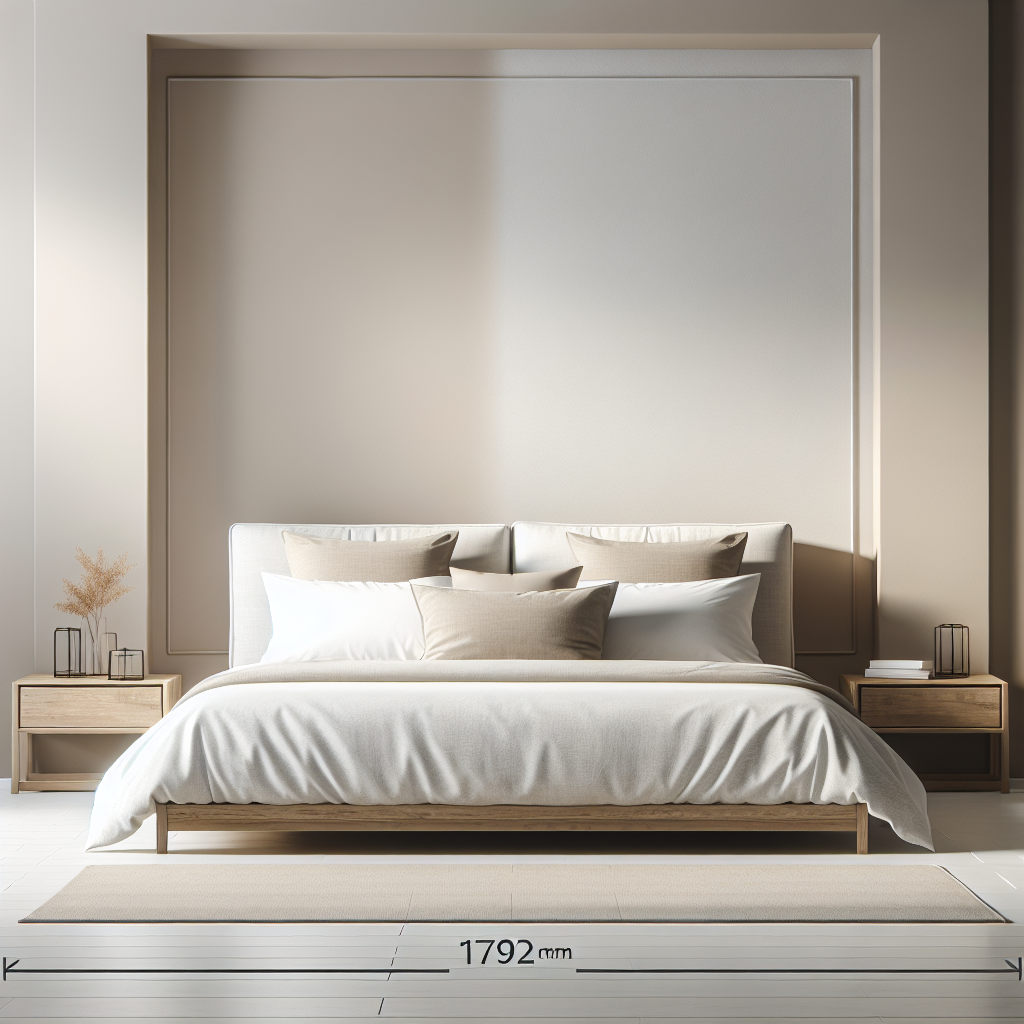
Picking the right mattress size reduces awkward nights and wasted space. Knowing exact measurements helps with frames, sheets, and the layout of a bedroom.
This article breaks down common mattress sizes, thickness ranges, and practical tips to match bedding and room space. Each section keeps things simple and useful.
Common mattress sizes and exact measurements
Mattresses come in several widely used sizes. Exact inches vary by region, but the most common sizes below are what you’ll see in many stores and online listings.
Twin
Twin mattresses measure about 38 inches wide by 75 inches long. They are a good fit for smaller rooms, kids, or single sleepers who don’t need extra legroom.
- Width: 38 inches
- Length: 75 inches
- Best use: small bedrooms, daybeds, bunk beds
Twin XL
Twin XL keeps the same width as a Twin but adds length, measuring about 38 by 80 inches. This size is common in college dorms and for taller sleepers who still need a narrow bed.
- Width: 38 inches
- Length: 80 inches
- Best use: dorm rooms, tall single sleepers
Full (Double)
Full size is wider than a Twin but still compact. At roughly 54 by 75 inches, it gives more space for one person or a snug fit for two adults.
- Width: 54 inches
- Length: 75 inches
- Best use: single sleepers wanting extra space, spare rooms
Queen
Queen is a very popular mid-size option. The typical measurement is 60 by 80 inches. Couples often choose this when a King is too large for their room.
- Width: 60 inches
- Length: 80 inches
- Best use: master bedrooms with limited space, couples
King
King mattresses are generous, usually 76 by 80 inches. They offer individual sleeping space similar to two Twins side-by-side, which is great for partners who need personal space.
- Width: 76 inches
- Length: 80 inches
- Best use: large master bedrooms, couples valuing space
California King
California King shifts the balance toward length, typically 72 by 84 inches. It’s ideal for tall sleepers who need extra legroom but don’t require the full width of a King.
- Width: 72 inches
- Length: 84 inches
- Best use: tall sleepers, long rooms
How to choose a size that fits your room
Picking a mattress size is about matching sleeping needs with room dimensions. Measure the floor and factor in other furniture and walking space.
Measure room dimensions
Start by noting the room’s length and width. Subtract space for dressers, desks, and door swing. Aim for at least 24 to 30 inches of clear walking space around the bed where possible.
- Measure along walls and doorways to ensure the bed can be moved in.
- Account for baseboards, radiators, or built-in shelves.
Plan furniture layout
Think about bedside tables and closets. A larger mattress can crowd these items and make a room feel cramped. Consider wall-mounted lights to save surface space.
- Place the bed first, then add other pieces to avoid overfilling the room.
- Leave enough clearance so drawers and doors can open easily.
Consider mattress frame and base
Some frames add inches to the final footprint. Platform beds, sleigh frames, and upholstered headboards can change how much space the bed takes up in the room.
- Measure the frame before buying sheets or a bedspread.
- Account for bed height if you need under-bed storage.
Thickness and mattress types: how depth affects fit
Mattress thickness varies a lot. Standard mattresses are often 8 to 14 inches thick, while premium models can be 15 inches or more. Thickness affects sheets, edge support, and the overall feel.
Innerspring and hybrid
Innerspring mattresses range from thin to thick. Hybrids pair coils with foam layers and commonly sit between 10 and 14 inches. These models usually offer strong edge support and good cooling.
- Thin innersprings: 8–10 inches
- Hybrid models: 10–14 inches
Memory foam
Memory foam mattresses often vary from 8 to 14 inches. Many memory foam beds feel deeper because of thick comfort layers, which can affect how fitted sheets fit and how the mattress sits on a frame.
- Standard memory foam: 8–12 inches
- Pillow-top memory foam: 12+ inches
Pillow-top and Euro-top
These add extra cushioning on top of the mattress core. That padding can add 1–3 inches to the mattress depth, so factor that when buying fitted sheets or frames with low clearance.
- Pillow-top adds plush comfort and increases total depth.
- Check manufacturer specs for exact thickness.
Sheets, protectors, and accessories that match the mattress
Fitted sheets and protectors are sized both by mattress dimensions and depth. Buying the wrong pocket depth leads to loose corners or overstretched fabric.
Fitted sheets and pocket depth
Sheet pockets are often labeled as standard, deep, or extra deep. Standard pockets fit thin mattresses, while deep pockets fit thicker models and those with toppers.
- Standard pocket: up to 12 inches
- Deep pocket: 13–18 inches
- Extra deep: 18+ inches
Mattress protectors and toppers
Protectors must match mattress width, length, and depth. Toppers add height, so check combined depth to ensure a proper fit for sheets and encasements.
- Measure mattress plus topper thickness before ordering covers.
- Waterproof encasements often have zip closures—confirm they fit around depth and frame.
Bed frames, foundations, and slats
Some frames require a foundation or box spring. Platform beds may sit lower, affecting headboard height and under-bed storage. Slatted frames need correct slat spacing to support certain mattress types.
- Memory foam often needs tighter slat spacing or a solid foundation.
- Check manufacturer requirements to keep warranties valid.
Special considerations and regional variations
Sizing terms and exact inches can vary by country. International sizes or older homes with narrow hallways can affect which mattress will actually fit into the bedroom.
International and non-standard sizes
Some regions use metric measurements, and a mattress labeled “single” or “double” may differ slightly in length and width. Always confirm the exact inches or centimeters before buying.
- European single and double widths may be different from U.S. standards.
- Japanese sizes often favor shorter lengths but similar widths.
Narrow stairways and elevators
Measure openings, corridors, and stair turns before purchase. A mattress may compress slightly, but large models can be difficult to maneuver in tight spaces.
- Check the moving path and entrance clearances first.
- Some stores offer split options (e.g., split King) that join in place but fit through tight spaces.
Conclusion
Knowing exact mattress measurements makes buying bedding, moving the bed, and planning a room much easier. Match mattress width, length, and depth to the frame, sheets, and available space.
Take measurements twice, consider mattress depth with any topper, and think about how the bed will fit with other furniture before deciding.
Frequently Asked Questions
What is the most popular mattress size?
Queen size is the most popular choice in many markets. It balances space for two people with reasonable room footprint and bedding availability.
How much space should I leave around a bed?
Aim for at least 24 to 30 inches of clear space on the sides and foot of the bed. That allows easy movement, opens drawers, and keeps the room comfortable.
Can a mattress be too thick for my sheets?
Yes. If a mattress plus topper exceeds the sheet pocket depth, corners won’t stay put. Check sheet pocket depth and compare it to the mattress thickness, including toppers.
Is a split King the same size as a King?
A split King is two Twin XL mattresses placed side-by-side. Together they match a standard King footprint but are easier to move and can offer different firmness on each side.
Do mattress sizes differ between brands?
Most brands follow common size standards, but small variations exist. Always check the exact width, length, and thickness on the product page before buying sheets or frames.