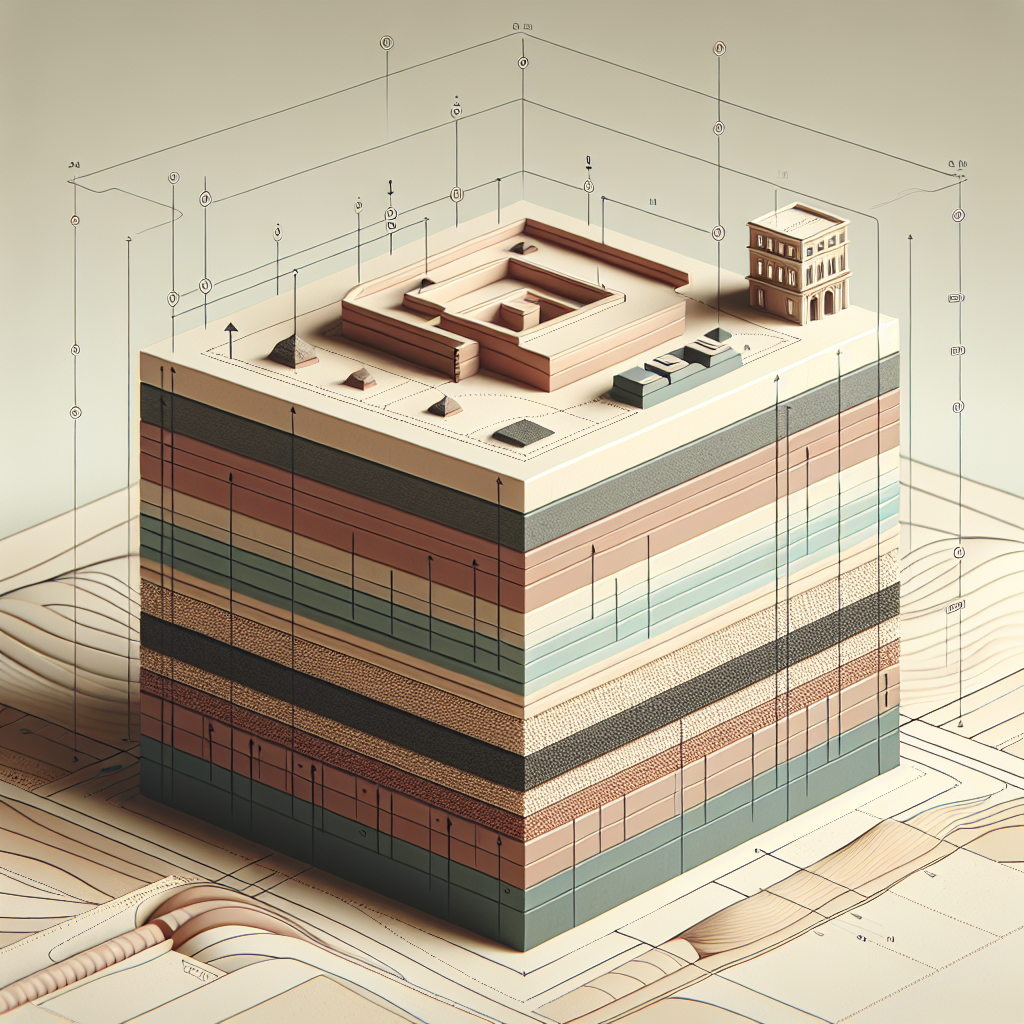
Every building relies on the ground below. Knowing how loads travel from a structure into soil helps prevent settlement, cracking, and costly fixes later.
This article walks through practical ways to estimate loads, combine them, and check that a chosen footing or pad will perform as intended. Examples and checks make the process clearer.
Why precise load estimates matter
Small errors in load estimation can cause large problems in the foundation. Overlooking a load case or misreading soil capacity often shows up as uneven settlement or structural distress.
Accurate load estimates lead to safer and more economical foundations. They reduce uncertainty when choosing footing size, depth, and reinforcement.
Types of loads to consider
Foundations carry several types of loads. Each type affects design differently, so identifying and quantifying them is a first step.
Below are the common categories and key points to check when you calculate loads.
Dead loads
Dead loads are the permanent weights of materials and fixed systems. They include floors, roofs, walls, heavy finishes, and fixed equipment.
Use material weights and dimensions to compute total dead load. Pay attention to concentrated elements like masonry chimneys or heavy machinery.
Live loads
Live loads are variable and depend on use. Residential floors, offices, and storage areas have different code-specified values.
Apply the appropriate live load from local standards and consider load distribution and possible load sharing between structural members.
Wind and lateral loads
Wind, seismic, and other lateral forces transfer to the foundation through the structure. These create overturning and uplift that must be resisted.
Estimate lateral loads using simplified code methods or building analysis, then resolve them into base shear and moments at the foundation level.
Point and line loads
Columns and load-bearing walls create concentrated loads. Footings under columns must carry these loads directly, often requiring larger area or deeper foundations.
Continuous loads from bearing walls act like line loads and are distributed along strip footings. Convert line loads to equivalent loads per meter when needed.
Basic workflow to estimate and combine loads
A structured workflow reduces errors and ensures all relevant cases are checked. Work in stages from raw weights to final design checks.
Keep a clear record of assumptions, unit conversions, and load combinations used.
Step 1: Gather dimensional and material data
Collect floor plans, elevation heights, and material types. Note areas and spans so you can calculate dead and live loads per area.
List heavy items separately, including localized equipment loads, chimneys, and mechanical units.
Step 2: Compute area and point loads
For slab and beam-supported areas, multiply area by the relevant load per unit area to get total load. For columns, sum axial loads from tributary areas and superimposed loads.
Convert loads into consistent units before summing. Typical units are kilonewtons (kN) or kiloNewtons per square meter (kN/m2).
Step 3: Apply load factors and combinations
Design codes specify load factors and combinations to account for uncertainty. These combine dead, live, wind, and seismic loads in ways that test both strength and serviceability.
Use the highest resulting factored axial load and bending moment when checking bearing capacity and stability.
Step 4: Translate loads to foundation inputs
Determine how loads reach the soil: point loads to isolated footings, line loads to strip footings, and distributed loads beneath mats or rafts.
For combined footings, resolve eccentricities and compute the resulting pressure distribution under the foundation plane.
Estimating soil support and bearing capacity
Soil behavior controls allowable pressures and settlements. A conservative approach avoids overloading weaker layers.
Use lab and field data where available; otherwise, rely on local soil maps and conservative assumptions tailored to the project type.
Allowable bearing capacity
Allowable bearing pressure is a safe limit for soil stress under the foundation. It is often given by site investigation or derived from standard tables and correlations.
Apply appropriate safety factors; many codes provide clear adjustment factors based on soil type and groundwater conditions.
Settlement estimation
Even when soil can carry the load, settlement must be acceptable. Immediate settlement relates to elastic compression, while consolidation occurs in compressible clays.
Estimate settlement using simple elastic formulas or consolidation methods depending on soil type and loading duration.
Effect of water table and drainage
A high water table reduces effective stress and bearing capacity. It also increases risk of liquefaction in seismic regions.
Lowering the water table or designing deeper foundations can help, but check the impact on costs and constructability.
Typical calculation examples
Worked examples make the steps tangible. Below are two common situations with simplified calculations and checks.
Example: isolated column footing
Consider a column that carries a factored axial load. Choose a preliminary bearing pressure based on site data.
- Calculate required footing area = factored load / allowable soil pressure.
- Select a square or circular footing with area equal or greater than required.
- Check bearing pressure distribution for eccentric loads and increase footing size if pressure exceeds limits at the edge.
Also check punching shear and bending of the footing plate as needed.
Example: strip footing under a load-bearing wall
Sum loads from the wall and tributary floor to get a line load per meter. Divide by allowable pressure to get required strip width.
- Consider moment from eccentric load if the wall is not centered on the strip footing.
- Verify depth and reinforcement for bending and shear according to material strength assumptions.
Common pitfalls and practical checks
Avoiding common mistakes saves time and money. A short checklist helps catch frequent oversights before construction begins.
Below are typical issues and quick checks that can be applied on most projects.
Underestimating load concentrations
Heavy equipment, stacked storage, and mechanical anchors create local stress concentrations. Treat them as point loads and size footings accordingly.
Place load transfer elements directly over footings or provide load-spreading beams to avoid overstressing soil.
Ignoring load combinations
Design load cases should cover maximum credible scenarios, not just the most common. Combine live, wind, and seismic loads where applicable.
Review the governing code to find required combinations and use the most conservative resulting values in checks.
Overreliance on standard tables
Tables are useful for preliminary work, but site variability matters. When soil conditions are doubtful, obtain a site investigation before final design.
Use tables only for initial sizing and then refine with project-specific data.
Check for eccentricity and uplift
Horizontal forces and moments shift pressure distribution. An eccentric load can create zones of tension at the base, which soil cannot resist.
Design to keep resultant within the middle third of the footing or provide tie beams and anchors to resist uplift and overturning.
Detailing considerations and reinforcement basics
Reinforcement and detailing ensure the foundation performs under bending, shear, and differential settlement.
Simple detailing rules reduce cracking and make construction easier to execute accurately on site.
Minimum reinforcement and spacing
Provide minimum steel to control shrinkage and thermal cracking in slabs and footings, even when the primary bending demand is low.
Follow spacing rules to ensure concrete bond and cover requirements are met for durability.
Depth and cover
Adequate depth ensures footing weight distributes into soil and provides room for reinforcement and protection against frost or corrosion.
Specify concrete cover according to exposure conditions and local practice to prevent premature deterioration of steel.
Construction sequencing effects
Construction loads, temporary stockpiles, and early-age concrete stresses can affect the foundation. Plan sequencing to avoid overloading partially cured concrete or soft footing areas.
Monitor settlement as work progresses and adjust construction where unusual movement appears.
Conclusion
Estimating loads that foundations must carry is a critical step that links structure and soil. Careful measurement, proper unit handling, and checking multiple load cases reduce surprises.
Start with clear data, apply appropriate factors, and perform both bearing and settlement checks. Simple checks and conservative assumptions in early stages save time and cost later.
Frequently Asked Questions
How do I convert area loads to point loads?
Multiply the load per unit area by the tributary area that feeds the column or footing. For strip footings, convert line loads to equivalent area loads across the chosen footing width.
What is a safe starting value for allowable soil pressure?
Use local experience or conservative values from code tables when site data is missing. Common starting values range widely by soil type, so treat them as preliminary and refine with testing.
When is a mat or raft foundation preferred?
Mats are useful when loads are close together, soil is weak and compressible, or where differential settlement between nearby footings must be minimized.
How should uplift and overturning be checked?
Resolve lateral loads into base shear and moment. Check that the resisting moment from vertical forces and footing geometry exceeds the overturning moment, and ensure net pressure stays compressive under service loads.
What basic records should be kept during load calculations?
Keep material weights, load distribution assumptions, load combinations, soil pressure values, and any safety factors. Clear documentation helps during review and on-site decisions.