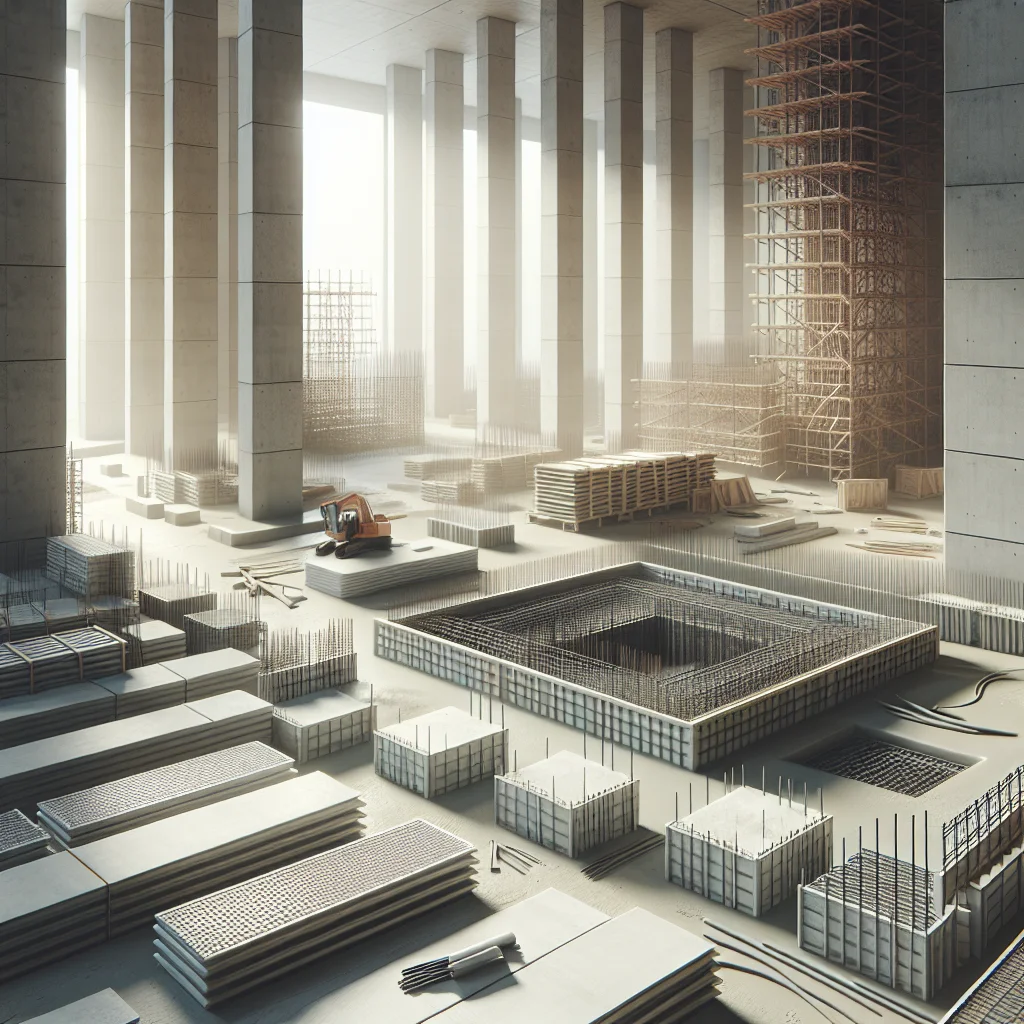
Quality formwork shapes the finished concrete and sets the pace of work on site. Understanding the systems and materials behind formwork helps teams deliver accurate, durable concrete elements with fewer delays.
This article breaks down key types, design considerations, erection steps, and common pitfalls so you can plan formwork that saves time and reduces waste.
Why proper formwork makes a difference
Formwork does more than hold wet concrete. It controls geometry, surface finish, and tolerance while supporting the weight and pressure of the mix during placement.
Well-planned formwork reduces rework, improves safety, and extends the life of reusable panels. It also affects labor needs and overall cost on every poured element.
Load and pressure basics
Wet concrete exerts lateral pressure that varies with slump, pour rate, and temperature. Designers must account for hydrostatic-like loads and dynamic impacts from placing methods.
Quality and finish
The material and stiffness of the mold determine visible surface texture and the need for patching. Smooth, well-supported forms yield better finishes with less labor.
Common types of formwork and where they work best
Choice of formwork depends on element shape, repetition, budget, and available equipment. Each material and system has trade-offs in cost, speed, and reusability.
Here are frequently used systems and practical notes on their use.
Timber and plywood formwork
Traditional and flexible, timber formwork is easy to cut to size and adapt to irregular shapes.
- Pros: Low initial cost, simple to craft on site, good for one-off work.
- Cons: Limited reuse life, warps with moisture, higher long-term labor if reused often.
Steel and metal panel systems
Steel panels offer durability and precise tolerances. They are often used where many identical elements are needed.
- Pros: Long life, consistent finish, fast assembly with panels and clamps.
- Cons: Higher upfront cost and heavier handling needs.
Aluminum frame systems
Aluminum combines lighter weight with reasonable strength, making lifting faster and reducing crane time.
- Pros: Good for repetitive work, easier handling than steel.
- Cons: Not as robust as steel under heavy reuse.
Plastic and fiberglass molds
Thermoplastics and fiberglass suit curved features and decorative finishes. They resist moisture and provide smooth surfaces.
- Pros: Lightweight, excellent for complex shapes, low maintenance.
- Cons: Limited load capacity and niche applications.
Stay-in-place systems
Some modular systems remain as part of the structure, acting as permanent forms or insulation. These speed up work but change structural detailing.
Tunnel and slip formwork
Continuous methods like slipform are ideal for tall shafts, silos, and long walls. They move with the pour and minimize joints.
- Pros: Fast continuous casting, excellent for repetitive vertical structures.
- Cons: Requires careful mix control and experienced crews.
Design considerations and materials selection
Good design balances stiffness, weight, reusability, and cost. It also addresses safety and erection logistics from the start.
Material choice affects deflection, surface finish, and the number of reuses possible before replacement.
Calculating pressures and support
Designers estimate lateral pressure using concrete properties, temperature, and pour rates. Bracing, ties, and shores are sized to resist these loads with safety margins.
Panel layout and joint detailing
Panel joints should prevent leakage and align with reinforcement. Careful joint layout reduces honeycombing and patch repairs after stripping.
Ties, walers, and bracing
Ties keep opposing faces at the correct distance under pressure. Walers distribute loads to studs or shores, and bracing prevents sway and overturning.
Release agents and surface treatment
Applying suitable release agents improves form longevity and ensures easier stripping. Choose products compatible with the panel material and expected finish.
Construction process, sequence, and safety
Execution requires coordination between concrete supply, reinforcement, formwork crews, and lifting equipment. Sequencing minimizes waiting times and avoids overstressing support systems.
Safety is integral: formwork collapses can cause serious injury and project delays, so check design, installation, and monitoring carefully.
Erection and alignment
Set panels plumb and level using temporary bracing. Verify dimensions against drawings and confirm reinforcement clearance before placing concrete.
- Check anchor points and lifting capacity before moving large panels.
- Use spirit levels or laser devices for consistent alignment across repeated elements.
Pouring sequence and vibration
Control pour rate to limit lateral pressure and avoid form deformation. Proper vibration consolidates concrete without creating high-impact forces on forms.
Stripping time and curing
Stripping should follow strength gain criteria, not fixed days. Early removal risks cracking and distortion; late removal delays reuse.
- Temperature, cement type, and member thickness all influence when forms can be safely removed.
- Continue curing after stripping to reach design strength and reduce shrinkage issues.
Inspection and maintenance
Inspect panels for cracks, warping, and damaged connections. Routine maintenance extends life and maintains consistent finishes.
Safety checks and controls
Confirm load paths, secure temporary supports, and restrict access under unloaded spans. Keep records of inspections and follow engineering notes without alteration.
Cost, sustainability, and reuse strategies
Long-term thinking changes the choice of system. Higher upfront cost for durable panels often pays back through many reuses and faster cycles.
Sustainability also plays a role—materials that last reduce waste, while thoughtful design cuts excess formwork material on every component.
Estimating lifecycle cost
Compare initial purchase, expected reuse count, labor time per setup, and repair costs. A system that reduces labor often offsets higher material costs.
Reducing material waste
Standardize panel sizes to minimize cutting and offcuts. Reclaim and recycle damaged elements rather than discard when possible.
Storage and handling
Proper stacking, drying, and storage extend the life of timber and plywood. Metal panels benefit from corrosion control and careful transport to avoid dents.
Conclusion
Careful selection and design of formwork affect the final structure, the pace of work, and project cost. Consider load demands, repeatability, and site logistics when choosing a system.
Attention to erection, inspection, and maintenance keeps panels reusable and improves safety while delivering better concrete finishes with fewer repairs.
Frequently Asked Questions
What determines formwork life and reuse potential?
Material quality, handling, exposure to moisture, and the number of handling cycles all affect how long panels last. Regular maintenance and correct storage boost reuse counts.
How is lateral pressure from concrete calculated?
Designers use formulas that account for concrete density, temperature, slump, and pour rate. For rapid pours or high slumps, increase design pressure to ensure safety.
When can forms be safely removed?
Removal depends on concrete strength, not a fixed calendar time. Tests or specified strength ratios guide safe stripping to avoid damage to young concrete.
How do I reduce surface defects like honeycombing?
Tight joints, proper vibration, and correct reinforcement cover reduce honeycombing. Ensure panels are stiff enough to resist deformation under pressure.
Are modular panel systems always better than timber?
Modular systems excel on repetitive work and where finish quality matters. Timber may still be preferred for one-off or highly irregular shapes due to flexibility and lower initial cost.
2 thoughts on “Concrete Formwork Techniques: Systems and Types Explained”
Comments are closed.