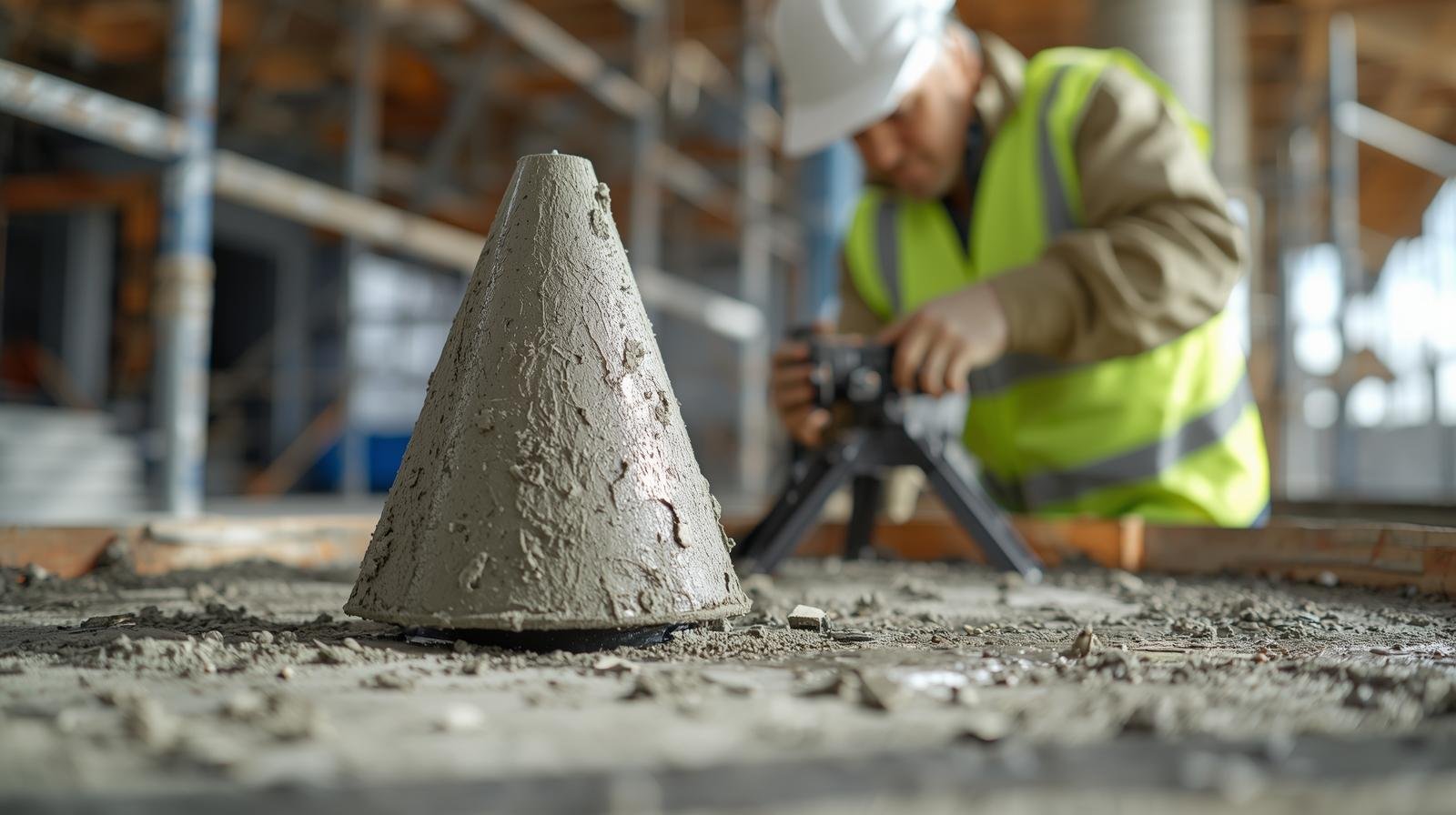
In the construction industry, ensuring the quality and workability of concrete is essential for the durability and strength of structures. The slump test is one of the most widely used methods to evaluate the consistency of fresh concrete before it is placed. This article explores the principles, equipment, and detailed procedure for conducting a slump test, helping construction professionals maintain quality control on site.
What is the Slump Test?
The slump test is a simple field test used to measure the workability or consistency of fresh concrete. It provides a quick and practical way to determine whether the concrete mix has the right fluidity for proper placement and compaction. Understanding this test helps ensure concrete quality before it is poured.
Defining the Slump Test
The slump test measures the relative fluidity of concrete by recording how much a sample subsides after being molded in a standard cone and then released.
Importance of the Test
This test is critical in monitoring concrete consistency on-site to avoid problems such as poor compaction, segregation, or difficulty in placement.
Principles of the Slump Test
Understanding the basic principles behind the slump test helps in interpreting the results accurately and applying them effectively in construction projects.
Understanding Workability of Concrete
Workability refers to the ease with which concrete can be mixed, placed, compacted, and finished. It depends on factors such as water content, aggregate properties, and admixtures.
How the Slump Test Works
By molding fresh concrete in a cone and then removing the cone, the test measures how much the concrete slumps or settles vertically under its own weight, indicating its workability.
Equipment Required for the Slump Test
To conduct the slump test accurately and consistently, certain standard equipment is necessary. Each piece plays a critical role in ensuring the test results are reliable and reflect the true workability of the fresh concrete. Below is a detailed description of the essential equipment used in the slump test.
Slump Cone (Abrams Cone)
The slump cone is a metal mold shaped like a truncated cone, 12 inches (300 mm) tall, with a base diameter of 8 inches (200 mm) and a top diameter of 4 inches (100 mm). It forms the sample shape for the concrete and provides a standardized container for measuring slump.
Tamping Rod
A steel rod approximately 16 mm (5/8 inch) in diameter and 24 inches (600 mm) long is used to compact the concrete inside the cone. The rod’s rounded end prevents cutting into the concrete mix while tamping.
Base Plate
The base plate is a flat, rigid, non-absorbent surface on which the cone is placed during the test. Commonly made of steel or glass, it ensures stability and prevents moisture loss from the concrete sample.
Measuring Scale
A ruler or tape measure graduated in millimeters or inches is required to measure the vertical slump distance precisely after the slump cone is removed.
Test Procedure for the Slump Test
Following a standardized procedure ensures that slump test results are consistent and meaningful across different batches of concrete and testing locations.
Step 1: Preparation
Begin by placing the base plate on a stable, level surface. The inside of the slump cone should be dampened to prevent concrete from sticking, and the cone positioned upright and held firmly on the base plate.
Step 2: Filling the Cone
The cone is filled in three equal layers, each about one-third of the cone’s height. After placing each layer, tamp the concrete uniformly with 25 strokes of the tamping rod to ensure proper compaction.
Step 3: Leveling the Surface
After the final layer is placed and tamped, excess concrete is struck off with the tamping rod to level the top surface flush with the rim of the cone.
Step 4: Removing the Cone
Carefully lift the cone vertically in a smooth motion without any lateral or twisting movement to avoid disturbing the concrete.
Step 5: Measuring the Slump
Position the cone next to the slumped concrete, then measure the vertical distance between the top of the cone and the highest point of the slumped concrete. This measurement is recorded as the slump value.
Interpretation of Slump Test Results
Interpreting the slump test results correctly is essential for understanding the concrete’s workability and suitability for specific construction applications.
Slump Value Categories
The slump test can reveal different slump types: true slump (even subsidence), shear slump (sideways slip), and collapse slump (complete loss of shape). Each type indicates different concrete consistency and potential issues.
Typical Slump Ranges and Applications
Slump values vary according to the intended use of concrete. Very low slumps (0-25 mm) suit pavements, low slumps (25-50 mm) suit foundations, medium slumps (50-100 mm) fit slabs and columns, and high slumps (over 100 mm) are used in pumped or heavily reinforced concrete.
Factors Affecting Slump Test Results
Several variables can influence the slump value, and understanding these helps in making informed decisions about mix adjustments or evaluating test outcomes.
Water Content and Mix Proportions
Higher water content generally increases slump but can reduce strength if excessive. Aggregate size, grading, and cement content also affect consistency.
Use of Admixtures and Environmental Conditions
Plasticizers and superplasticizers can improve workability without adding water. Temperature, mixing time, and transport conditions may alter slump before testing.
Limitations of the Slump Test
While useful, the slump test has limitations and should be used alongside other tests for a full understanding of concrete quality.
Qualitative Nature of the Test
The slump test provides a relative measure of workability but does not directly indicate strength or durability.
Suitability for Different Mixes
It is less effective for very dry mixes (zero slump) or highly fluid mixes (collapse slump) and may not reflect performance under all site conditions.
Conclusion
The slump test remains a quick and effective on-site method to assess the workability of fresh concrete. By understanding its principles, using the proper equipment, and following a standardized procedure, construction teams can ensure concrete mixes meet project requirements. This helps avoid problems related to poor workability, such as segregation or inadequate compaction, ensuring the durability and safety of the structure.