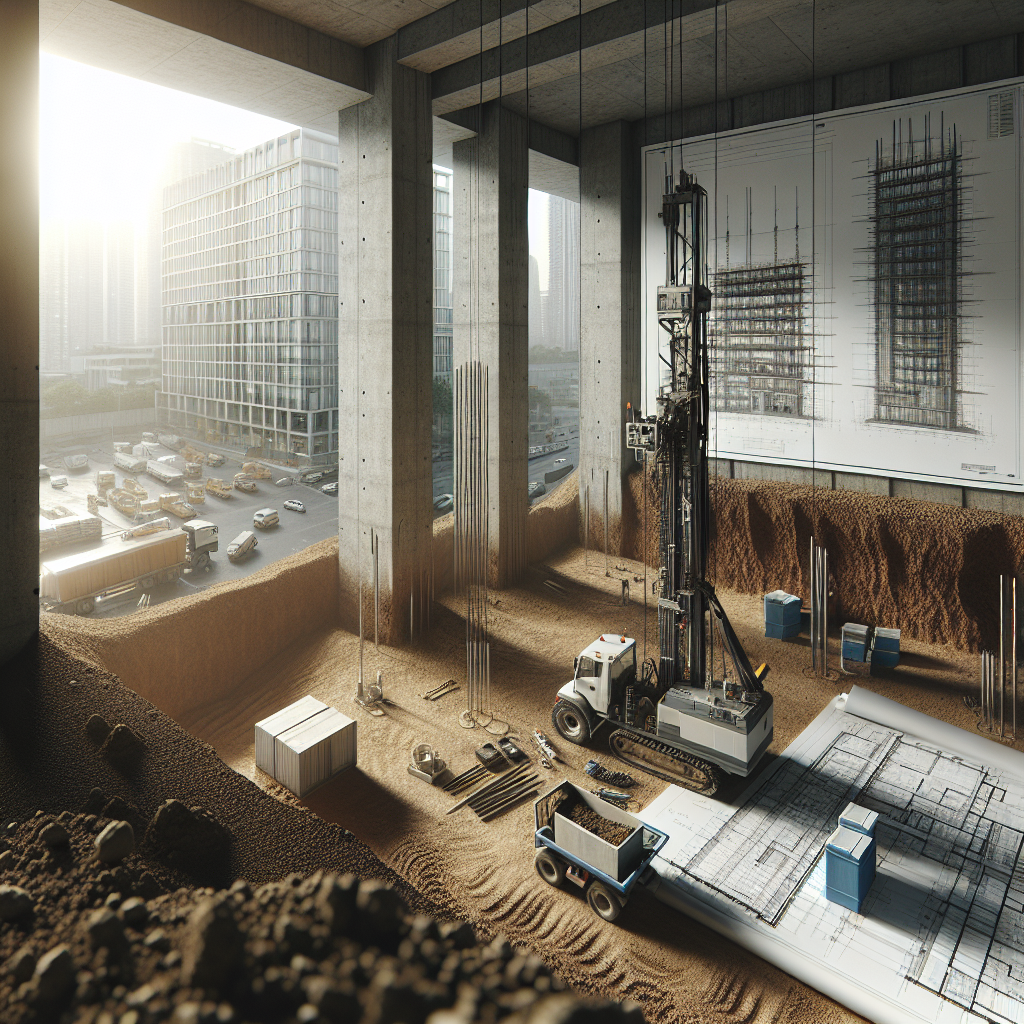
A stable base starts with knowing what’s under your feet. Before a single trench is dug, testing the soil where a structure will sit reduces surprises and helps choose the right foundation type.
This article breaks down common tests, how to read results, and practical steps to prepare a site. The goal is clear: reduce risk, unexpected costs, and delays by making informed decisions early.
Why accurate soil checks matter
Soil conditions control how a foundation behaves. Clay, silt, sand, or organic material each react differently to loads and moisture changes.
Skipping tests can lead to settlement, cracking, and water problems later. Early testing gives knowledge that shapes design, drainage needs, and construction methods.
Risk of unexpected ground behavior
Layers of soft soil or high water tables may not show on the surface. When loads compress weak layers unevenly, parts of a structure can sink more than others.
That uneven movement causes cracks, doors or windows that stick, and costly repairs. Identifying risks up front reduces those chances.
How soil type affects foundation choice
Some soils support shallow foundations; others need deep supports like piles or piers. Soil tests reveal bearing capacity and how much settlement to expect.
Designers use those results to match foundation depth and type to site conditions, saving both material costs and long-term maintenance.
Common tests and what they reveal
Field and lab tests each answer different questions. Together they give a clear picture of strength, compressibility, and moisture behavior.
Below are common evaluations and the practical meaning of their results.
Standard Penetration Test (SPT)
SPT measures resistance to a driven sampler and reports a blow count (N-value). It’s quick and useful for stratifying layers and estimating relative density.
Low N-values indicate loose or soft soils that may need improvement or deeper foundations. Higher values generally mean stronger soil.
Atterberg limits
These lab tests determine the plasticity of fine-grained soils. Results include liquid limit, plastic limit, and plasticity index.
High plasticity often means clay that swells and shrinks with moisture, increasing the risk of movement near the surface. This points to the need for special foundation detailing or moisture control.
Proctor compaction test
The Proctor test finds the optimum moisture content and maximum dry density for compacted fills. It’s vital when adding or reworking soil under slabs and footings.
Field compaction should match lab targets to ensure the fill supports design loads without excessive settlement.
Plate load test
This on-site test applies load to a steel plate and measures settlement. It gives a direct estimate of bearing capacity at shallow depths.
Results help decide if spread footings are feasible or if deeper elements are required.
Percolation and moisture testing
Percolation tests measure how quickly water drains through soil, important for drainage systems and septic designs.
Moisture content tests and seasonal water table readings reveal whether groundwater or seasonal saturation could affect foundation stability.
Site investigation: what to expect
A proper investigation mixes field work and lab analysis. It usually starts with a surface review, then advances to sampling and testing at planned locations.
The process should be tailored to site size, terrain, and planned loads. Smaller sites need fewer borings; complex sites require a denser sampling grid.
Sampling and boring
Borings let technicians collect intact samples at regular intervals. The depth and spacing depend on building size and local variability.
Logs from borings describe layer thickness, color, density, and groundwater. These notes are essential for designing foundations that match actual conditions.
Lab analysis and field tests
Samples go to a lab for particle size, Atterberg limits, and consolidation tests. Field tests like SPT or plate load provide immediate, on-site context.
Combining lab and field data provides a more reliable picture than either alone, especially where layers change rapidly with depth.
Interpreting results and planning the foundation
Once test results are in, the next step is matching foundation type to the site’s behavior. The decision balances performance, cost, and constructability.
Common choices include shallow spread footings, raft slabs, or deep foundations like piles and piers. Each responds differently to soil conditions.
Matching foundation type to soil
Shallow foundations suit dense sands and stiff clays with adequate bearing capacity. If upper layers are weak, stepping down to deeper, firmer strata or using piles is typical.
Raft slabs spread loads across the site and can be effective on moderately compressible soils to reduce differential settlement.
Dealing with high water or organic soils
Sites with high groundwater or thick organic layers often require removal of poor material, replacement with engineered fill, or deep foundations that bypass weak layers.
Drainage solutions such as sub-surface drains and perimeter grading also limit moisture changes that cause movement.
Ground improvement and reinforcement
Techniques like soil stabilization, vibro-compaction, lime or cement treatment, and geogrids can improve bearing and reduce settlement.
These methods can be more cost-effective than deep foundations on sites with moderate issues.
Practical checklist after receiving results
- Confirm bearing capacity and expected settlement values.
- Identify shallow or deep water concerns and seasonal variation.
- Decide if remediation or ground improvement is required.
- Choose foundation type, depth, and reinforcement based on data.
- Include specifications for compacted fill and on-site testing during construction.
Costs, timing, and common issues on site
Testing costs depend on the number of borings, the depth required, and lab work. Timing varies too, but most small to medium sites complete a basic program in days to a few weeks.
Delays usually arise from weather, access issues, or unexpected hard layers that slow drilling. Planning with a realistic schedule avoids surprises.
Typical cost drivers
Depth and number of samples, the need for advanced lab tests, and accessibility of the site all increase cost.
Complex sites with contamination, obstructions, or steep terrain require special equipment and add to the bill.
When unexpected results appear
If tests reveal poor ground, options include deeper foundations, removing and replacing unsuitable soils, or using ground improvement techniques.
Design teams should re-evaluate loads and budget when major changes are needed to maintain safety and performance.
Conclusion
Testing the soil beneath a future foundation is an investment that reduces long-term risk. Clear test data informs foundation type, drainage needs, and construction methods.
Careful planning and a tailored testing program make construction smoother and more predictable, with fewer surprises after the building is in use.
Frequently Asked Questions
Below are concise answers to common questions about testing soil before foundation work. These address timing, scope, and typical outcomes.
How long does a standard site investigation take?
For a small to medium site, fieldwork often finishes in one to three days. Lab testing can add one to two weeks depending on the number of tests and lab schedules.
Complex investigations or sites with many borings may take longer, so factor extra time into the project schedule.
What is a reasonable cost range for basic testing?
Costs vary widely by region and site complexity. A basic program for a modest site typically ranges from a few hundred to several thousand dollars.
Ask for itemized estimates so you understand excavation, lab, and reporting fees separately.
Can soil conditions change after testing?
Yes. Seasonal changes, nearby construction, or changes in drainage can alter moisture and groundwater levels.
Critical projects may need monitoring or repeated checks if conditions are expected to change during construction.
Is one test enough for the whole site?
Not usually. Soil varies across a site. Multiple borings spaced to cover the footprint give a better picture, especially for larger structures.
The spacing and depth depend on site variability and building loads; consult the testing plan to ensure adequate coverage.
What if the soil is contaminated?
Contamination adds layers of complexity. Specialized testing and remediation plans are needed, and regulations often require specific handling and disposal procedures.
Address contamination early to avoid delays and unexpected cleanup costs.