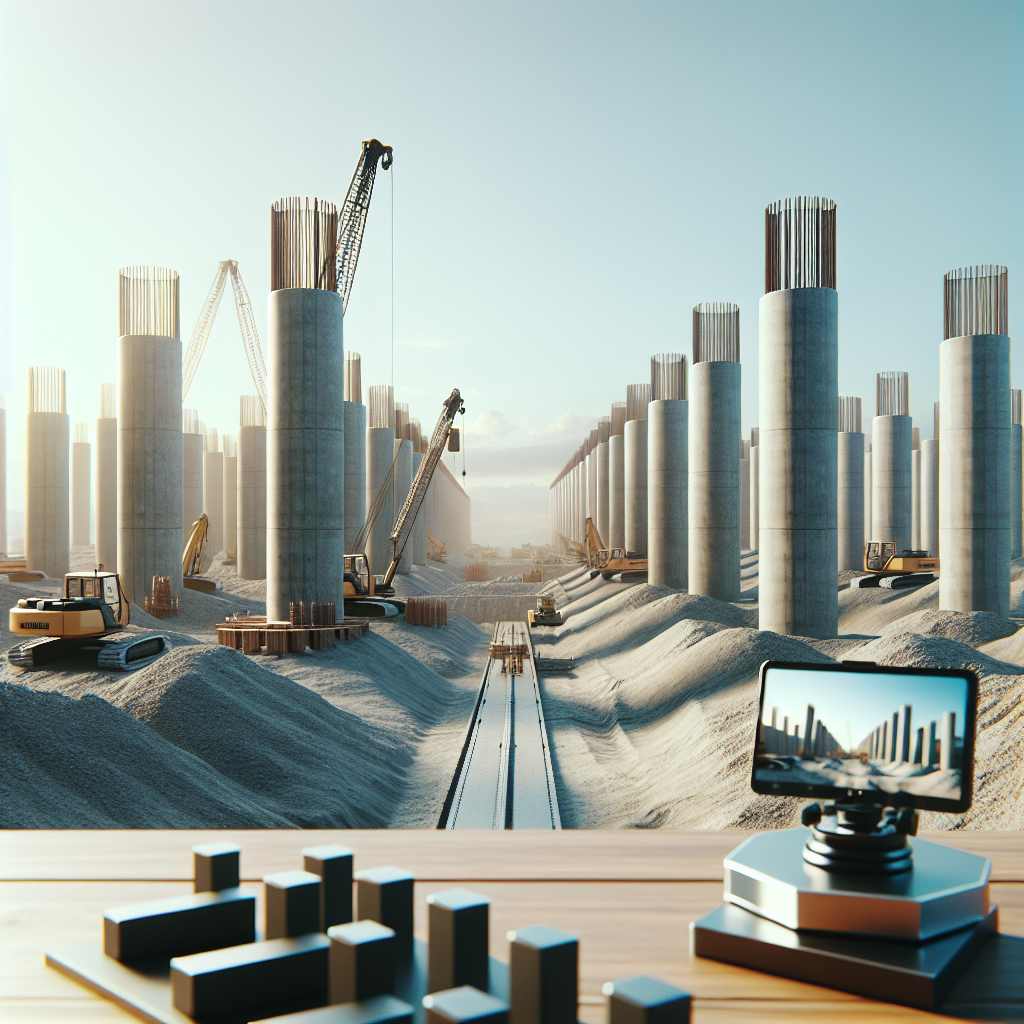
Pile foundations support structures where surface soils are too weak to carry loads. They transfer loads to deeper, stronger strata and are essential for tall buildings, bridges, and waterfront works.
This guide explains common pile systems, how they carry load, material choices, construction methods, and key design considerations to help make sound engineering decisions.
Why piles are chosen over shallow footings
Piles are selected when near-surface soil lacks bearing capacity or is prone to excessive settlement. They can bypass compressible layers and reach dense sand, gravel, or rock deeper down.
Other reasons include controlling uplift from wind or seismic forces, working in high water tables, or when vibration and noise constraints require specialized installation methods.
When to prefer deep foundations
Deep foundations are appropriate if predicted settlement for a shallow foundation exceeds tolerable limits, or the structure imposes concentrated loads that exceed the safe bearing of surface soils.
Projects on reclaimed land, riverbanks, or near excavations often need piles to ensure long-term stability and performance.
How piles carry load
Piles transfer structural loads through two main mechanisms: end-bearing and skin friction. Most pile designs use a combination of both, depending on soil profile and pile length.
Understanding the dominant mechanism helps determine pile length, diameter, and the most efficient construction method.
End-bearing piles
End-bearing piles act like columns that rest on a strong stratum. The pile tip bears on rock or dense soil, so the carrying capacity depends mainly on the strength of that layer.
These piles are often shorter than friction piles when suitable strata are available at moderate depth.
Friction (skin) piles
Friction piles transfer load along their shaft by shear between the pile surface and surrounding soil. They are useful when no competent bearing layer exists within reasonable depth.
Designing friction piles requires careful site investigation to estimate shear strength and to account for long-term consolidation effects around the shaft.
Classification by construction method
Construction method affects installation speed, ground disturbance, and suitability for site constraints. Common methods include driven, bored, and helical systems.
Each method has trade-offs in noise, vibration, load capacity, and cost that influence selection for a given project.
Driven piles
Driven piles are prefabricated elements hammered into the ground using pile drivers. They can be timber, steel, or precast concrete sections.
Advantages include high load capacity, immediate testing by dynamic methods, and speed. Drawbacks can be noise and vibration, which limit use in sensitive areas.
Bored (cast-in-place) piles
Bored piles are formed by drilling a hole and filling it with reinforced concrete. They’re ideal where vibration must be minimized or where large-diameter piles are needed.
Proper casing or drilling fluid control is important in loose soils and high water table conditions to prevent collapse of the borehole.
Continuous flight auger and CFA piles
CFA piles use a continuous-flight auger to drill, then concrete is pumped through the hollow stem as the auger is withdrawn. Reinforcement is inserted afterward.
This method is relatively quiet and fast, suitable for urban sites, but requires quality control to avoid premature grout loss or contamination.
Helical or screw piles
Helical piles are screwed into the ground using hydraulic machinery. They’re quick to install and immediately loadable, often used for light to medium loads.
They work well in constrained sites, cold climates, and temporary works, but capacity is limited by soil conditions and shaft length.
Materials and common pile types
Piles are made from timber, concrete, steel, or combinations. Material choice depends on load, durability requirements, corrosion risk, and availability.
Each material performs differently under compressive, tensile, and lateral loads, and may require protective measures in aggressive environments.
Timber piles
Timber piles are economical for small loads and short to moderate life spans. They’re often used in marine or rural applications where treated wood resists decay.
Limitations include susceptibility to biological attack when exposed to moist conditions and lower capacity compared with steel or concrete.
Reinforced concrete piles
Concrete piles come precast or cast-in-place and offer excellent compressive strength and durability. Reinforcement handles tensile and bending stresses.
Precast piles give consistent quality and rapid installation, while cast-in-place piles adapt better to variable load and diameter needs.
Steel piles
Steel H-piles and pipe piles provide high strength with relatively small sections. They are suitable for high loads and driving through obstructions.
Corrosion protection like coatings or cathodic protection is essential in aggressive soils or marine environments to ensure long-term performance.
Composite and special piles
Composite piles combine materials, such as concrete encased steel, to take advantage of each material’s strengths. Specialty piles include micropiles for restricted access and vibration-sensitive sites.
Micropiles can be drilled and grouted with small rigs, supporting high loads with minimal disturbance.
Design and site investigation essentials
A reliable design starts with a thorough geotechnical investigation. Boreholes, CPTs, and lab tests define layers, strengths, and groundwater conditions that affect pile choice.
Design must consider axial loads, lateral loads, uplift, group effects, pile spacing, and interaction with surrounding soil and structures.
Load testing and verification
Static load tests, dynamic testing, and integrity testing help verify capacity and detect defects. They’re especially important for critical structures or where site conditions are uncertain.
Design codes set requirements for testing frequency and interpretation to ensure safety margins are met.
Group behaviour and settlement
Piles in groups do not behave like isolated elements; group efficiency can be lower due to overlapping stress bulbs in the soil.
Settlement analysis should account for pile-soil-pile interaction, especially for large foundations under sustained loads.
Construction challenges and practical tips
Field conditions often influence pile selection more than theoretical capacity. Access, noise limits, underground services, and environmental constraints are practical drivers.
Careful contractor selection, monitoring, and record keeping during installation reduce risks like pile damage, misalignment, or poor concrete quality.
Controlling groundwater and obstructions
Siting near water requires dewatering, temporary casing, or drilling fluids to maintain bore stability. Obstructions demand pre-drilling or different pile types to penetrate or avoid them.
Contingency planning for refusal or loss of casing preserves schedule and budget.
Corrosion and durability
Soil chemistry, oxygen levels, and moisture determine corrosion risk. Use protective measures such as coatings, sacrificial anodes, or increased concrete cover for durability.
Design life expectations should guide material selection and protective strategies for long-term performance.
Cost considerations and lifecycle thinking
Initial installation cost is only one factor. Consider maintenance, potential remediation, and the structure’s intended service life when comparing pile solutions.
Sometimes a higher initial investment in a durable pile system reduces lifetime costs and risk of costly repairs or restrictions later.
Comparing methods by cost drivers
- Driven piles: faster production but higher mobilization and potential remobilization costs for vibration mitigation.
- Bored piles: higher drilling cost but lower vibration and flexible diameters.
- Helical piles: lower setup and immediate load capacity, competitive for lighter structures.
Evaluate logistical costs, material availability, and site-specific constraints alongside raw installation rates.
Conclusion
Selecting the right deep foundation requires combining geotechnical data, structural needs, and site logistics. There is no one-size-fits-all answer; each method offers strengths and trade-offs.
Working closely with geotechnical engineers, contractors, and designers ensures a foundation solution that balances capacity, cost, constructability, and durability for the life of the structure.
Frequently Asked Questions
What information is needed for pile design?
Key inputs include soil stratigraphy, unit weights, shear and compressive strengths, groundwater level, and anticipated loads. Borehole logs and in-situ tests like CPTs improve confidence in design decisions.
How do you choose between driven and bored piles?
Choice depends on site constraints. Driven piles are faster where vibration is acceptable and suitable materials are available. Bored piles suit sensitive sites and large-diameter requirements but need more monitoring.
Can piles be tested during installation?
Yes. Dynamic testing during driving and static load tests after installation are common verification methods. Integrity testing helps identify defects before loading.
Are pile foundations eco-friendly?
The environmental impact varies. Helical and micropiles use less material and disturbance, while driven piles may cause noise and vibration. Sustainable design considers material sourcing and minimizing waste.
How long do different pile materials last?
With proper design and protection, concrete and steel piles can last many decades. Timber can last long in anaerobic conditions but may degrade in oxygen-rich environments. Durability depends on exposure and protective measures.