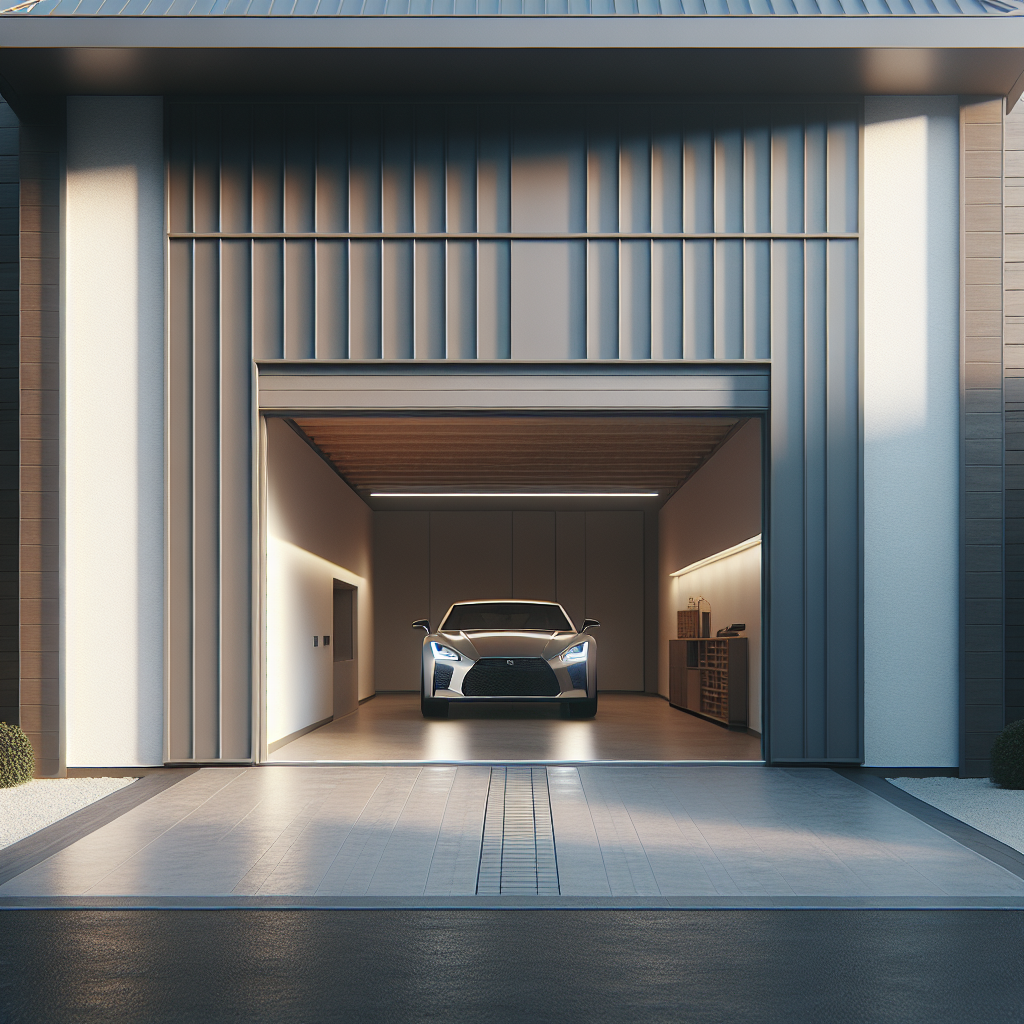
Choosing the right door size makes daily life easier and keeps vehicles safe. Knowing common widths, heights, and the clearances that matter helps you plan well before ordering or installing a new door.
This article breaks down typical widths and heights, explains how to measure openings and required clearances, and outlines how door type and materials affect the final dimensions. Practical tips throughout will help avoid costly surprises.
Common door widths and heights
Most homes use a handful of common sizes that fit typical garage openings. These sizes balance vehicle access and cost while matching standard framing practices.
Single-car door sizes
Single doors usually come in widths of 8, 9, and 10 feet. Heights are commonly 6’8″ (80 inches) and 7’0″ (84 inches). Taller single doors such as 8’0″ height appear where owners need extra headroom for taller vehicles or storage racks.
Double-car door sizes
For two-car garages, 16 feet wide by 7 feet high is the most common combination. Other options include 14×7 and 18×7 in some older or custom homes. For extra tall vehicles, 16×8 is a popular upgrade.
Special widths and tall openings
Spaces used for vans, trucks, or work vehicles often require widths of 12 feet or more for a single door, and heights of 8 feet or taller. Garages built for RVs may need heights of 10 feet or more and wider openings that can exceed 12 feet.
Measuring the opening and required clearances
Before selecting a door, measure three key areas: the opening itself, the side clearances, and the headroom. Each affects which door types and track systems will fit and operate properly.
How to measure the width and height
Measure the clear width between the framing on both sides at three points: top, middle, and bottom. Use the smallest reading as the true width. For height, measure from the floor to the underside of the header in three spots and use the smallest number.
Sideroom (side clearance)
Sideroom is the space between the edge of the opening and the nearest obstruction or wall. Most sectional doors need between 3 3/4″ and 5 1/2″ of sideroom on each side depending on track and hinge types. Roll-up models often require similar or slightly larger clearances for the guide tracks.
Headroom (top clearance)
Headroom is the space from the top of the opening to the ceiling or joist. Standard torsion spring and track setups usually need 12″ to 15″ of headroom. If headroom is limited, low-headroom or highlift track options exist but they change cost and track layout.
Backroom (door travel depth)
Backroom measures from the garage door opening back into the garage where the door panels rest when fully open. For a standard 7-foot tall door, expect 7 to 8 feet of backroom for sectional doors. Roll-up doors need less depth but require space for the drum and springs at the header.
How door type and materials affect size choices
The style of door—sectional, roll-up, or tilt-up—changes the way a door uses space and what clearances are required. Material and insulation also influence weight and mechanical needs.
Sectional doors
Sectional models are common in residential settings. They rise vertically and then slide parallel to the ceiling. This design is forgiving with width but needs consistent backroom and headroom. Track radius and hinge styles can alter clearance needs slightly.
Roll-up doors
Roll-up doors coil around a drum above the opening. They require less backroom than sectional doors, making them a smart choice in short garages. However, the drum assembly needs sufficient headroom and internal width for proper operation.
Tilt-up doors
Tilt-up or canopy doors swing out and then up on a single panel. They need clear space in front of the garage for the panel swing and often require more exterior clearance than sectional styles. This can be limiting if your driveway is short.
Materials and insulation
Steel doors are common and come in many standard sizes. Wood and fiberglass offer custom looks but often come with bespoke sizing and higher costs. Insulated panels add thickness and weight; this rarely changes the visible opening size but does affect track and spring selection.
Choosing the right size for vehicles and storage
Think about what will use the space now and in the future. A compact car needs less clearance than a pickup with a camper shell. Measure the tallest vehicle and add extra for roof racks or accessories.
Clearance allowances for vehicles
Add at least 6 inches to the height of your tallest vehicle to allow for safe entry and a margin for changes in floor level or snow buildup. For width, ensure at least 6–12 inches of side buffer to make parking less stressful.
Storage and workshop needs
If you plan to add shelves above vehicles or use overhead storage, prioritize headroom and backroom in your measurements. Choosing an 8-foot tall door instead of 7-foot gives more usable vertical space for overhead racks and door openers.
Installation considerations and common pitfalls
Simple measurement mistakes can lead to doors that don’t fit or doors that require costly frame changes. Expect slight variations in older homes and always measure more than once.
Uneven openings and framing issues
Older houses can have out-of-square openings. If the top corner measurements differ by more than 1/4″, you may need to correct the frame or order adjustments. Fill and shim gaps rather than forcing a standard door into a nonstandard opening.
Floor level differences
Garage floors can slope toward the driveway for drainage. Measure the threshold at the lowest point, and note if you’ll need a threshold seal or a slight fill to ensure a proper floor-to-door fit.
Opener placement and track routing
Automatic openers require headroom for the motor and rail. If your garage has exposed ductwork or lighting near the ceiling, repositioning the opener or choosing a low-profile rail might be necessary.
Cost and customization options tied to size
Larger doors and nonstandard widths often increase cost due to material, spring sizing, and special tracks. At the same time, a properly sized door reduces long-term headaches and maintenance.
Stock vs. custom sizes
Stock doors come in common widths and heights and are usually less expensive. Custom sizes accommodate odd openings but raise lead times and price. Weigh the cost of modifying framing vs buying a custom door.
Energy efficiency and R-value
Insulated doors carry an upfront premium but save on energy bills and make the garage more comfortable. Compare R-values when matching a door size, since insulation thickness can affect spring settings and track choices.
Conclusion
Understanding common widths, heights, and clearance needs helps you pick the right door and avoid surprises during installation. Taking careful measurements of width, height, sideroom, headroom, and backroom is the best first step.
Match your choice to vehicle size, storage needs, and the door type that fits your garage geometry. When in doubt, measure twice and consider an inspection by a qualified technician to confirm mechanical compatibility.
Frequently Asked Questions
What are the most common single-car door sizes?
The most common single-car widths are 8, 9, and 10 feet. Heights are typically 6’8″ (80″) or 7’0″ (84″). Choose a taller option when extra clearance or overhead storage is desired.
How much headroom is usually required?
Standard installation of sectional doors often needs 12″ to 15″ of headroom. Low-headroom tracks exist if you have less space, but they can increase cost and limit opener choices.
Can I fit a wider door without changing framing?
Sometimes small increases in width are possible by relocating a stud or adjusting siding. Major increases typically require reframing the opening, which adds to labor and materials costs.
Do insulated doors need different measurements?
Insulation affects panel thickness and door weight but rarely changes the exterior opening size. It does influence spring selection and track setup, so share insulation specs with your installer.
Which door type needs the least backroom?
Roll-up doors generally require the least backroom since they coil at the header. Sectional doors need more depth for panel storage along the ceiling. Match door type to your garage depth constraints.
Is it worth choosing an 8-foot tall door over 7-foot?
An 8-foot tall door provides better clearance for taller vehicles and more overhead storage. If your garage framing and headroom allow it, the extra height adds flexibility with minimal downside.
How should I account for floor slope when measuring?
Measure the opening height at the lowest point of the threshold. Note the slope magnitude in your notes so installers can plan proper adjustment or recommend a threshold solution.
What clearance do automatic openers need?
Openers need room for the motor and rail, usually mounted to the ceiling. Ensure no obstructions like ductwork or low beams are in the rail path. Low-profile rails can solve tight-clearance issues.
Are there standard options for very wide openings?
Very wide openings can be served by multiple doors, a single wide custom door, or a commercial-style roll-up. Each has trade-offs in cost, aesthetics, and operation, so consider daily use and budget when choosing.
How do I know if my opening is out of square?
Measure both diagonal corners. If the diagonals differ by more than 1/4″, the opening is likely out of square and may need framing correction or a custom approach to ensure a smooth fit and operation.