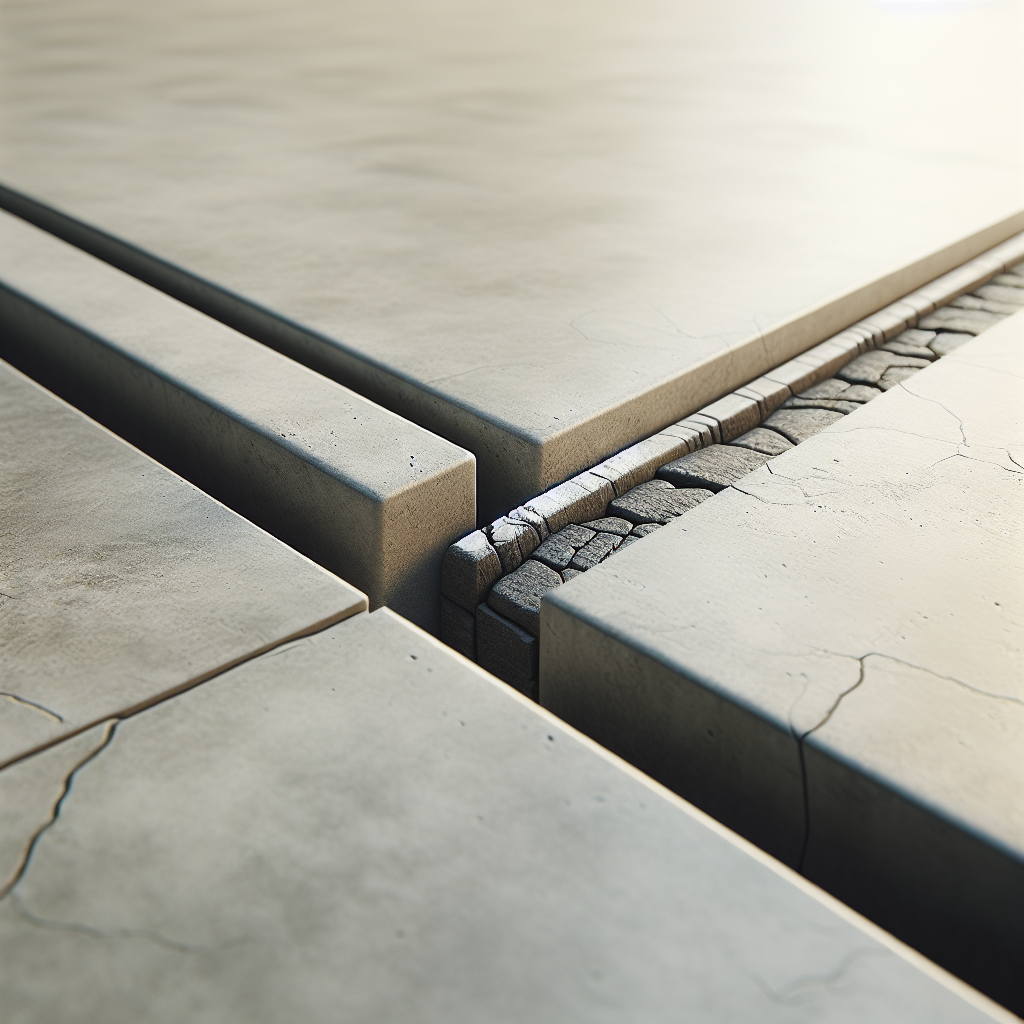
Concrete slabs move with temperature, moisture and load changes. Without a planned gap and the right filler, that movement can cause unsightly cracks and structural damage.
This article explains why joints matter, the common materials used, sensible placement and simple steps that lead to durable, low-maintenance joints.
Why planned gaps matter in concrete
Concrete is strong in compression but weak in tension. When it expands or contracts, stresses build up. Joints give the slab controlled places to relieve those stresses.
Well-designed joints keep cracks where you expect them, protect edges, and allow different parts of a structure to move without harming finishes or embedded items.
Control stress and crack direction
Placing a gap lets the slab separate along a line you choose rather than randomly. This keeps surfaces visually smoother and prevents damage from uncontrolled cracking.
In pavements and large slabs, regular spacing of joints reduces repair costs by limiting the size and number of stressed areas.
Protect infrastructure and finishes
Joints prevent movement from transferring to walls, tiles, or equipment anchors. They act as buffers that protect finishes and mechanical connections from differential movement.
When designed with the right filler and sealant, gaps also reduce water intrusion and debris buildup that speed deterioration.
Common types and materials used
There are several ways to create a movement gap: sawed, tooled, molded or placed inserts. Choice depends on timing, load, exposure and aesthetic needs.
Materials range from compressible foam strips to rigid preformed boards and flexible sealants. Each has benefits and limits tied to movement range and environment.
Preformed compressible fillers
These products—often made from bitumen, cork, rubber, or closed-cell foam—fit into the gap and compress as slabs move. They are simple and fast to install.
Select a filler that resists moisture, crushing and long-term degradation if traffic or heavy loads are expected.
Elastomeric sealants
Sealants are applied over a backer rod to form a flexible, watertight seal. Polyurethane and silicone types offer different elasticity and UV resistance.
Proper adhesion and joint geometry are critical. A bonded sealant without a backer can restrict movement and fail prematurely.
Pre-molded joint strips and plates
For heavy-duty uses, manufacturers supply rigid or semi-rigid strips and metal plates. These provide load transfer while permitting limited movement.
They are common at expansion joints in bridges, loading docks and where wheel loads must be carried across a gap.
Installation essentials and sensible placement
Good results start with planning: decide spacing, depth, filler type and how joints will be protected during construction and use.
Timing matters. Sawing early joints within 6–18 hours after finishing helps control crack depth and alignment in many climates.
Spacing and sizing rules of thumb
Typical joint spacing ranges from 2 to 3 times the slab thickness in feet (for example, a 4-inch slab might use 8–12 foot spacing). Local codes and expected loads can change this.
Joint width should accommodate predicted movement. Small sidewalks may use 3/8″–1/2″, while larger structures require wider gaps and flexible sealants.
Surface preparation and cleanout
Clean, dry joints ensure sealant adhesion. Remove dust, laitance and debris before inserting fillers or applying sealant.
Use compressed air or mechanical tooling for stubborn deposits. Wet joints can trap moisture that shortens sealant life.
Backer rods and sealant geometry
A backer rod sets the correct depth for a sealant so it can stretch properly. Aim for a roughly hourglass-shaped sealant profile: thinner at the bond faces, thicker in the middle.
Overfilling or insufficient depth can force the sealant to pull away under movement or ultraviolet exposure.
Protecting edges and drainage
Edge protection prevents joint damage from finishing, tools, and traffic. Metal edge forms or temporary boards keep joints straight during pours.
Ensure water sheds away from joints or provide drainage. Standing water accelerates freeze–thaw damage and joint filler breakdown.
Maintenance and common issues
Joints need periodic checks. Small problems caught early usually require simple repairs, while neglected joints often demand larger fixes.
Key issues include sealant loss, filler compression, edge spalling and debris buildup that locks the joint.
Inspection schedule and what to look for
Inspect annually or after severe weather events. Look for gaps in sealant, exposed filler, or cracks radiating from the joint edge.
Check for signs of movement beyond design limits—uneven slabs, trip hazards, or drainage changes indicate the need for action.
Common repairs and replacement
Minor resealing usually involves removing old sealant and contaminants, inserting a new backer rod, and applying fresh sealant sized correctly.
For degraded compressible fillers or spalled edges, remove the damaged material, repair the concrete as needed, and reinstall appropriate filler and sealant.
Preventing edge spalling
Use dowels or reinforcement where loads concentrate near joints. Proper joint width and protection during finishing reduce premature edge failure.
Applying a thin, sacrificial strip or using tougher edge materials in high-traffic zones can extend life significantly.
Conclusion
A thoughtful approach to gaps and fillers keeps concrete looking and performing well. Joints manage inevitable movement and reduce expensive repair needs.
Choose materials and spacing that match the expected movement, protect edges during construction, and inspect regularly to extend service life.
Frequently Asked Questions
How wide should a movement gap be?
Width depends on expected thermal and moisture movement plus depth limits of sealants. Small sidewalks often use 3/8″–1/2″, while larger slabs may need 1″ or more.
Consult product data for maximum joint movement and consider local temperature ranges when sizing gaps.
When should joints be cut or sawed?
Sawing should occur soon after finishing but after the concrete has gained enough strength to avoid raveling. Typical windows are 6–18 hours in moderate climates.
Timing varies with mix design, ambient conditions and slab thickness—too early causes tearing, too late allows random cracking.
Can old sealant be repaired without full replacement?
Small, localized failures can be touched up after removing loose material and cleaning. However, if adhesion is poor across a long run, full removal and replacement give longer-lasting results.
Partial fixes are short-term solutions where resources or access are constrained.
Are backer rods necessary under sealant?
Yes. Backer rods control sealant depth, prevent three-sided adhesion, and allow the sealant to stretch properly. They also save material and improve joint performance.
Choose closed- or open-cell types per manufacturer recommendations and the environment.
When do you use dowels at joints?
Dowels provide load transfer across a joint while permitting horizontal movement. They are common at contraction joints where wheel loads must cross the gap smoothly.
Correct alignment and non-bonding coatings prevent unwanted restraint of slab movement.
How does freeze–thaw affect fillers and sealants?
Freeze–thaw cycles can force water into joints and degrade materials. Flexible, low-absorption fillers and well-bonded sealants reduce water entry and resist damage.
Good drainage and timely maintenance cut the risk of frost-related spalling and joint failure.
Can joints be hidden or filled cosmetically?
While some sealants match slab color or are covered by finishes, hiding a joint must not restrict movement. Cosmetic coverings should be flexible and not bond both sides.
Rigid coverings often cause more harm than good by preventing expansion and creating stress points.
What causes joint sealant to fail prematurely?
Poor surface prep, incorrect sealant depth, incompatible materials, heavy traffic during curing, and UV exposure are common causes. Selecting the right product and following application instructions prevents many failures.
Always follow manufacturer guidance on temperatures and substrate cleanliness at the time of installation.