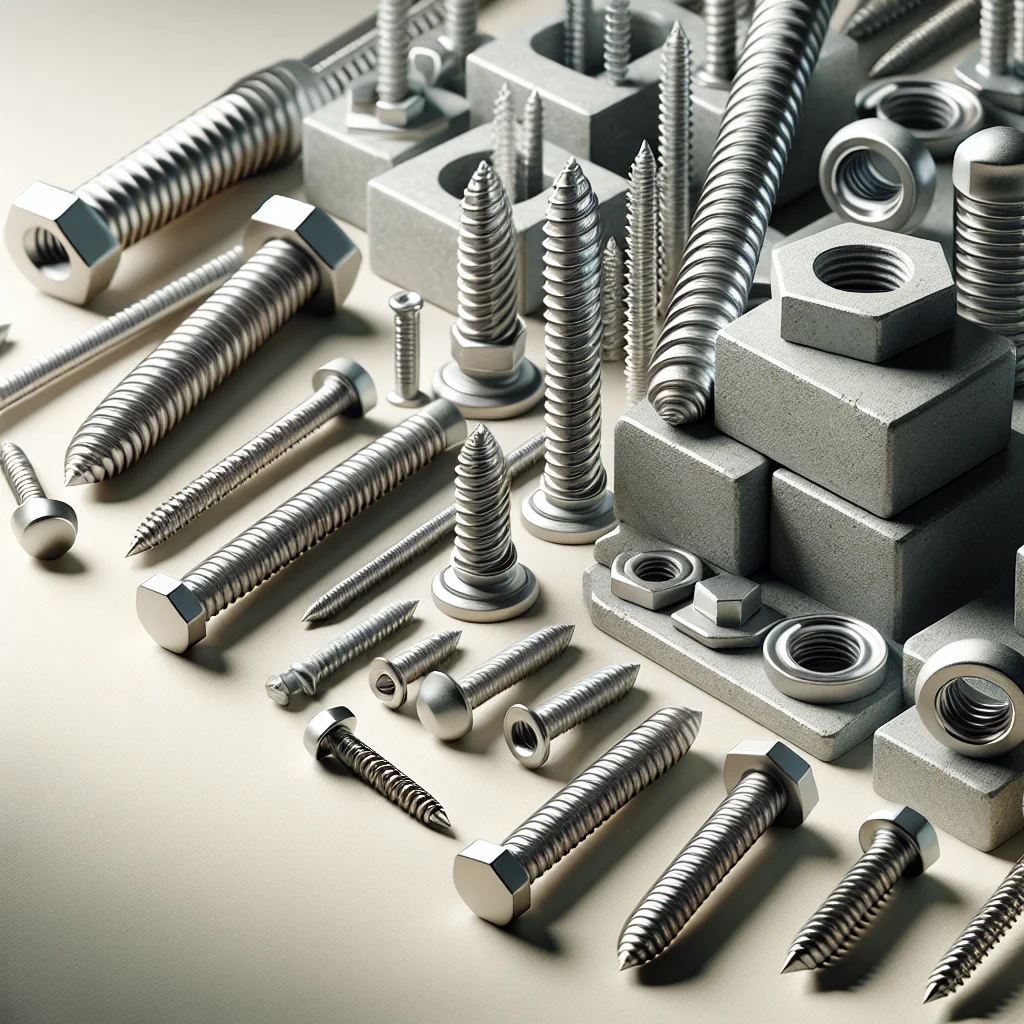
Anchoring into concrete requires the right hardware and method. Choosing the proper anchor affects safety, load capacity, and longevity of a connection.
This article breaks down common anchor types, how to pick one based on the situation, and practical steps to install and inspect them correctly.
Common types and how they differ
There are several anchor types designed to handle different loads, concrete conditions, and installation constraints. Each type works in a different way and has specific strengths.
Wedge anchors
Wedge anchors are mechanical anchors that expand against the concrete when tightened. They are strong in both shear and tension, making them a frequent choice for heavy fixtures.
They require a clean, accurately drilled hole and an allowance for full embedment depth to reach rated performance.
Sleeve anchors
Sleeve anchors use an outer sleeve that squeezes against the hole wall as the bolt is tightened. They are versatile and can work in a range of concrete densities and with hollow masonry.
These anchors are often chosen for medium loads and for applications where slight adjustments during installation are useful.
Drop-in anchors
Drop-in anchors are internally threaded anchors set flush with the concrete surface. A setting tool expands the anchor inside a drilled hole, creating a reliable point for bolts.
They perform well for vertical or overhead attachments when a flush finish is desired before adding the bolt.
Screw anchors (concrete screws)
Concrete screws cut threads into the predrilled hole as they are driven. They are fast to install and removable, making them popular for temporary or adjustable connections.
They rely on the thread engagement and hole size for strength, so correct drilling and installation torque matter.
Chemical (adhesive) anchors
Chemical anchors use a bonded adhesive to secure threaded rods or rebar in drilled holes. They offer strong pull-out capacity and can be used in cracked concrete when properly specified.
They need careful hole cleaning and proper cure time. They can be more forgiving in varied hole conditions than purely mechanical options.
Choosing the right anchor
Selecting an anchor starts with understanding the load type, the concrete condition, and the environment. This reduces risk and avoids over- or under-specifying hardware.
Load type: shear versus tension
Shear loads act parallel to the concrete surface, while tension pulls perpendicular. Some anchors resist shear better than tension, and vice versa.
Match the anchor’s rated capacities to the dominant load. If both loads exist, use the manufacturer’s combined load tables.
Concrete quality and crack status
Older or low-strength concrete and cracked slabs require anchors rated for those conditions. Chemical anchors and specific mechanical anchors have variants rated for cracked concrete.
When in doubt, test a sample or consult technical specifications to confirm capacity under the actual concrete condition.
Embedment depth and edge distance
Embedment depth drives pull-out capacity. Deeper embedment generally increases strength but may hit reinforcement or ducts.
Maintain minimum edge distances and spacing between anchors to prevent concrete breakout or splitting under load.
Corrosion resistance and environment
Outdoor, marine, or chemically aggressive environments need corrosion-resistant materials like stainless steel or specially coated anchors.
Using the correct material avoids premature failure from rust or chemical attack.
Installation steps and best practices
Correct installation is as important as choosing the right anchor. Small mistakes during drilling, cleaning, or setting reduce holding power significantly.
Drilling the hole
Use the recommended drill bit size and type. Hammer drills and carbide bits are standard for concrete.
Keep the drill perpendicular to the surface and drill to the required depth plus allowance for dust accumulation.
Cleaning the hole
Remove all dust and debris from the drilled hole. Use a wire brush, blow-out pump, and vacuum in sequence when possible.
Clean holes drastically improve bond for chemical anchors and ensure mechanical anchors expand correctly.
Setting mechanical anchors
Place the anchor and tighten to the specified torque. Over-tightening can stress the anchor or strip threads; under-tightening leaves it loose.
Follow manufacturer torque charts and check with a calibrated torque wrench when accuracy is important.
Installing chemical anchors
Dispense the adhesive per instructions and inject from the back of the hole outward to avoid air pockets.
Insert the rod with a slow twisting motion to displace voids, and respect the recommended cure time before loading.
Torque verification and load testing
After installation, verify torque where specified and consider a pull test on a sample anchor for critical connections.
Load testing confirms real-world performance and catches installation or material issues early.
Common mistakes and inspection tips
Many failures stem from installation errors rather than the anchor itself. Inspecting installations prevents costly repairs or safety hazards.
Poor hole cleaning
Leaving dust in the hole often halves the adhesive bond or reduces mechanical expansion. Always follow a cleaning sequence and recheck before setting the anchor.
A simple test is to re-run the brush and blow cycle, then visually inspect for dust before proceeding.
Incorrect hole size or depth
Using the wrong drill bit or stopping short of depth affects embedment and strength. Measure twice and drill once to the correct depth.
Mark the bit with tape to avoid under-drilling, and confirm depth using a depth gauge when needed.
Edge distance and spacing errors
Placing anchors too close to an edge or to each other can cause concrete breakout under load. Adhere to minimum edge and spacing rules from the anchor datasheet.
If spacing constraints exist, consider larger anchors or distributed load designs to reduce point loads.
Reusing damaged anchors
Removing and trying to reuse anchors is risky. Threads or expansion components may be damaged, reducing capacity.
Replace anchors after removal and inspect the hole condition before installing a new one.
Inspection checklist
- Drill bit and hole size match manufacturer specs.
- Hole cleaned properly: brush, blow, vacuum sequence where possible.
- Correct embedment depth and edge distances observed.
- Anchor material selected for environment and corrosion risk.
- Proper torque applied and documented where required.
Conclusion
Anchors in concrete are simple in concept but require attention to type, condition, and installation details. The right choice and careful work deliver safe, durable connections.
Understanding load demands, concrete quality, and environmental risks will help select and install anchors that last and perform as needed.
Frequently Asked Questions
What is the difference between mechanical and adhesive anchors?
Mechanical anchors rely on physical expansion or threading in the hole to create a hold. Adhesive anchors use a bonding compound to secure the rod or bolt.
Mechanical anchors are quicker to set, while adhesive anchors often provide higher pull-out strength and can be better for irregular holes or cracked concrete when specified.
Can anchors be used in cracked concrete?
Some anchors are rated for cracked concrete, including certain chemical anchor systems and specially tested mechanical anchors. Always check the product’s cracked-concrete rating before use.
When dealing with cracks, follow design guidance on spacing, embedment, and load limits to avoid unexpected failures.
How deep should an anchor be set?
Embedment depth depends on the anchor type, size, and load requirements. Deeper embedment generally increases pull-out capacity, but specific depths are provided by manufacturers and in technical tables.
Always follow the recommended depth for the chosen anchor and consider reinforcement location when planning drill depth.
Are stainless steel anchors always required outdoors?
Not always, but stainless steel or specially coated anchors are recommended in corrosive or marine environments. Plain steel may corrode and lose capacity over time.
Select material based on exposure, lifespan expectations, and maintenance plans to avoid premature degradation.
Can I test installed anchors on site?
Yes. Tension or pull tests on sample anchors are common where safety is critical. Follow standardized testing methods and use certified equipment.
Testing helps validate installation quality, material performance, and design assumptions under real conditions.