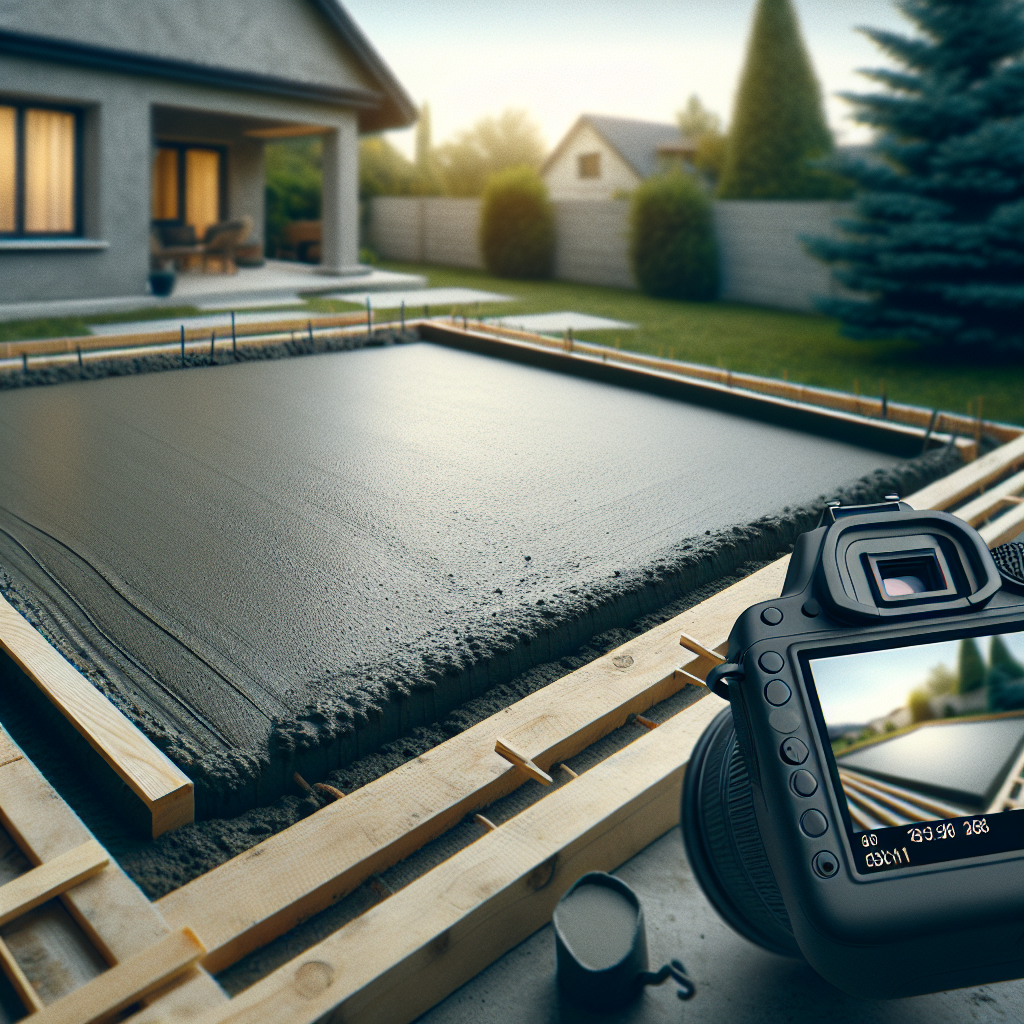
Understanding how much a concrete pad will cost helps you plan a project without surprises. This article breaks down the main cost drivers and shows simple ways to estimate your budget.
You’ll find clear examples, material counts, and common extras that push prices up or down. Read on to get a realistic picture of concrete pad pricing.
What makes up concrete pad cost
Concrete pad cost comes from materials, labor, equipment, and site preparation. Each piece affects the final price differently depending on pad size, thickness, and finish.
Knowing the parts lets you tweak choices—like mix strength or finish—to save money or improve durability.
Materials and mix
Concrete mix is charged by the cubic yard. Prices vary by region and by additives such as fiber reinforcement or air entrainment.
Common choices include standard 3,000–4,000 psi mixes for general pads and higher-strength mixes for heavy loads.
Labor and equipment
Labor covers forming, pouring, finishing, and curing. Equipment rentals or contractor hourly rates add to cost, especially for larger pours.
Complex shapes, slopes, or tight access raise labor time and can increase the hourly bill significantly.
Site prep and extras
Clearing, excavation, compaction, and adding base material are often overlooked but essential. Poor prep leads to early cracking and costly repairs.
Extras like reinforcement (rebar or wire mesh), control joints, and specialized finishes will increase the initial cost but often extend service life.
How to estimate size and volume
Start with the pad’s length, width, and thickness to calculate concrete volume. This step gives the baseline material cost before labor and extras.
Small math errors can lead to big buying mistakes, so double-check dimensions and add a waste factor.
Volume calculation example
To calculate cubic yards: multiply length (ft) × width (ft) × thickness (ft) and divide by 27. Use thickness in feet (2 inches = 0.1667 ft).
For a 10 ft × 12 ft pad at 4 in (0.333 ft) thick: 10 × 12 × 0.333 = 39.96 ft³. Divide by 27 = 1.48 cubic yards. Add 10% waste = 1.63 cu yd.
Common pad sizes and typical volumes
- 4 ft × 6 ft shed pad at 4 in: ~0.59 cu yd (0.65 with waste)
- 10 ft × 10 ft pad at 4 in: ~1.23 cu yd (1.35 with waste)
- 12 ft × 24 ft driveway section at 4 in: ~3.56 cu yd (3.92 with waste)
Typical pricing ranges and real examples
Concrete cost varies by region, season, and supplier. Below are average ranges to use as a starting point. Local quotes will still be necessary.
Prices shown mix material and basic labor but exclude rare extras like heavy equipment mobilization or specialized finishes.
Material-only costs
Concrete material often ranges from $120 to $180 per cubic yard for standard mixes. Specialty mixes or additives raise this figure.
Delivery fees or minimum pour charges can add $50–$200 depending on supplier distance and order size.
Installed pad pricing
Installed prices for a basic 4-inch pad commonly fall between $4 and $8 per square foot. This covers site prep, basic reinforcement, pour, and standard finish.
Expect $6–$12 per square foot for pads needing extra base, thicker sections, or finished surfaces like broom or stamped finishes.
Example cost breakdowns
- Small 6 ft × 6 ft pad (4 in): Material ~0.53 cu yd at $150/yd³ = $80; labor and prep $250–$450; total $330–$530.
- 10 ft × 12 ft slab (4 in): Material ~1.48 cu yd = $222; labor and prep $400–$800; total $622–$1,022.
- 20 ft × 20 ft driveway slab (4 in): Material ~5.93 cu yd = $890; labor, base, and finishing $1,500–$3,000; total $2,400–$3,900.
Factors that push prices up or down
Several variables change costs more than the basic size or thickness. Understanding these helps set realistic expectations and prioritize upgrades.
Many inexpensive upgrades pay off long-term by reducing maintenance or increasing durability.
Thickness and load requirements
Thicker pads use more concrete and are heavier to handle, so both material and labor rise. A 6-inch pad uses 50% more material than a 4-inch pad.
Heavier loads like vehicles or equipment need thicker pads and often steel reinforcement, increasing cost.
Reinforcement choices
Wire mesh is cheaper and OK for light loads. Rebar costs more but controls cracking under heavier loads and in freeze-thaw climates.
Fiber reinforcement is a mid-price option that reduces shrinkage cracking but does not replace rebar where structural strength is required.
Site access and grade
Limited access, steep sites, or narrow driveways increase hand labor and specialized equipment needs. This can multiply labor costs.
Level, well-draining locations with easy truck access shave hours off labor and reduce overall cost.
Finishes and edges
A broom finish is the most common and usually included. Decorative finishes, stamps, or integral color raise labor time and price.
Extra edge treatments, chamfered edges, or specific joint layouts also add to cost but can improve longevity and appearance.
How to reduce concrete pad cost without sacrificing quality
There are practical choices that keep cost down while preserving performance. Smart planning and realistic expectations make a big difference.
Prioritize structural needs over cosmetic touches if budget is tight.
Right-size the pad
Design the pad to match actual use. Oversizing is a common and costly mistake.
Plan layouts to avoid unnecessary thickness increases or extra wide pours that add material and labor.
Choose cost-effective reinforcement
For most residential pads, welded wire mesh or fiber inclusion works well. Reserve rebar for areas with heavy loads.
Ask suppliers about blended options that reduce material cost while providing needed performance.
Prepare the site properly
A well-compacted base of crushed stone reduces the chance of future settling and can prevent costly repairs.
Good drainage, including slight slope away from structures, reduces freeze-thaw damage and extends pad life.
Common mistakes that raise final cost later
Cutting corners early often causes higher costs later. Fixing a failed slab is usually far more expensive than doing it right the first time.
Focus on durability if the pad will see heavy use or sits in a harsh climate.
Skipping adequate base material
Thin or uncompacted bases lead to soft spots and cracking. The cost to replace a settled slab is typically double the initial cost of proper base work.
Use at least 4 inches of compacted crushed stone under most light-duty pads; heavier use may need more.
Ignoring control joints and curing
Control joints manage cracking in predictable places. Skipping them can leave unsightly random cracks and weak points.
Proper curing keeps concrete strong—covering, wet curing, or curing compounds may add time but greatly improve life span.
Conclusion
Estimating concrete pad cost starts with accurate measurements and a clear list of needs. Material volume, labor, site prep, and extras shape most of the budget.
By understanding the main cost drivers, you can balance durability and price, avoid common mistakes, and get a practical estimate before work begins.
Frequently Asked Questions
How much does a basic concrete pad cost per square foot?
A basic installed 4-inch pad typically runs $4–$8 per square foot. Prices shift by region and the amount of site prep needed.
What thickness should a concrete pad be?
Most light-duty pads use 4 inches. For vehicle traffic or heavy equipment, 5–6 inches or more is common and often needed with reinforcement.
Does a concrete pad need reinforcement?
Yes for most permanent pads. Wire mesh is common for light loads, while rebar is better for heavier loads and structural uses. Fiber can help control cracking as a supplement.
How long does a concrete pad last?
With good design, base, and drainage, a quality concrete pad can last decades. Poor prep or heavy loads without proper thickness shorten life significantly.
Can I pour a pad myself to save money?
DIY pours can save labor but require careful planning, mixing, and finishing skill. Small pads are more manageable, while larger pours need helpers, equipment, and experience to avoid problems.
What is the best way to get an accurate cost?
Measure your pad, calculate volume, and get quotes from local suppliers and contractors. Factor in base material, reinforcement, permits, and any special finishes to compare apples to apples.