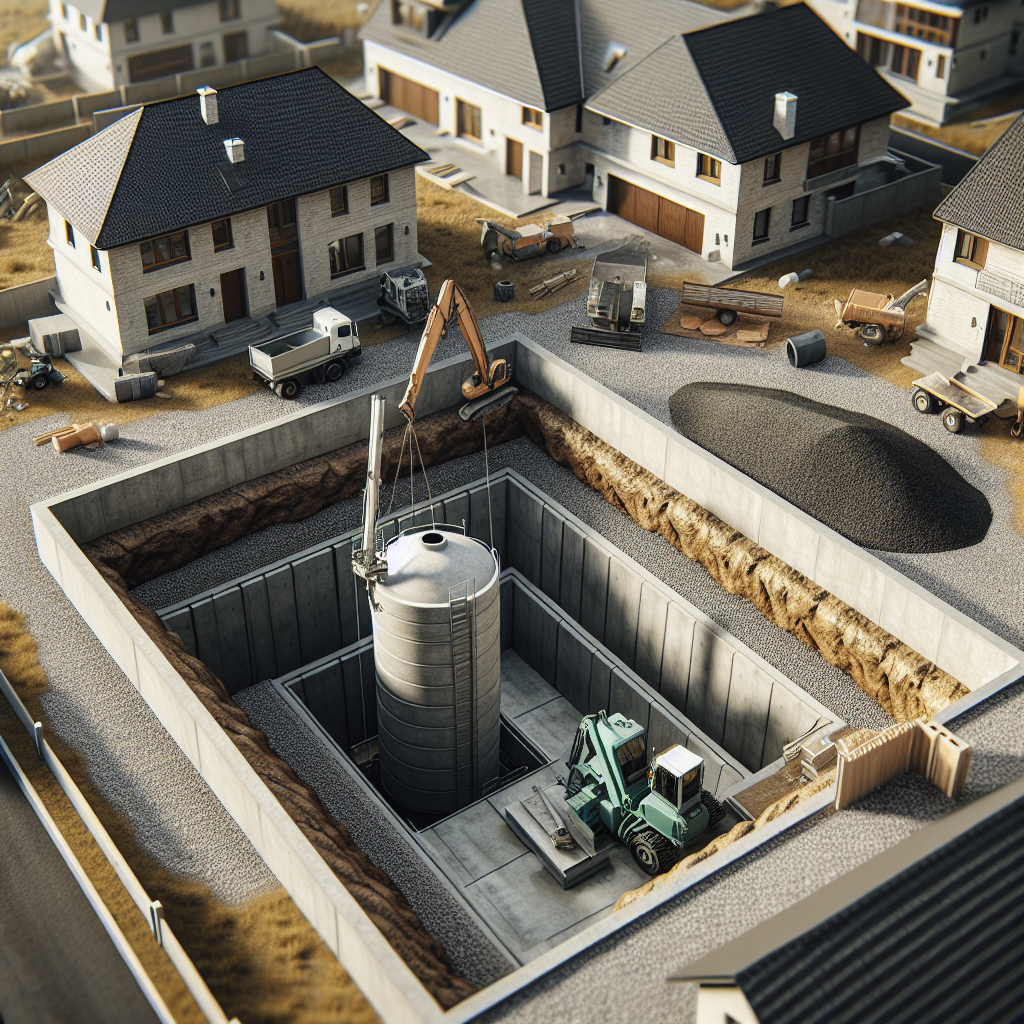
Choosing the right material for an on-site wastewater tank affects longevity, performance, and cost. Concrete remains a popular option because it resists buoyancy, tolerates heavy loads, and can last for decades when built and installed correctly.
This article explains how concrete tanks are shaped, placed, and cared for so a system stays reliable. It focuses on practical design details, common installation steps, and simple maintenance to avoid costly repairs.
Why concrete is a strong option
Concrete offers structural weight and stability that lighter tanks can’t match. That weight helps keep the tank anchored below ground and reduces the chance of flotation in areas with high groundwater.
Besides stability, concrete resists many chemical and biological conditions found in soil and wastewater. When mixed and cured properly, it creates a dense barrier that limits leaks and intrusion.
Key advantages
A few benefits stand out when comparing materials:
- Long service life when joints and surfaces are sealed.
- High load-bearing capacity—suitable under driveways or yards.
- Better fire resistance and minimal deformation over time.
When concrete is not ideal
Concrete isn’t always the best choice. In rocky terrain or very shallow sites, installation can be difficult and costly.
Also, if the mix, reinforcement, or curing is poor, the tank can crack. Proper workmanship and quality control are essential.
Core components and design elements
A standard precast or cast-in-place tank typically includes two or three compartments, inlet and outlet baffles, and an access riser. Each piece must be sized for expected flow and solids retention.
Design dimensions and wall thickness depend on capacity, reinforcement, and local load requirements. Attention to joint details and seals is crucial to prevent leaks and root intrusion.
Compartments and baffles
Multiple compartments improve solids separation. The first chamber receives raw sewage and stores solids, while subsequent chambers allow further settling and clearer effluent.
Baffles slow flow, prevent short-circuiting, and keep scum layers from escaping into the outlet pipe.
Reinforcement and concrete mix
Rebar or wire mesh controls cracking and improves tensile strength. Reinforcement layout should follow structural calculations based on tank size and soil loads.
The concrete mix must have suitable slump and cement content to achieve durability and low permeability. Air-entrainment may be added in freeze-thaw climates.
Seals, joints, and risers
Sealed joints reduce infiltration and exfiltration. Use approved gaskets, butyl rope, or other durable sealants designed for below-grade wastewater applications.
Access risers simplify inspection and pumping. They should be watertight where they meet the tank lid to keep groundwater out.
Site preparation and installation steps
Careful site work sets the stage for a trouble-free installation. Start with a clear excavation plan that accounts for groundwater, existing utilities, and access for equipment.
Level bedding and proper support prevent point loads and tilting. The subgrade should be compacted and free of large stones that could damage the tank bottom.
Excavation and bedding
Excavate an area that allows safe crane or equipment access and space to maneuver. Slope the excavation sides to local safety standards.
Bedding typically uses a compacted granular layer or poured concrete pad. The bedding must be level and continuous to avoid stress concentrations.
Lowering and alignment
Lift the tank using lifting points specified by the manufacturer. Avoid dragging the tank; support it fully as it is lowered.
Check alignment of inlet and outlet pipes. Minor adjustments can be made with compacted bedding; major misalignment requires repositioning before backfilling.
Backfill and support
Backfill in layers and compact each lift to reduce settlement. Use non-corrosive, free-draining material around the tank to avoid creating hydrostatic pressure zones.
When groundwater is present, consider staged backfilling or temporary anchoring until the backfill reaches a level that counters buoyant forces.
Common issues and how to avoid them
Many failures trace back to poor joints, incorrect bedding, or neglected maintenance. Identifying weak points during installation prevents most future problems.
Inspection at critical stages—after bedding, before backfill, and after connecting pipes—catches errors early when fixes are simpler.
Cracking and structural distress
Small cracks can form from shrinkage or thermal changes, but larger cracks indicate reinforcement or mix issues. Control joints and proper curing reduce shrinkage cracking.
If cracking appears after installation, test for leaks and check nearby soil movement. Repair options range from epoxy injection to patching with cementitious repair mortars.
Infiltration and exfiltration
Water entering the tank increases pumping frequency and can overwhelm soils. Conversely, leaked effluent contaminates groundwater.
Use certified joint systems and inspect seals regularly. In wet sites, external waterproof coatings or membranes add protection around critical seams.
Scum buildup and blocked outlets
Insufficient solids retention or failing baffles lets scum clog outlet pipes. Proper compartment sizing and periodic pumping reduce this risk.
Install and maintain effluent filters where required; these prevent solids from traveling to drainfields and causing failures.
Maintenance essentials
Even the sturdiest tank needs routine attention. Simple checks help catch early signs of problems and extend service life.
Routine tasks include inspecting lids and risers, monitoring sludge depth, and arranging desludging on a schedule suited to household size and wastewater load.
Inspection checklist
- Check riser lids for cracks, proper seating, and smell of sewage indicating a seal issue.
- Inspect surrounding ground for wet spots, sinking, or lush vegetation that suggests leakage.
- Look for cracks in exposed concrete and note any changes in alignment or settlement.
Pumping frequency and sludge management
Pumping intervals vary by household size, water use, and tank capacity. Measure sludge and scum levels to determine when emptying is required.
Avoid overloading the tank with chemicals that harm anaerobic bacteria. Conserving water and repairing leaks reduces solids flow into the drainfield.
Cost factors and lifespan expectations
Initial costs include excavation, tank manufacture or cast-in-place work, transportation, and labor. Concrete tanks often cost more upfront than plastic, but longer service life can offset that difference.
Lifespan depends on mix quality, reinforcement, joint materials, and maintenance. Well-built concrete tanks commonly last 30–50 years or more with regular care.
Comparing long-term value
Consider total lifecycle costs: installation, periodic pumping, possible repairs, and replacement. Concrete’s resistance to UV, heat, and surface wear tends to reduce long-term replacement risk.
In high-traffic or heavy-soil-load areas, concrete may be the most economical choice when factoring structural needs and avoidance of damage under load.
Conclusion
Concrete tanks offer durability and stability that fit many property conditions. Proper design, selection of materials, and careful installation make them a resilient choice for on-site wastewater treatment.
Routine inspection and timely maintenance keep systems functioning and protect surrounding soil and water resources from contamination.
Frequently Asked Questions
Below are concise answers to common questions owners and site planners often have about concrete wastewater tanks and how they perform over time.
How long does a concrete tank typically last?
With proper mix, reinforcement, sealed joints, and regular maintenance, a concrete tank can commonly last three to five decades. Local soil conditions and workmanship influence longevity.
Can a concrete tank be installed in high groundwater?
Yes, but extra steps are needed. Heavy tanks resist flotation, but temporary anchoring, controlled dewatering, and staged backfilling help manage buoyant forces during installation.
What are signs of a failing tank?
Look for sinking ground, persistent wet areas, unpleasant odors near risers, or sewage surfacing. These may indicate cracks, joint failure, or drainfield problems.
Is a precast unit better than cast-in-place?
Precast units offer factory-controlled quality and faster installation. Cast-in-place allows custom shapes and on-site adaptation. Choice depends on site access, soil, and project scale.
How can leaks be fixed?
Repairs range from surface patching and sealant application to structural injection for larger cracks. For joint leaks, replacing gaskets or adding external waterproofing can be effective.