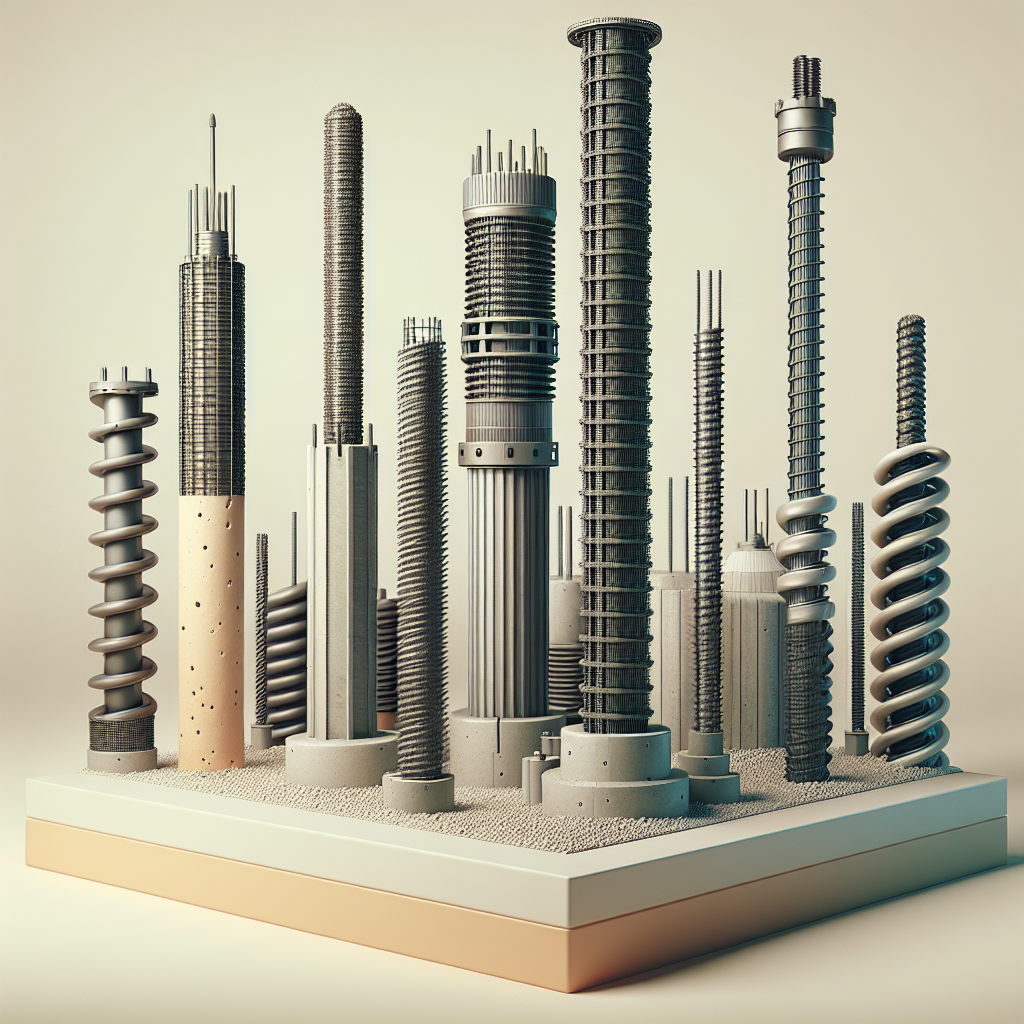
Piles transfer building loads deep into stable soil or rock when shallow foundations can’t do the job. They come in many forms and installation methods, each suited to different ground and load conditions.
This article explains common pile kinds, when to use them, key design points, installation methods, and maintenance concerns to consider during project planning.
When deep foundations become necessary
Piles are chosen when surface soils are weak, compressible, or when high loads need to reach competent strata. They also suit sites with high water table, expansive soils, or where settlement must be limited.
Common triggers include tall structures, heavy machinery loads, poor bearing soils, or bridge and waterfront works. Early soil investigation helps decide whether piles are a practical option.
Common pile types and how they differ
There are many pile forms. Selection hinges on load type, site access, soil profile, noise and vibration limits, and material availability. Below are the most used pile kinds with their advantages and trade-offs.
Driven concrete piles
Precast concrete piles are manufactured off-site and driven into the ground by impact or vibration. They perform well under compressive loads and are durable in many environments.
- Pros: high quality control, immediate load capacity after driving, long service life.
- Cons: heavy equipment needed, noise and vibration during driving, limited length by transport.
Driven steel piles (H-piles, pipe piles)
Steel sections are driven to depth and often used where high axial and lateral capacity are required. Pipe piles can be filled with concrete for added capacity.
- Pros: high strength, slender sections, can be driven through obstructions.
- Cons: corrosion risk in aggressive soils, need for corrosion protection or coatings.
Bored (drilled) concrete piles
Bored piles are formed by drilling a hole, placing reinforcement, and casting concrete in place. They cause less vibration and are useful near sensitive structures.
- Pros: suitable for limited access sites, minimal vibration, long lengths possible.
- Cons: ground water and unstable soils may require casing or drilling fluid, quality depends on casting conditions.
Continuous Flight Auger (CFA) piles
CFA piles are formed by augering into the ground while pumping concrete through the hollow stem as the auger is withdrawn. They are efficient and cause low disturbance.
- Pros: fast installation, low vibration, good for urban sites.
- Cons: not ideal in very loose granular soils unless displaced or controlled, limited to certain diameters and depths.
Helical (screw) piles
Helical piles are steel shafts with helical plates that are screwed into the ground. They carry load via the helix bearing on soil and are often used for lighter structures or where quick installation is needed.
- Pros: minimal noise, immediate loading, easy to install even in confined spaces.
- Cons: limited to moderate loads, suitability depends on soil where helices can bear.
Micropiles
Micropiles are small-diameter, high-capacity elements installed by drilling and grouting. They are useful where access or vibration constraints prevent larger piles.
- Pros: can pass through obstructions, high load per unit area, adaptable to complex conditions.
- Cons: higher cost per unit length, need specialist installation equipment.
Timber piles
Timber piles remain useful where they stay submerged and protected from decay, such as marine or swamp sites. They are low cost and easy to handle.
- Pros: economical where timber is available, simple driving methods.
- Cons: susceptible to rot if exposed to oxygen, limited lifespan in some soils.
Design and site considerations before choosing a pile type
Design must balance capacity, settlement control, constructability, environmental impact, and cost. A geotechnical site study forms the basis of any deep foundation decision.
Key elements include load types, soil stratigraphy, groundwater, nearby structures, and site constraints such as access and noise restrictions.
Load and performance requirements
Identify axial loads (tension and compression), lateral loads, and required serviceability limits. Some piles perform better under lateral loads, so matching pile behavior to load conditions is essential.
Soil profile and bearing strata
Soil layering, strength, compressibility, and depth to competent layers determine whether end-bearing or friction piles are more appropriate. Soft clays often rely on skin friction, while dense sands or rock allow end-bearing piles.
Groundwater and corrosion risks
High groundwater or aggressive chemistry affects material choice and protection. Steel piles may need cathodic protection or coatings, and concrete mixes may be designed for sulfate resistance.
Settlement and tolerances
Predict both immediate and long-term settlement. For sensitive equipment or finishes, tighter settlement limits often require deeper or larger pile systems or more piles to distribute loads.
Testing and verification
Pile testing informs design and quality control. Static load tests, dynamic measurements during driving, and integrity tests detect issues and confirm capacity.
Conclusion
Piles provide reliable foundations when surface soils cannot support required loads. Choosing the right pile kind relies on accurate site data, clear load definitions, and awareness of construction constraints.
Careful coordination between geotechnical assessment and foundation selection reduces risk, controls costs, and improves long-term performance of the structure.
Frequently Asked Questions
Below are concise answers to common questions about deep pile elements and their application on different soil types.
What determines whether piles are needed?
Piles are required when shallow foundations would experience excessive settlement or when strong bearing strata lie too deep. Major factors are the load to be supported, soil strength, and allowable settlement.
How do driven and bored piles compare?
Driven piles offer high quality control and immediate capacity but cause noise and vibration. Bored piles produce less disturbance and can be installed to greater diameters, but depend on careful casting and often need temporary casing in loose soils.
Can pile load capacity be tested on-site?
Yes. Static load tests, dynamic pile testing during driving, and integrity testing like low-strain or cross-hole tomography confirm capacity and detect defects. The choice depends on regulatory needs and project risk tolerance.
How does groundwater affect pile choice?
Groundwater can complicate drilling, require dewatering, influence concrete curing, and accelerate steel corrosion. Some pile methods are less affected by groundwater than others—this factor often shifts selection toward closed-system or treated piles.
Are helical piles suitable for heavy buildings?
Helical piles typically suit light to moderate loads and are popular for residential and retrofit projects. For very heavy structures, multiple helices or alternative pile systems may be required, depending on soil bearing capacity.
What maintenance do piles need over time?
Proper initial material choice and corrosion protection minimize maintenance. Periodic inspections at exposed connections, monitoring of settlement, and addressing drainage or erosion issues keep pile-supported structures functioning well.