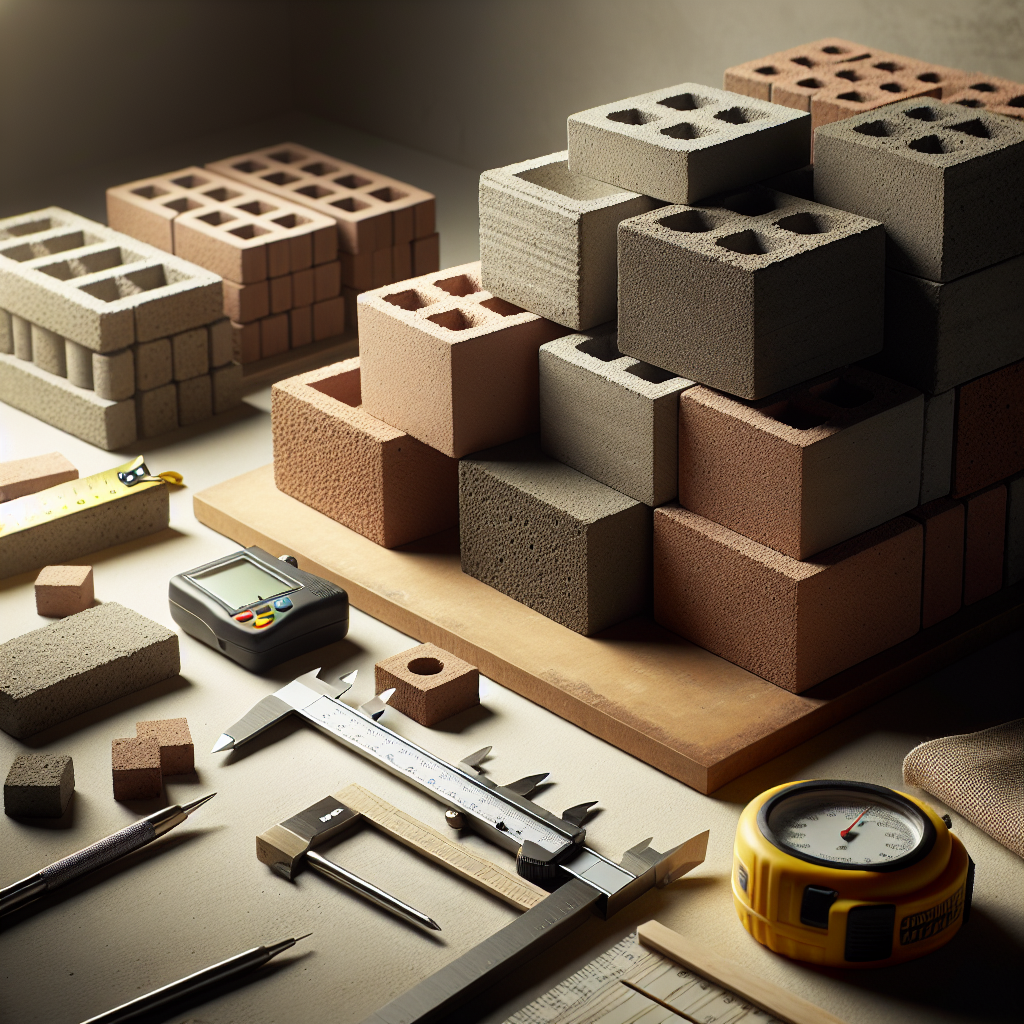
Bricks are one of the oldest building elements still in everyday use. Knowing typical dimensions makes designing walls, estimating quantities and ordering materials much simpler.
This article explains the common sizes you are likely to encounter, why dimensions vary by region and type, and how those differences influence construction decisions and material needs.
Common sizes and regional standards
There is no single global standard. Countries and regions set preferred dimensions that suit local production methods and traditional bonds.
Sizes are often described by length, width and height, and manufacturers may add tolerances. Understanding the range helps when matching new work to existing structures.
Typical metric dimensions
Many countries use metric brick sizes. A common modular brick measures 190 mm long, 90 mm wide and 57 mm high. That size works well with 10 mm mortar joints, allowing easy calculation of module multiples.
Other popular metric sizes include 215 x 102.5 x 65 mm and 240 x 115 x 71 mm. These reflect local practices, thermal needs and tooling used in production.
Typical imperial sizes
In regions with imperial heritage, common dimensions are expressed in inches. A widely used format is 8 x 4 x 2 1/4 inches. This aligns with older construction traditions and tooling.
Imperial sizes still appear in renovation work or where local codes reference older standards. Converting between systems requires careful rounding and attention to mortar joint thickness.
Modular and non modular options
Modular bricks are designed to simplify layout, frequently fitting a predictable pattern of length plus joint equals an even module. Non modular bricks may be slightly larger or smaller, which can complicate course counts and openings.
When planning, check whether a chosen brick is modular to keep window and door lintel placement consistent without excessive cutting.
How dimensions affect construction
Brick size influences structural behavior, thermal mass, and aesthetic rhythm. A small change in height or length alters the number of courses and the appearance of mortar lines.
Builders, architects and homeowners should consider how brick proportions relate to wall thickness, bond patterns and detailing at corners and openings.
Wall thickness and strength
Wall thickness is often expressed in terms of brick lengths. A single-brick wall uses the width of one brick, while double-brick or cavity walls use two or more units.
Larger bricks can speed up construction because fewer units are needed per square metre, but they may change the load distribution and require different reinforcement or ties.
Bond patterns and visual effect
Bond patterns such as stretcher, header, Flemish and English bond depend on brick proportions. Length to height ratio determines how easy it is to create certain bonds without cutting.
Some patterns look best with longer bricks, while compact bricks can give a denser, finely textured appearance. Choosing a size is both a technical and aesthetic decision.
Mortar joint impact
Mortar joints usually add 8 to 12 mm to each course. That means the overall dimensions of a wall depend on both brick and mortar sizes.
When calculating courses per metre, include joint thickness. That ensures window sills and lintels fall at predictable courses rather than awkward partial bricks.
Materials and types that affect size
Different manufacturing methods produce bricks in varying sizes. Material, kiln type and forming process all influence final dimensions and tolerances.
Common types include clay fired bricks, concrete bricks and engineered or perforated bricks, each with typical size ranges and performance traits.
Clay bricks
Clay bricks are shaped from natural clay and fired. They often come in traditional sizes and offer a range of textures and colours.
Pressed clay bricks can be highly regular, while handmade styles show more variation and often require allowances during laying to achieve a rustic look.
Concrete bricks
Concrete bricks are produced from cement and aggregate in moulds. They can be manufactured in many sizes and often have tighter tolerances than handmade clay bricks.
Because they can be cast to required dimensions, concrete bricks are common where specific sizing or large format units are helpful.
Perforated and lightweight bricks
Perforated bricks include holes that reduce weight and improve insulation. Their external dimensions match solid bricks but core geometry affects thermal and acoustic properties.
Lightweight aggregates or foamed concrete bricks also change handling and bonding properties, with makers offering standard sizes that fit common mortar joint practices.
Calculating quantities and planning
Estimating the number of bricks required depends on unit size, wall area, mortar joint thickness and allowance for waste. A consistent method removes surprises during construction.
Careful measurement and simple arithmetic provide a reliable estimate that can be adjusted to local production tolerances and cutting waste.
Basic quantity calculation
Step 1 Measure wall area in square metres or square feet. Step 2 Determine the area of one brick including the mortar joint. Step 3 Divide wall area by brick area to get a unit count.
- Example calculation based on metric modular brick 200 x 100 x 65 mm with a 10 mm joint
- Effective module becomes 210 x 110 mm so area per brick is 0.0231 m2
- For a 10 m2 wall divide 10 by 0.0231 to get roughly 433 bricks
This simple approach gives a first estimate. Account for openings, corners and courses that may need cutting.
Wastage and cutting allowance
Always add a percentage to cover breakage, cutting and sorting. Typical allowances range from 5 to 10 percent depending on handling and the amount of cutting expected.
Conservatively plan a higher allowance when working with handmade bricks or complex bond patterns that require many cuts.
Ordering and storage notes
Order extra from the same batch or kiln run when possible, since colour and size can vary between batches. Store bricks on a flat, dry surface and protect from frost and moisture.
Mix tiles or facing bricks from several pallets during laying to reduce visible banding from production differences.
Practical tips when matching existing work
When adding to an existing structure, take actual measurements rather than relying on nominal sizes. Visual matches rely on both dimension and surface finish.
Where exact matches are unavailable, consider using a complementary size and adjusting mortar joint width slightly to align courses.
Measuring an existing wall
Measure across several courses and divide by the number of courses to find average course height including mortar. Do the same horizontally if visible.
Record several samples as brick sizes can vary within the same wall, especially in older buildings.
Dealing with mismatches
Small differences can be reconciled by adjusting mortar joint thickness, using a different bond at the junction, or incorporating a transition course made of cut bricks.
Major differences may require reclamation bricks or commissioning a custom run if a perfect match is essential.
Conclusion
Understanding common dimensions and how they interact with mortar joints, bonds and wall thickness makes planning smoother. Size choices affect aesthetics, speed of build and material quantities.
Careful measurement, modular thinking and sensible allowances for waste help avoid costly errors and ensure a cohesive result when selecting brick types and sizes.
Frequently Asked Questions
What is the most common brick size used today?
Common sizes vary by region, but metric modular bricks around 190 to 200 mm in length and 57 to 65 mm in height are widely used. In imperial areas, an 8 x 4 x 2 1/4 inch format remains common.
Are brick sizes the same worldwide?
No. Dimensions reflect local standards, production methods and historical practices. Converting between systems requires accounting for mortar joint thickness and local tolerances.
How much does a mortar joint change the effective brick size?
Mortar joints commonly add 8 to 12 mm per joint. When calculating module dimensions include the typical joint size to get the effective length and height used in layout calculations.
Can I mix bricks of different sizes in one wall?
Mixing sizes is possible but complicates bonding and may require cutting or special transition courses. It is easier when both units share a common modular relationship.
How much extra should I order to allow for waste?
Typical allowances range from 5 to 10 percent. Use the higher end for handmade bricks, complex patterns or large amounts of cutting to ensure you have adequate stock.