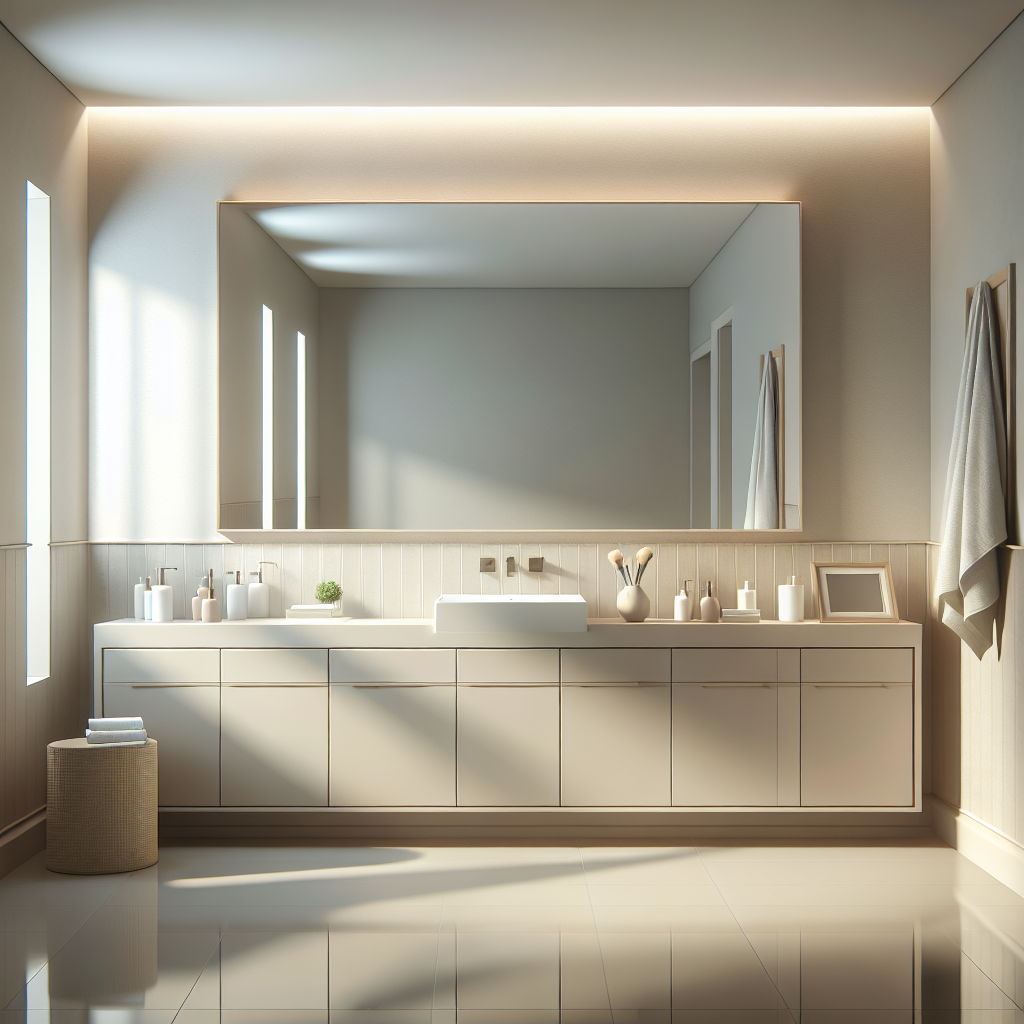
Picking the right vanity size makes a bathroom feel balanced and function well. Small mistakes in width, height, or depth can create cramped counters, awkward plumbing runs, or wasted storage.
This post breaks down typical measurements, clearances, and design choices so you can choose a vanity that fits your space and daily routine without second-guessing the numbers.
Planning vanity size and layout
Start by measuring the full width of the bathroom wall where the vanity will go. Note doors, windows, and the locations of drains and supply lines before shopping.
Consider traffic flow: the vanity should allow people to move around the room without brushing the countertop or cabinet corners.
Recommended clearances
Leave at least 30 inches of clear floor space in front of the vanity for comfortable use. If a toilet or shower door faces the vanity, increase that to 36 inches when possible.
Side clearances matter too. Keep a minimum of 6 inches between a vanity cabinet and adjacent fixtures like a toilet to avoid tight squeezes.
Measuring your space
Measure wall width, the distance from wall to obstacle, and the finished floor to center of the drain. Write these down in inches and double-check before ordering a unit.
Also measure the distance from the floor to windowsills or light switches to ensure the vanity height and countertop won’t block or interfere.
Common vanity heights and widths
Vanity sizes vary by style and age of the home. Knowing typical ranges makes picking a unit easier and helps the sink align with plumbing and mirror heights.
Below are common widths and heights used today, with options that suit different needs.
Single sink standards
Common widths for single-sink vanities are 24″, 30″, 36″, and 42″. Smaller homes often use 24″ or 30″, while 36″ gives more counter space without taking over a room.
Traditional cabinet height is around 30″ to 32″. Recently, many people prefer slightly taller vanities—34″ to 36″—which are more comfortable for adults and align better with modern countertops.
Double sink options
Double vanities typically start at 60″ wide to allow enough counter and storage between sinks. Common widths include 60″, 72″, and 84″.
Each sink should have at least 24″ of width to feel usable. Allow extra surface space between sinks to prevent crowding and to provide shared storage or a central drawer unit.
Floating and furniture-style heights
Floating vanities often sit at counter heights of 30″ to 34″, depending on whether the intent is a low, modern look or an ergonomic setup. Mounting height can be adjusted to suit users.
Furniture-style vanities mimic dressers and may have deeper cabinets. Their heights vary but usually remain in the 30″–36″ range to match countertop and mirror sizing.
Cabinet depth, countertop overhang and sink types
Depth affects storage and comfort. Standard cabinet depth is 21″ to 24″, which works with common countertop overhangs and leaves room for plumbing behind drawers and doors.
Sink type influences required counter depth and installation style. Consider how you use the vanity when choosing between undermount, vessel, or integrated sinks.
Depth and legroom
Bathroom vanities typically range from 18″ to 24″ deep. A shallower cabinet (18″) saves space in narrow bathrooms but limits storage depth.
For seated makeup or grooming areas, allow knee space of 21″ to 24″ depth for comfort. Floating units can provide legroom without sacrificing cabinet storage elsewhere.
Top materials and overhang
Countertops come in laminate, stone, quartz, or solid surface. Overhangs are usually 1″ for laminate and 1.5″ for stone, though custom options vary.
Make sure the overhang doesn’t push the sink edge too close to the wall or obstruct drawer operation. Measure the countertop edge to wall distance first.
Integrated, undermount and vessel sinks
Undermount sinks require standard counter depth and a hole cut into the countertop. They offer a clean look and easy wipe-downs.
Vessel sinks sit on top and need less undermount clearance but require higher faucets and more vertical room. Integrated sinks combine with the countertop for a seamless surface and often need custom sizes.
Special considerations: accessibility, storage and plumbing
Different households and bathroom layouts create unique demands. Think about who uses the space and how often before settling on dimensions.
Plumbing location, storage needs, and future accessibility should all influence the final choice.
Accessibility and ADA-friendly options
For wheelchair access, leave a 30″ x 48″ turning space and provide knee clearance under the sink of at least 27″ high, 30″ wide, and 19″ deep.
Mount the countertop height to suit the user—often slightly lower than modern tall vanities—and ensure controls are reachable without stretching.
Storage needs
Drawers make small items easier to organize than deep cabinets. If storage is the priority, choose a deeper vanity or plan for tall medicine cabinets and shelving above the unit.
Divide storage between daily items near the sink and bulk supplies stored elsewhere to keep counters uncluttered.
Plumbing and installation
Existing plumbing locations often dictate vanity placement. Moving drain lines adds cost, so check the center-to-wall drain height before picking a unit.
Standard drain center is usually 18″ from the wall and 20″–22″ from the floor in many setups, but confirm with measurements in your space.
Material and style choices that impact size decisions
The material of the vanity affects weight, thickness, and sometimes depth. Solid wood cabinets may require different supports than lightweight composites.
Style choices like open shelving, legs, or a full-height pedestal change how a vanity connects to the wall and floor, and they can influence perceptions of space.
Solid wood vs. engineered materials
Solid wood offers durability and a furniture look but can be heavier and more costly. Engineered plywood or MDF is lighter and often more moisture resistant when finished properly.
Choose materials based on humidity exposure and the level of wear expected—bathrooms with heavy use benefit from moisture-resistant finishes.
Open shelves, legs and visual space
Open shelving and legged vanities can make a bathroom feel larger because the floor is visible beneath the unit. Full-height cabinets maximize hidden storage but can dominate the room visually.
Mix closed drawers with an open shelf to balance storage and an airy look without sacrificing function.
Conclusion
Choosing the right vanity size is about balancing measurements with daily needs. Accurate measurement, attention to clearances, and knowing common sizes prevent surprises during installation.
Whether you pick a compact single sink, a roomy double unit, or a floating vanity, the right dimensions make the space more livable and attractive.
Frequently Asked Questions
What is the best vanity height for most adults?
Heights between 32″ and 36″ work well for most adults today. Taller countertops reduce bending and feel more ergonomic. If multiple people use the bathroom, choose a middle ground or adjust with cabinet and sink style.
How much space should I leave in front of a vanity?
Allow at least 30″ of clear floor space in front of the vanity. If possible, aim for 36″ in high-traffic bathrooms or where doors and fixtures face each other to ensure comfortable movement.
Can I install a double vanity in a small bathroom?
Double vanities generally require a minimum of 60″ of width. For smaller rooms, consider a wider single sink with extra counter space, or a shallow-depth double setup, but be careful not to crowd circulation paths.
What vanity depth is best for storage?
Depths of 21″ to 24″ give good storage without overwhelming the room. If floor space is limited, a shallower 18″ unit saves room but reduces usable storage depth.
Do floating vanities affect plumbing placement?
Yes. Floating units require plumbing to be set into the wall or routed in a way that leaves open space beneath. Confirm wall cavity depth and plumbing layout before choosing a floating design.
How much clearance should be between sinks on a double vanity?
Aim for at least 12″ to 18″ of counter space between sink edges so two people can use the area comfortably. Each sink should ideally have at least 24″ of cabinet width to provide practical bowl size and elbow room.