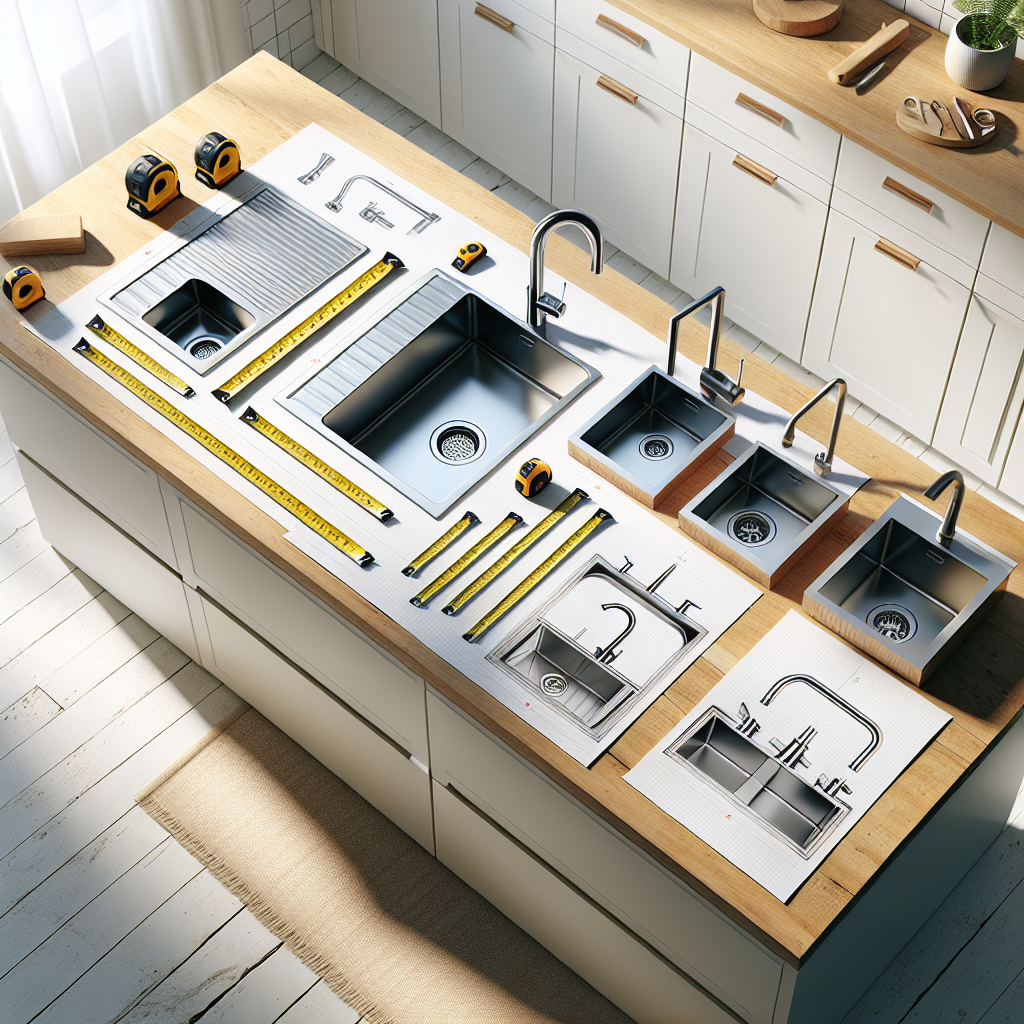
Picking the right sink size makes daily tasks easier and keeps counters balanced. This post walks through typical measurements, depth options, and mounting styles so you can pick a sink that fits the room and how you use it.
Whether you are updating a cooking area or refreshing a wash space, understanding the numbers helps avoid surprises. Read on to compare common dimensions, think about workflow, and match a sink to cabinet and counter spacing.
Sizing basics and what measurements mean
Sinks are described with three main numbers: width (left to right), front-to-back depth, and bowl depth. Each value affects fit and function in different ways.
Width determines how much counter space the sink will take. Front-to-back depth affects overhang and cabinet fit. Bowl depth changes how much water it holds and how comfortable it is to use.
Width vs. usable workspace
Wider sinks give more room for large pots but reduce counter area. If counter prep space is limited, a narrower sink with deeper bowls may be a better tradeoff.
Front-to-back depth and cabinet size
Standard counters are about 24 inches deep. A sink labeled 22″ front-to-back will sit comfortably with some counter lip. If counters are custom, measure from the back wall to the front edge before picking a sink.
Bowl depth and ergonomics
Shallow bowls (5–7 inches) reduce bending and splashes but hold less water. Deep bowls (8–10 inches) fit large items but can be tiring if the counter height and body posture aren’t matched.
Common kitchen sink measurements
Kitchen sinks come in single-bowl, double-bowl, and divided formats. Each style has common size ranges that match typical cabinet widths.
Match sink width to cabinet width: a 33″ or 36″ cabinet often pairs with a 33″ sink, while a 24″ cabinet commonly takes a 22″ sink. Leave room for mounting hardware and faucet clearance.
Single-bowl kitchen sinks
Single bowls are ideal for washing large cookware. Typical widths: 24″ to 36″. Typical bowl depths: 8″ to 10″. Front-to-back dimensions often range 18″ to 22″.
- Popular size: 33″ x 22″ x 9″ (width x front-to-back x bowl depth)
- Smaller single bowl: 24″ x 18″ x 9″ for compact kitchens
Double-bowl kitchen sinks
Double bowls balance washing and rinsing tasks. Common widths: 30″ to 48″ depending on bowl sizes. Smaller double sinks often use uneven bowls such as a large and a small bowl.
- Typical double: 36″ x 22″ with two bowls around 12″–14″ wide each
- Compact double: 30″ x 18″ for tighter spaces
Farmhouse and integrated styles
Apron-front (farmhouse) sinks sit forward of the cabinet face and need careful counter and support planning. Widths commonly mirror standard sizes but require specific cabinet reinforcement.
Undermount and integrated sinks must match the cabinet and countertop cutout precisely. Measure cabinet interior and countertop thickness before ordering.
Bathroom sink sizes and mounting types
Bathroom sinks are usually smaller but still come in many forms: drop-in, undermount, wall-mounted, and vessel. Each style affects how much counter space remains and how plumbing is accessed.
Consider mirror and faucet placement. Small changes in sink width can change the look and functionality of a vanity significantly.
Drop-in and undermount basins
Common vanity sink widths range from 16″ to 31″. For a single bowl on a 24″ vanity, a sink around 18″–20″ wide is typical. Undermount sinks give a cleaner edge but need a solid countertop material.
- Compact vanity: 16″–18″ wide sinks on narrow counters
- Standard single vanity: 20″–24″ wide sinks on 24″–30″ vanities
- Wider double vanities: two 18″–21″ sinks on 48″+ counters
Vessel and wall-mounted options
Vessel bowls sit on top of the counter and are often 12″–18″ wide. They need taller faucets or wall spouts. Wall-mounted sinks free up floor space but require solid wall backing and different plumbing placement.
Materials, depth choices, and planning tips
Material affects weight, thickness, and the feel of the sink. Common options include stainless steel, composite granite, fireclay, and porcelain-coated steel.
Each material behaves differently when sized. For example, thin stainless steel can be wider without excessive weight, while fireclay is heavier and needs stronger cabinet support when deep or wide.
Depth tradeoffs by task
If you wash large pans often, prioritize bowl depth and width. If food prep is the main use, a shallower and wider setup helps avoid bending and splashing.
- 5″–7″ depth: easier on the back, better for light use
- 8″–10″ depth: fit large cookware, may require higher counters or mats
Mounting style and countertop impact
Top-mount sinks are easier to install and replace but show a rim. Undermount sinks create a seamless look and make cleaning counters easier, but they need firm countertop material and precise cutouts.
- Top-mount (drop-in): simpler, rim visible
- Undermount: seamless look, needs solid counters
- Farmhouse: forward-facing apron, cabinet modifications likely
Clearances and faucet fit
Allow at least 4″ between the sink edge and backsplash for faucet placement, and ensure the faucet reach covers the center of the bowl. Check for handles or sprayers that require extra space to operate.
Also consider garbage disposal clearance and trap placement under the bowl, which can affect drawer layouts and storage under the sink.
Conclusion
Measuring cabinets, counters, and available workspace first prevents costly mistakes. Think about how you use the area and choose width, depth, and mounting style that match daily tasks and room layout.
Balance size with storage and clearance. A well-chosen sink will feel like a natural part of the space and make routine chores easier over time.
Frequently Asked Questions
Below are short answers to common questions about sink sizing and selection.
What is the most common kitchen sink size?
The most common kitchen sink width is around 33″ to 36″ for single-basin units paired with standard cabinets. Many homes also use 30″ or 33″ double-bowl sinks depending on cabinet space.
How deep should a sink be for comfort?
Depths between 8″ and 9″ are popular because they balance capacity with comfort. Shallower bowls around 5″ to 7″ are easier on the back but hold less water.
Can I put a wide sink on a smaller cabinet?
A sink should match cabinet width closely. Placing a sink wider than the cabinet can cause support and installation issues. Always measure cabinet opening and internal reinforcement before buying.
Does sink material change recommended sizes?
Material affects weight and support needs rather than ideal size. Heavy materials like fireclay or thick stone require stronger cabinet support, especially in wide or deep configurations.
How much counter space should be on each side of the sink?
At minimum, aim for a small landing area of 6″ on one side for drying or staging. Ideally, 12″ or more on at least one side improves workflow and keeps prep space functional.
Are farmhouse sinks compatible with standard cabinets?
Farmhouse sinks usually need a modified or custom cabinet front. They can work with standard cabinets if the cabinet is altered and reinforced to carry the sink weight and apron placement.
How do I measure for an undermount sink?
Measure the countertop cutout and cabinet interior. For undermounts, ensure the countertop material is thick and strong enough to support the sink and that the cutout dimensions match the sink template provided by the manufacturer.