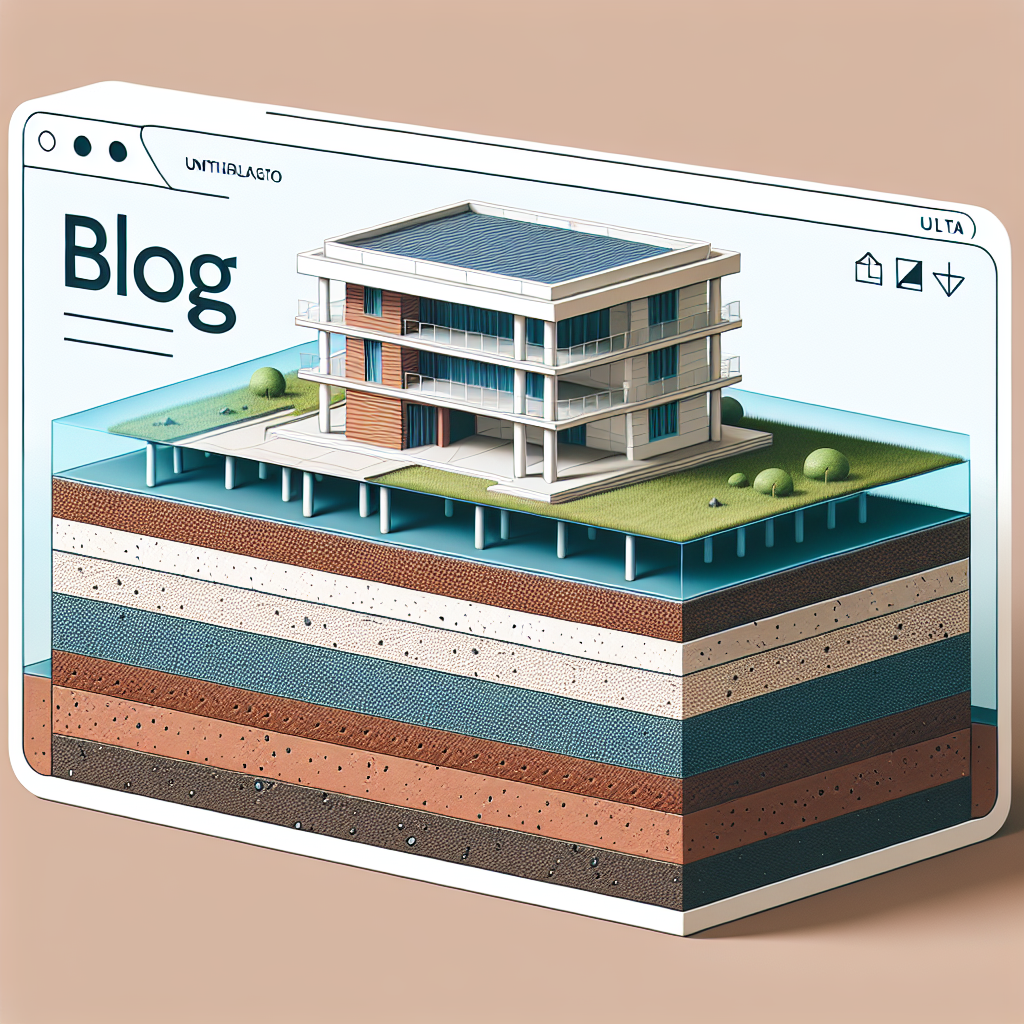
A mat foundation is a wide concrete slab that supports an entire building footprint. It spreads loads across a large area, which can reduce differential settlement and simplify footing layout on weak or variable soils.
This post explains when this slab approach is a sensible choice, what practical benefits it offers, and the key design and construction points to watch. The focus is on clear, usable information without technical clutter.
When a slab-style foundation is a sensible choice
Choosing a slab that covers the whole footprint often comes down to soil and load conditions. Where isolated footings would be close together or soils vary across the site, a single slab delivers uniform support.
It also becomes attractive when structural columns are tightly spaced or when basements and columns create complex bearing patterns that are better handled by one continuous element.
Sites with weak or variable soils
When the bearing capacity of the soil is low, spreading loads reduces the pressure on the ground. A broad slab can limit settlement and lower the risk of unequal sinking between columns.
Tightly spaced columns and dense layouts
Buildings with many close columns often require footings that would overlap if designed individually. A continuous slab eliminates conflicts and can be more efficient than numerous isolated footings.
Structures sensitive to differential movement
Hospitals, laboratories and precision facilities may need very uniform support. A monolithic slab helps minimize differential settlement that could affect equipment or finishes.
Practical benefits that make it popular
A slab foundation can simplify construction and offer clear performance advantages. The slab behaves as a single element, making load transfer predictable in many situations.
Below are common benefits to keep in mind when comparing foundation options on a given site.
Even load distribution
By spreading loads over a wide area, the slab reduces the unit pressure on soil. This lowers the chance of localized bearing failures and gives more uniform settlement behavior across the building.
Reduced risk of differential settlement
Because the slab ties columns and walls together, it resists differential movements between elements. That reduces cracking in finishes, misalignment of doors and other serviceability issues.
Simpler excavation and coordination
Excavating a single slab footprint is often faster than digging many isolated pits. For sites with shallow utilities or where deep excavation is costly, a slab can be less disruptive.
Potential cost savings
In many cases, using one slab reduces formwork, reinforcement detailing and inspection points compared with multiple footings. Savings depend on soil, concrete prices and reinforcement needs.
Soil and design considerations to evaluate
No foundation choice is automatic; the right design follows from careful assessment. Testing and analysis reveal whether a slab is the best technical and economic option.
Here are the main technical aspects to check during early planning.
Soil investigation and bearing capacity
Reliable boreholes and lab tests are essential. The foundation designer uses these data to estimate allowable bearing pressure and settlement behavior under the slab.
Slab thickness and reinforcement layout
Slab thickness depends on loads and soil stiffness. Reinforcement is arranged to handle bending, shear and punching around columns. Detailing should follow local structural codes and best practices.
Settlement analysis
Both total and differential settlement must be estimated. Compressible layers, groundwater changes, and nearby excavations can influence future movement and need to be accounted for.
Interaction with basement walls and utilities
If a basement or heavy underground services are present, the slab must integrate with retaining elements. Coordination prevents stress concentrations and simplifies waterproofing details.
Construction steps and cost factors
Building a slab-type foundation follows familiar concrete-work steps, but scale and reinforcement patterns differ from isolated footings. Planning reduces surprises and cost overruns.
Costs depend on concrete volume, reinforcement, excavation and finishing requirements. Local labor rates and access also matter.
Site preparation and leveling
Proper compaction, removal of organic soil, and provision of a working platform are critical. A stable base helps ensure uniform slab performance after pouring.
Formwork, placing and curing
Large slabs need coordinated placing to avoid cold joints. Careful planning includes scheduling concrete deliveries, vibration strategy, and a curing plan to develop strength and minimize cracking.
Reinforcement and jointing
Rebar or welded wire mesh must be supported at the correct cover height. Control joints are often introduced to control cracking at predictable lines, based on slab geometry and restraint conditions.
Primary cost drivers
- Concrete volume and strength class.
- Amount and complexity of reinforcement.
- Excavation and ground improvement needs.
- Access, weather constraints and labor availability.
Long-term performance and upkeep
With proper design and execution, a slab foundation can perform reliably for decades. Understanding common deterioration mechanisms helps owners plan inspections and simple maintenance.
Below are practical points that affect long-term behavior and durability.
Cracking and repair strategies
Small cracks are normal in concrete and rarely reduce structural capacity. Monitoring and sealing prevent water ingress and reduce corrosion risk to reinforcement.
Water management and drainage
Keeping groundwater and surface water away from the slab edges prevents saturation of supporting soils. Proper site grading, drains and waterproofing extend service life.
Monitoring settlement and movement
Simple settlement markers and periodic surveys help detect unexpected movement early. Early intervention often avoids larger repairs later on.
Conclusion
A wide, continuous slab is a robust option where soil conditions or building layouts make isolated footings impractical. It spreads loads, reduces differential settlement and can simplify coordination on site.
Decisions should be based on soil tests, load patterns and cost comparisons. When planned and executed carefully, a slab foundation gives stable support and predictable performance over the life of the structure.
Frequently Asked Questions
How does a slab behave on soft ground?
On compressible or soft soils, the slab lowers bearing pressure by spreading loads. Designers may combine a thicker slab with soil improvement measures to reduce settlement to acceptable levels.
Are slabs more expensive than isolated footings?
Costs vary. For small buildings with strong soil, isolated footings can be cheaper. Where footings would be close together or soils are weak, a slab often becomes the more economical choice.
What are typical reinforcement patterns?
Reinforcement is placed in two directions to resist bending and shear. Around columns, additional bars or a local thickening may be provided to prevent punching shear.
Can a slab be used where groundwater is high?
Yes, but waterproofing, drainage and possibly a protective sub-base are needed. High water can affect compaction and concrete curing, so construction timing and methods should adapt accordingly.
How is cracking controlled?
Control joints, adequate reinforcement, correct curing and managing restraint are common measures. Small cracks are typical; sealing and monitoring prevent long-term issues.
When should ground improvement be considered?
If predicted settlements or bearing pressures exceed acceptable limits, techniques like densification, stone columns or grouting can improve the subgrade and make a slab feasible and more durable.