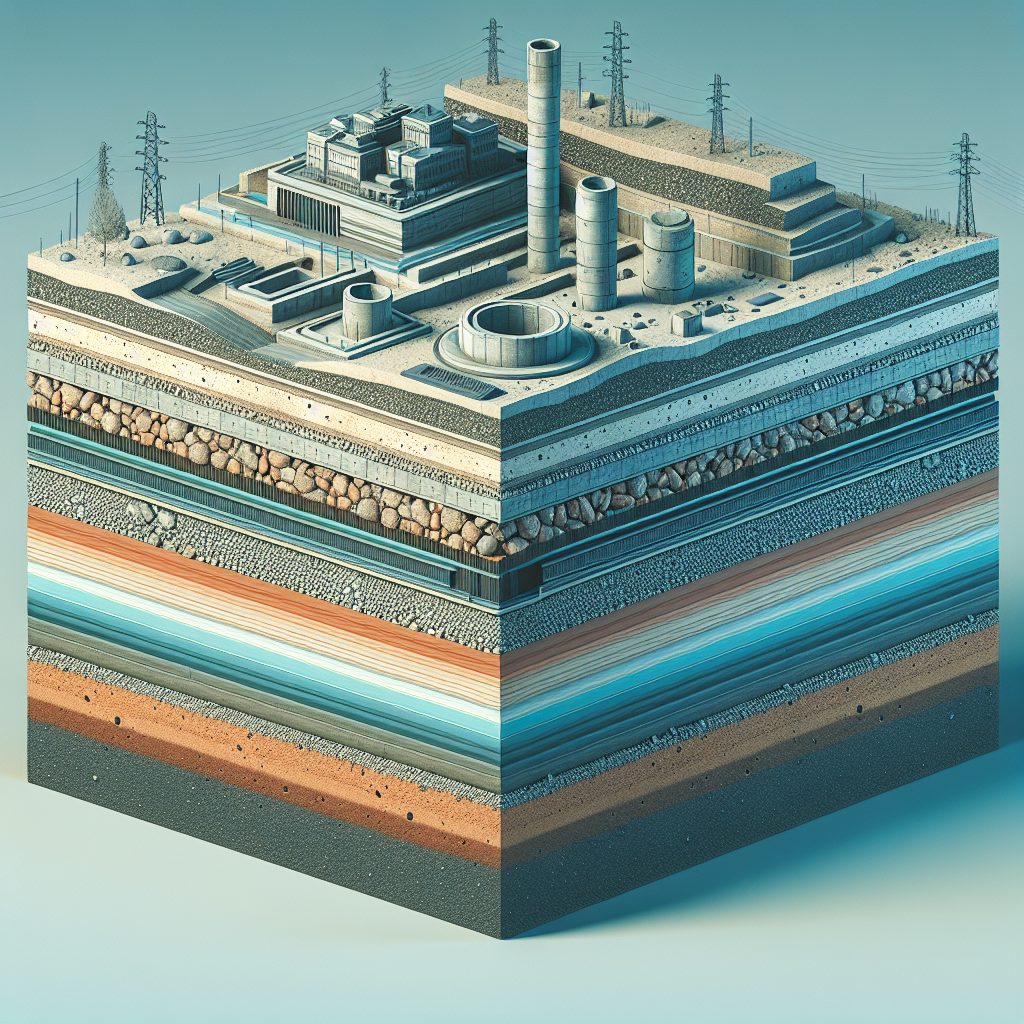
Strong and reliable ground support is the backbone of any lasting structure. Understanding how soil, loads, and materials interact lets teams make smarter choices that reduce risk and control settlement over time.
This article covers modern approaches to foundation work, from soil assessment to construction monitoring, with clear explanations of key concepts and common techniques used in complex projects.
Why solid ground support matters
Foundations transfer building loads safely into the ground. When that transfer is predictable, structures remain stable and durable.
Poorly chosen or executed support systems lead to uneven settlement, tilting, or even structural failure. Early attention to soil behavior and load paths prevents costly repairs later.
Understanding subsurface conditions
Good decisions start with detailed site information. Subsurface conditions vary widely and influence every subsequent choice about support systems.
Field investigations, lab testing, and geophysical surveys reveal soil layers, groundwater, and potential anomalies that affect bearing capacity and settlement.
Common investigation methods
Standard penetration tests (SPT), cone penetration tests (CPT), and boreholes remain core tools. Each method provides different data on density, resistance, and stratigraphy.
Interpreting soil data
Porosity, grain size, and plasticity influence compressibility and strength. Understanding these properties helps predict short-term and long-term settlement.
Shallow versus deep support options
Selection often centers on whether to use shallow footings or deeper elements like piles. The choice depends on load size, soil stratigraphy, and allowable settlement.
Shallow systems work when good bearing layers exist near the surface. Deep systems reach stronger strata or bypass weak layers entirely.
Shallow systems
Strip footings, pad footings, and raft foundations are economical when soil near the surface can carry loads. Rafts spread loads over large areas and reduce differential settlement risk.
Deep systems
Piles and drilled shafts reach deeper, stiffer layers. They carry loads by end-bearing, skin friction, or a combination of both. Choice of pile type follows soil type and construction access.
Pile types and selection factors
Piles come in many forms: driven piles, bored piles, micropiles, and vibro-driven elements. Each has advantages in different ground and site conditions.
Selection depends on load demands, presence of groundwater, vibration sensitivity, noise limits, and the potential for obstructions underground.
Driven piles
Driven piles provide high lateral capacity and immediate load transfer if refusal is achieved. They can cause vibrations, so they suit settings where disturbance is acceptable.
Bored piles and drilled shafts
Bored elements are installed with minimal vibration and can be built to large diameters. They are preferred in dense urban zones and where underground utilities are sensitive.
Micropiles and anchors
Micropiles work in restricted access sites and can be installed at angles. Soil anchors and ground anchors stabilize slopes and retaining structures by providing tensile resistance.
Ground improvement techniques
When native ground lacks the needed strength or stiffness, alteration methods can improve overall performance without deep foundations.
Options range from densification to chemical stabilization. The right technique reduces settlement, increases bearing capacity, or both.
Compaction and densification
Vibro-compaction and dynamic compaction increase density in granular soils, improving stiffness and reducing settlement potential.
Grouting and chemical treatment
Pressure grouting fills voids and binds loose grains, while cement or lime mixing stabilizes soft cohesive soils. These methods work well under existing structures where excavation is not possible.
Geosynthetics and reinforcement
Geotextiles and geogrids distribute loads and reduce differential movement. They are cost-effective in improving subgrade performance beneath slabs and embankments.
Design considerations and safety factors
Design balances economy and safety. Engineers apply load combinations, factor in uncertainties, and choose safety margins that match the consequence of failure.
Codes provide minimum requirements, but project specifics often demand conservative assumptions about soil variability and construction tolerances.
Settlement prediction
Settlement analysis includes immediate elastic settlements, consolidation in saturated clays, and long-term creep. Accurate predictions inform allowable deformations and structural detailing.
Lateral and uplift loads
Foundations must resist wind, seismic forces, and hydrostatic uplift. Proper detailing of reinforcement, connection points, and anchorage prevents unexpected movement.
Materials and construction details
Concrete mix, reinforcement placement, and corrosion protection affect durability. Attention to material selection reduces maintenance and extends service life.
Quality control at the site keeps design intent aligned with actual performance. Small lapses in cover, curing, or compaction can lead to long-term issues.
Concrete and reinforcement
Higher strength mixes allow slimmer elements but require good curing. Corrosion-resistant reinforcement is vital in aggressive soils or high groundwater conditions.
Protective measures
Waterproofing, cathodic protection, and coatings guard against chemical attack and chloride intrusion. Selection depends on exposure and expected service life.
Monitoring, testing, and construction control
Modern projects rely on instrumentation to confirm performance. Pore pressure gauges, settlement markers, and load tests provide evidence that predictions match reality.
Regular inspections and on-site testing during construction catch deviations early. Load tests on piles validate capacity and inform any needed design adjustments.
Static and dynamic testing
Static load tests give direct capacity data, while dynamic testing offers rapid assessment of driven elements. Both are useful in different contexts.
Accepting and rejecting work
Clear acceptance criteria simplify decisions. Rejection and remediation plans must be in place before work begins, so fixes are timely and controlled.
Sustainability and long-term risk management
Efficient designs reduce material use and environmental impact. Reusing excavated soil, optimizing pile length, and choosing low-carbon concrete help lower footprint.
Risk management includes contingency planning for unexpected ground conditions and building monitoring plans that detect early signs of distress.
Adaptive design
Designs that anticipate variability—such as adjustable pile caps or provision for underpinning—allow easier correction if conditions differ from expectations.
Life-cycle thinking
Consider maintenance access, repairability, and the likely evolution of groundwater or adjacent construction. These choices affect total cost over decades.
Conclusion
Successful support systems depend on sound investigation, appropriate selection of techniques, and strict construction control. Each project benefits from tailored solutions rather than one-size fits all approaches.
Combining thorough site data, proven improvement methods, and careful monitoring yields foundations that perform well over the long term while managing cost and environmental impact.
Frequently Asked Questions
What determines whether a shallow or deep system is best?
Key factors include the depth of competent bearing soil, building loads, allowable settlement, and site constraints like groundwater or adjacent structures. If good bearing layers are shallow, shallow systems are often cost-effective. Otherwise, deep elements are used to reach stable strata.
How is pile capacity verified on site?
Capacity is checked using static load tests, which apply controlled loads and measure settlement, or dynamic testing, which infers capacity from hammer impacts. Both methods help confirm that piles meet design requirements.
When is ground improvement preferable to deeper foundations?
Improvement suits cases where modifying the near-surface soil is faster or cheaper than deep foundations, or when access prevents deep installation. It is often chosen when reducing settlement and boosting strength can be achieved without excavation to deep layers.
What monitoring tools are most useful during construction?
Piezometers, settlement plates, inclinometers, and strain gauges give real-time data on pore pressure, vertical movement, lateral shifts, and load distribution. Regular readings help compare actual behavior to predictions.
How can sustainability be improved in support work?
Use optimized designs to minimize materials, accept recycled aggregates where appropriate, consider low-carbon cement mixes, and choose ground improvement techniques that reduce the need for deep elements. Lifecycle planning also helps limit future interventions.