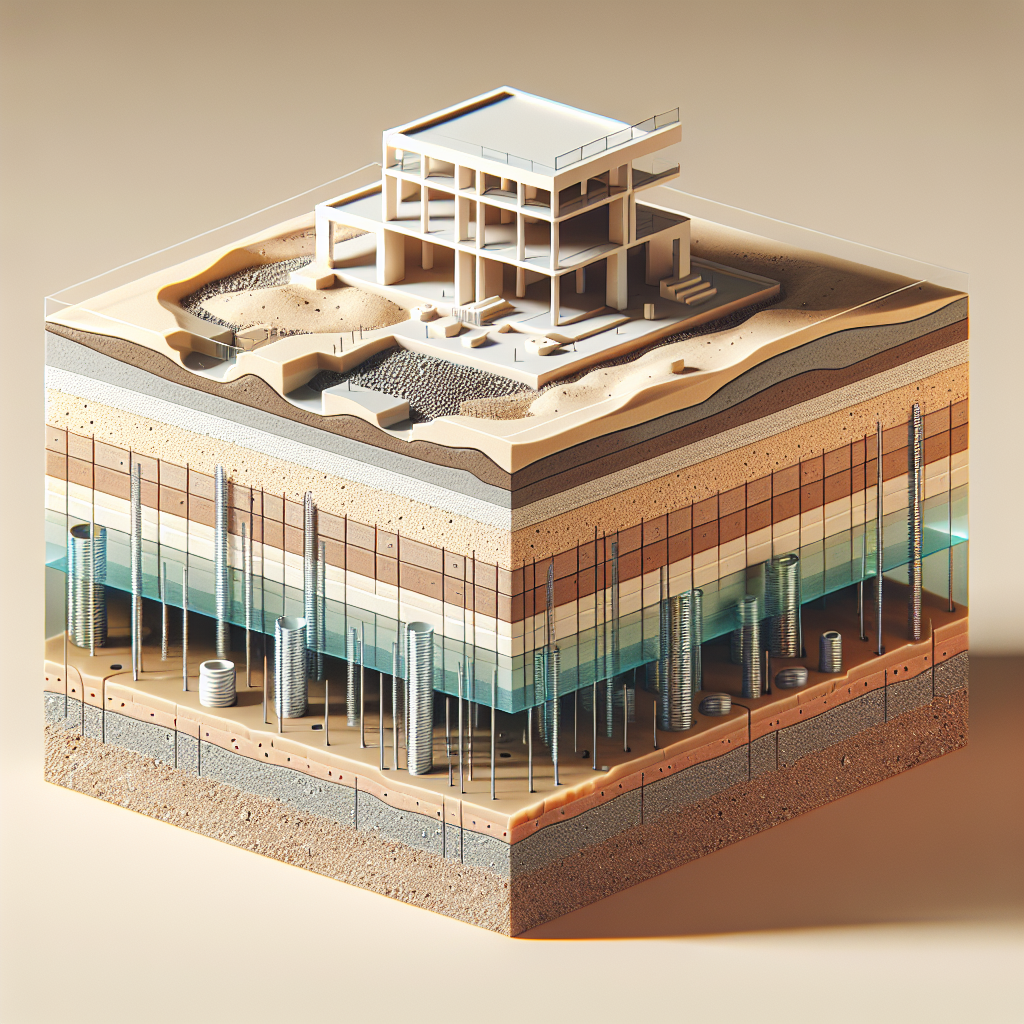
Sandy deposits are common beneath many building sites. Their high permeability and loose structure can make supporting structures tricky unless the right steps are taken.
This article explains how sandy ground behaves, which design approaches suit different scenarios, and what to watch for during construction to keep settlements and unexpected costs low.
Understanding sandy ground behavior
Sandy material varies from fine to coarse grains and from loose to dense packing. That mix controls strength, compressibility, and how water moves through the soil.
Key concerns are bearing capacity, likely settlement under load, and the potential for liquefaction in seismic areas. Clear testing and interpretation help reduce surprises later.
Essential soil checks
Begin with particle-size distribution and density tests to classify the sand. Standard penetration or cone tests reveal relative density and a rough stiffness estimate.
Permeability tests and groundwater level surveys are vital. A high water table can dramatically change effective stress and bearing capacity.
How tests influence choices
Test results point toward either shallow spread footings, raft foundations, or piled solutions. Dense, well-draining sand may support shallow footings, while loose or saturated sand often needs deeper options or treatment.
Load magnitude, allowable settlement, and nearby structures determine how conservative the design must be.
Design options and soil improvement methods
There are several ways to create a safe support system on sandy ground. Choose based on risk, cost, timeframe, and site constraints.
Options split broadly into using the natural sand with careful foundation selection, or improving the sand to raise its performance before building.
Shallow foundations
Shallow footings and slabs can work when sand is dense and the structure is light to moderate. A wide base lowers bearing pressure and reduces settlement.
Compaction and proper drainage are critical to keep the sand stable. Edge beams and stiff slabs help control differential settlement.
Deep foundations and piling
Piles transfer load to deeper, stiffer layers or rely on skin friction along the pile length. They are common when sand is loose or the allowable settlement is very small.
Driven piles, bored piles, and continuous flight auger piles all have roles depending on noise, vibration limits, and access constraints.
Soil improvement techniques
When the existing sand is unsuitable, several treatment methods can improve strength and reduce settlement.
- Dynamic compaction or vibrocompaction to densify loose sand.
- Stone columns or Vibro Replacement to increase stiffness and drainage.
- Grouting, including permeation or jet grouting, to bind grains and reduce permeability.
- Prefabricated vertical drains combined with surcharge loading to speed consolidation.
Each method suits different depths and performance targets. Cost and environmental impact should guide the selection.
Construction practices that reduce risk
Even a well-designed foundation can fail if construction is careless. Site supervision, sequencing, and material control matter greatly on sandy sites.
Focus on managing water, achieving specified compaction, and protecting prepared subgrades from traffic and weather.
Groundwater and dewatering
High groundwater reduces effective stress and bearing capacity. Temporary dewatering can allow safe excavation and placement, but must be planned to avoid long-term drawdown effects on nearby structures.
Well-point systems, deep wells, or cutoff walls may be appropriate depending on depth and soil permeability.
Compaction and layer control
For shallow foundations or improved layers, compaction must meet the specified relative density or Proctor criteria. Compact in thin lifts and test frequently.
Protect compacted areas from rain and construction traffic until the foundation elements are placed.
Pile installation pitfalls
When using driven piles, monitor blow counts and pile alignment. For cast-in-place piles, control concrete placement and reinforcement position to ensure the intended capacity.
Vibration control may be needed in dense urban sites to prevent damage to nearby buildings.
Settlement monitoring and record keeping
Install settlement markers or inclinometers where significant consolidation or lateral movement is expected. Regular readings help catch unexpected trends early.
Keep thorough records of moisture conditions, compaction tests, and any deviations from design. These notes are vital if adjustments are needed later.
Sustainability, materials, and long-term performance
Choosing materials and methods with a long service life pays off. Corrosion protection, drainage durability, and resistance to erosion matter on sandy sites.
Consider life-cycle impacts of soil improvement methods and the embodied carbon of deep foundations when cost and environment are both priorities.
Drainage and erosion control
Well-designed surface and subsurface drainage prevent saturation and reduce the risk of piping and loss of sand around foundations.
Use geotextiles, cut-off trenches, and proper grading to protect the toe of slopes and foundation edges.
Material selection and durability
Select concrete mixes, reinforcement protection, and pile types that resist local chemical attack and abrasion from shifting sand.
Corrosion allowances and coatings can extend life in coastal or saline conditions.
Maintenance expectations
Foundations on sand benefit from routine checks of drainage performance and visible settlement. Early repair of cracks and drainage blockages prevents small issues from growing.
Design details that allow inspection access make long-term upkeep easier and cheaper.
Conclusion
Sandy ground challenges are manageable with the right combination of testing, design selection, and construction control. The aim is to match the foundation type to the sand’s properties and the structure’s needs.
Spend effort early on characterization and on-site supervision. That approach reduces surprises and supports a durable, predictable performance over the building’s life.
Frequently Asked Questions
Below are concise answers to common questions about building on sandy sites. These address risk, common methods, and monitoring needs most often raised in early planning.
How do I know if sand needs treatment?
If standard penetration or cone results show loose packing, if the water table is high, or if allowable settlement is low, treatment is usually needed. Tests and a simple settlement estimate help decide.
When are piles preferable to a wide footing?
Piles are preferable when deeper stiff layers exist below weak sand, or when expected settlement from a shallow solution exceeds acceptable limits. They also suit heavy loads or poor surface access for compaction.
Can compaction alone make loose sand suitable?
Yes, dynamic or vibro compaction can densify loose sand to increase bearing capacity. The success depends on depth of influence and the sand’s gradation.
What are typical signs of settlement after construction?
Cracking in finishes, doors and windows sticking, or visible differential levels in floors and pavings often indicate settlement. Monitoring helps distinguish ongoing consolidation from one-time set-up.
Is liquefaction a concern on sandy ground?
In seismic regions, saturated loose sand can lose strength during shaking. A site-specific seismic assessment and mitigation measures such as densification or deep foundations reduce the risk.