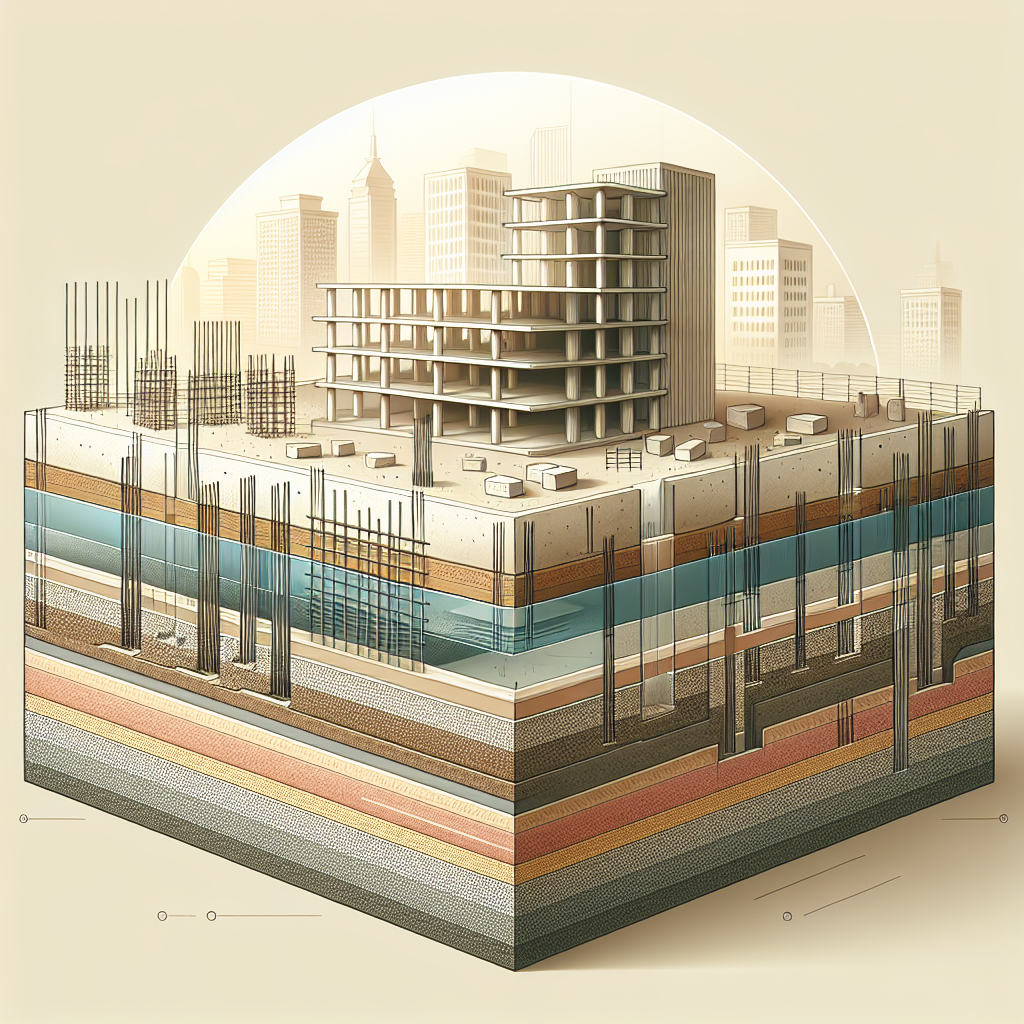
Foundations are the unseen backbone of any safe structure. They carry loads from the building into the ground and control movement, settlement, and stability over the life of the structure.
Sound analysis predicts how loads travel, how soil reacts, and where weak points might appear. This article breaks down the core ideas, the common failure modes, and practical checks used in everyday practice.
Why careful analysis matters
Even small miscalculations in load paths or soil strength can create large problems later. Cracks, uneven settlement, and tilting rarely appear suddenly; they develop from predictable stress patterns.
Understanding these patterns helps reduce repair costs and ensures safety. Analysis supports selection of foundation type, depth, and reinforcement needs.
Risk reduction through early evaluation
Early assessment of loads and soil conditions prevents surprises on site. A clear evaluation highlights where detailed testing is needed and where conservative choices pay off.
Performance across lifetime
Foundations perform over decades under changing conditions. Good analysis considers long-term effects like consolidation, seasonal moisture changes, and heavier-than-expected use.
Core components: loads, soil, and materials
Three elements interact in every foundation problem: the loads from the structure, the supporting soil, and the foundation materials. Each must be well understood to predict behavior.
Ignoring any of these components risks incomplete solutions. The interplay between load magnitude, soil stiffness, and material capacity sets the margin of safety.
Load types and distribution
Loads include dead weight, live loads, wind, seismic forces, and concentrated loads from heavy equipment. They can be steady, cyclic, or sudden.
Distribution matters: spread footings, strip foundations, and piles transfer loads to soil in different ways. Analysis clarifies how intensity and spread affect bearing pressure.
Soil behavior and interaction
Soil is not uniform. Layers vary in density, stiffness, and permeability. These differences control settlement and bearing capacity.
Key properties include cohesion, internal friction, compressibility, and permeability. Water table level also changes effective stress and needs careful attention.
Material strength and durability
Concrete grade, reinforcement detailing, and construction quality change how a foundation handles loads. Durability against moisture, sulfate attack, and freeze-thaw cycles matters too.
Design must match material capacity to expected stresses, including any dynamic or cyclic loads that can cause fatigue over time.
Common methods and tools used in analysis
Engineers use a mix of hand calculations, charts, and software to estimate stresses and displacements. Each method has strengths and limitations.
Choosing the right tool depends on project scale, soil variability, and how conservative the assessment must be.
Traditional calculation methods
Classic approaches include Terzaghi’s bearing capacity, allowable stress methods, and simple elastic settlement formulas. These provide quick, conservative estimates.
They are especially useful in early design stages or where soil conditions are uniform and loads are moderate.
Numerical modeling
Finite element models simulate complex geometry, layered soils, and nonlinear material behavior. They estimate stress distribution and settlement patterns with greater precision.
Models require good input data and validation. Garbage in leads to misleading results, so field data and sensitivity checks are essential.
Field and laboratory testing
Tests like standard penetration, cone penetration, plate load, and laboratory consolidation tests supply the data that models need. They reveal stiffness, strength, and compressibility.
Often a combination of in-situ and lab tests gives the best picture of how the soil will behave under load.
Checks, limits, and common failure modes
Design checks focus on bearing capacity, settlement limits, and structural integrity. Each check has clear triggers that require remedial measures.
Recognizing typical failure patterns helps prioritize inspections and preventive action during construction and service life.
Bearing capacity failure
This occurs when soil under the foundation cannot support applied loads, causing sudden shear and collapse. Signs include heaving or large tilt at the foundation.
Factors that reduce capacity include weak layers, high water table, and load concentrations.
Excessive settlement
Settlement may be uniform or differential. Uniform settlement is often acceptable, but differences across the structure cause cracking and serviceability issues.
Consolidation of soft clays and compression of loose fills are common causes. Estimating magnitude and rate helps decide mitigation.
Structural distress in the foundation
Poorly detailed reinforcement, inadequate concrete cover, or construction defects can lead to cracking and corrosion. These reduce capacity and stiffness.
Durability checks and proper detailing prevent many of these issues before they appear.
Practical measures to improve performance
When analysis shows potential problems, there are proven interventions that improve safety and longevity. Choices depend on risk appetite and budget.
Options range from simple ground improvement to deeper foundations and reinforcement upgrades.
Ground improvement techniques
Methods such as compaction, stone columns, and grouting increase stiffness and bearing capacity of weak layers. They are effective when shallow fixes will suffice.
Each technique suits certain soil types and load conditions; selection follows from testing and analysis.
Using deep foundations
Piles transfer loads to deeper, stiffer layers and are common where surface soils are poor. Pile groups and caps distribute loads and control settlement.
Design must address pile capacity, group effects, and possible negative skin friction from settling soils.
Detailing and construction control
Good drawings and on-site supervision ensure that reinforcement, concrete quality, and drainage measures meet intended performance levels.
Simple steps like proper curing, adequate cover, and drainage around the building reduce long-term maintenance needs.
Conclusion
Thorough analysis connects loads, soil behavior, and material performance into a coherent picture. That picture guides choices that keep structures safe and functional.
Practical testing, careful modeling, and conservative checks reduce surprises and help prioritize measures that yield the greatest benefit.
Frequently Asked Questions
Below are concise answers to common queries about foundation behavior and analysis.
What tests reveal soil strength most reliably?
Cone penetration tests and laboratory triaxial tests give reliable strength measures. Plate load tests indicate practical bearing behavior near the surface.
How is allowable settlement determined?
Allowable settlement depends on structure type and serviceability needs. Residential floors tolerate more movement than precision equipment foundations. Calculations combine predicted settlement with acceptable limits.
When is a numerical model needed?
Complex geometry, layered soils, and nonlinear behavior call for numerical modeling. Small, uniform sites can often be handled with traditional methods.
Can ground improvement eliminate the need for piles?
Sometimes. If soil improvement raises stiffness and bearing capacity enough to meet loads and settlement limits, shallow solutions can replace piles. The decision follows testing and cost comparison.
How important is groundwater control?
Very important. Groundwater changes effective stress and can reduce capacity or cause uplift. Drainage, dewatering during construction, and proper site grading are key controls.