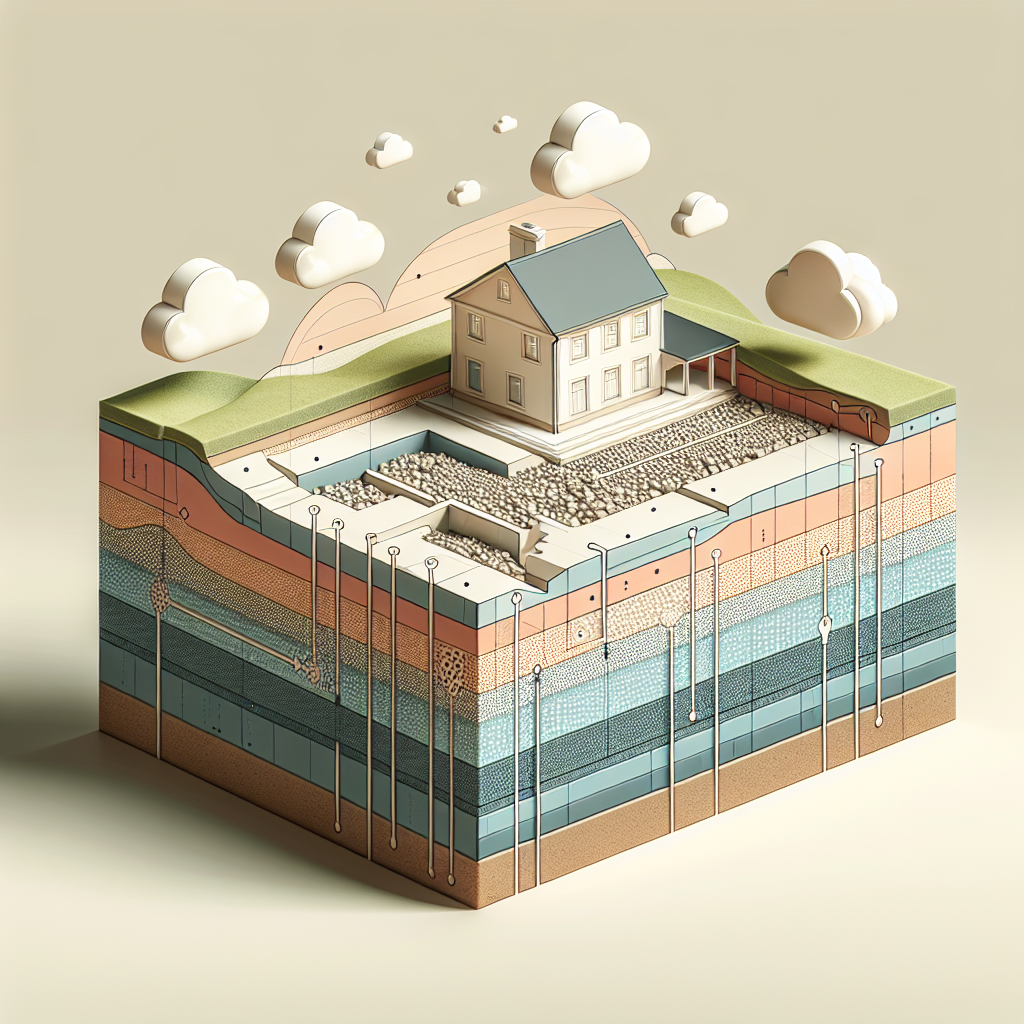
Buildings and structures on soft or compressible ground face slow but steady risks: uneven settling, cracking, and increased maintenance. Understanding practical approaches to stabilize the ground and support foundations makes a big difference in long-term performance.
This article explains common causes, on-site testing, and a range of proven solutions that work with different budgets and timelines. It focuses on realistic steps to reduce settlement and protect structural integrity.
Understanding weak soil and the risks it brings
Not all soils behave the same. Clay, peat, organic layers, loose sands, and reclaimed fills often lack the strength or stiffness that foundations need.
When loads are applied over weak ground, settlement can be uniform or differential. Differential settlement causes tilt and cracking, and it is the main danger to walls, floors, and services.
How soil type affects performance
Clay can compress over months or years, creating long-term settlement. Organic soils and peat are highly compressible and often unsuitable without treatment. Loose sands may liquefy under certain conditions.
Common signs of foundation distress
Look for cracks in walls and floors, doors that stick, uneven floors, and gaps around windows. These signs often indicate movement from uneven support below.
Site assessment and testing methods
Before selecting a repair or improvement method, gather reliable site data. A practical inspection and a few targeted tests reduce uncertainty and keep cost estimates realistic.
Testing should focus on strength, compressibility, and water conditions. Combining visual checks with simple field tests yields the best early picture.
Essential field checks
Start with a visual survey of vegetation, surface water, and any previous earthworks. Note signs of erosion, high water table, and nearby drainage patterns that might affect the site.
Key in-situ tests
Standard in-situ tests include boreholes to sample layers, cone penetration tests (CPT) for continuous strength profiles, and standard penetration tests (SPT) in granular soils. Each test gives different but useful information.
Practical solutions to strengthen foundations
Solutions vary by site: some sites need drainage and keeping water away, while others require mechanical support such as piles or soil replacement. Match the fix to the root cause.
Below are widely used approaches, with pros and cons to help choose the right mix of methods.
Improved shallow foundations
When weak layers are thin, widening or stiffening the foundation can spread the load and reduce settlement. Options include increasing footing width, using reinforced concrete pads, or adding grade beams that tie foundations together.
Shallow fixes are often faster and less costly than deep foundations, but they only work when competent soil sits just below the new foundation depth.
Deep foundations and piling
Piles transfer loads to deeper, stronger layers. Driven piles, bored piles, and screw piles are common approaches depending on access, vibration limits, and groundwater.
Piling is reliable where superficial soils are weak but deeper strata are competent. It is costlier but reduces long-term settlement significantly.
Soil replacement and recompaction
Excavating poor-fill or organic layers and replacing them with compacted engineered fill is effective on small to medium sites. It restores load-bearing capacity and creates a consistent platform.
This method requires space, proper compaction techniques, and moisture control to achieve the intended stiffness.
Soil stabilization techniques
Chemical stabilization uses additives such as lime, cement, or fly ash to bind particles and increase strength. It is especially useful with clayey soils that respond to treatment.
Stabilization can be mixed in-place or applied as a treated fill. Benefits include quick improvement and reduced need for deeper foundations.
Grouting and jetting
Grouting injects cementitious or resin materials into voids or soft soils to increase stiffness and reduce permeability. Low-mobility grouts are used to limit migration into unwanted zones.
This method is useful under existing foundations with limited access because it can be done with small rigs and staged injections.
Drainage and water control
Groundwater and surface water often worsen weak soil behavior. Installing perimeter drains, improving site grading, and keeping foundations dry can slow or stop progressive settlement.
Managing water is a low-cost step that complements structural fixes. In some cases, lowering the groundwater permanently stabilizes compressible layers.
Geosynthetics and reinforcement
Geotextiles, geogrids, and cellular confinement systems distribute loads and reduce deformation in soft ground, useful under roads, pads, and shallow foundations.
These materials can be combined with lightweight fill to reduce imposed loads while improving platform behavior.
Choosing materials, estimating costs and likely lifespan
Each method uses different materials and has distinct life expectations. Understanding trade-offs helps set a realistic budget and maintenance plan.
Cost depends on ground conditions, access, materials, and the level of risk reduction required. Local labor and disposal costs can be a large part of the budget.
Materials overview
- Concrete and steel: Durable, long-lasting, suited to piles and reinforced footings.
- Lime/cement stabilizers: Fast strength gain for clays and silts.
- Polymer resins: Useful for targeted lifting and void-filling under slabs.
- Geotextiles and geogrids: Reinforcement for shallow works and embankments.
- Lightweight fills (eg expanded polystyrene): Reduce load on compressible layers.
Typical cost drivers
Major factors include the depth of weak soils, need for dewatering, access restrictions, and disposal of excavated material. More invasive methods raise costs but reduce long-term risk.
Piling and deep stabilization are top-tier costs, while drainage, geosynthetics, and soil replacement are generally moderate depending on scale.
Lifespan and maintenance expectations
Well-designed fixes often last the life of the structure when properly installed. Regular inspection, crack monitoring, and ensuring drainage remain functional extend longevity.
Some chemical treatments can last decades, but extreme wetting-drying cycles or aggressive soils may need occasional checks.
Practical installation tips and risk reduction
Planning, clear site logistics, and staged work reduce surprises. Small measures during installation can prevent large future costs.
Prioritize good communication between site teams and those monitoring performance after work is complete.
Set realistic tolerances
Designs should use realistic settlement targets rather than optimistic values. Provide for some post-construction adjustment if differential movement remains possible.
Sequence work to control water
Excavation and compaction often expose and change groundwater behavior. Plan dewatering and temporary diversion to keep the new structure dry while materials gain strength.
Monitor during and after works
Install simple settlement markers or more advanced monitoring depending on risk. Early detection allows minor corrections before full repairs are needed.
Conclusion
Weak soils need a practical, site-specific response. Accurate assessment followed by the right mix of drainage, soil improvement, and foundation design keeps structures stable and reduces repair costs.
Matching intervention intensity to the degree of risk gives the best value: sometimes moisture control and reinforcement suffice, while at other times piling or full replacement is warranted.
Frequently Asked Questions
What causes long-term settlement in buildings?
Settlement comes from compression of weak layers under sustained load and changes in moisture. Organic soils and soft clays compress slowly, so structures may settle over years without obvious triggers.
When is piling necessary instead of shallow fixes?
Piles are needed when weak layers extend below the depth reachable by shallow footings and when deeper, competent layers exist to carry loads. Piling is chosen where long-term settlement limits require transferring loads deeper.
Can drainage alone stop foundation movement?
Drainage helps when water is the main driver of weakness. It may reduce ongoing compression and swelling, but it often needs to be combined with structural measures if soils are severely weak.
Are chemical stabilizers safe and durable?
Lime and cement stabilization are widely used and durable when applied correctly. Environmental and handling precautions are needed, and design should account for local soil chemistry and moisture cycles.
How soon can work start after soil improvement?
Some treatments gain strength quickly, like certain cement mixes, allowing follow-on construction in days to weeks. Others, especially those relying on consolidation, may require months for full effect. The chosen method dictates timing.