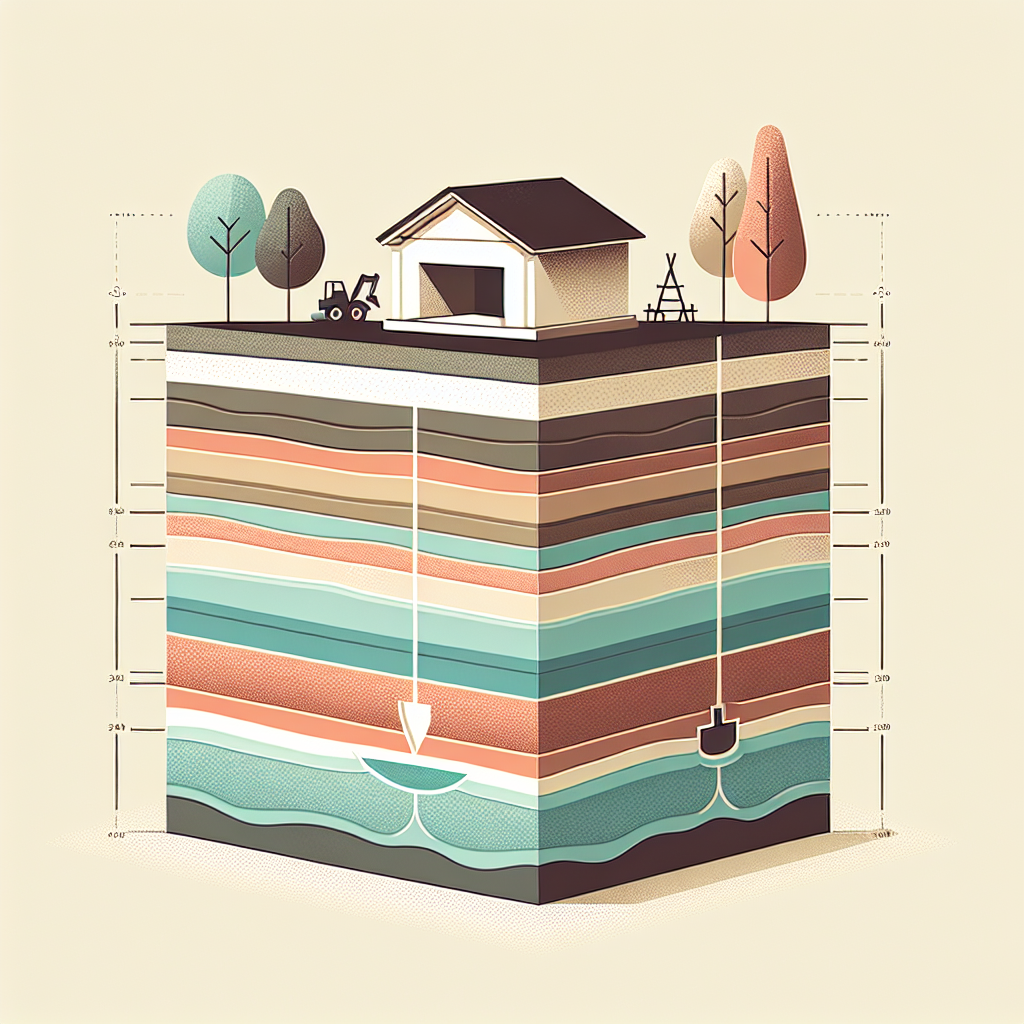
Good foundations start with knowing how much load your ground can support. Soil bearing capacity is the measure of the soil’s ability to hold a structure without excessive settlement or failure.
This article breaks down what bearing capacity means, the main factors that affect it, practical testing methods, ways to improve weak soils, and design considerations that reduce risk.
What is soil bearing capacity?
Soil bearing capacity is the maximum pressure that soil can sustain without undergoing shear failure or excessive settlement. It helps determine the size and type of foundation needed to safely carry the weight of a building or other structure.
Engineers typically distinguish between ultimate bearing capacity — the theoretical maximum before failure — and allowable bearing capacity — a reduced value used in design after applying safety factors and settlement limits.
Ultimate versus allowable values
Ultimate bearing capacity is a lab or theoretical number that indicates collapse risk. Allowable capacity is that number divided by a factor of safety and adjusted for acceptable settlement. Designs use allowable values to protect structures over time.
Shallow versus deep foundations
Shallow foundations spread loads across a wide area near the surface, relying on near-surface soil strength. Deep foundations transfer loads to deeper, stronger layers using piles or piers when surface soils are weak.
Key factors that affect soil strength
Several soil properties and environmental conditions change how much load the ground can bear. Understanding these helps predict behavior and choose the right foundation approach.
Soil type and grain size
Sands and gravels generally provide higher bearing capacity than silts and clays. Coarse-grained soils drain well and resist shear, while fine-grained soils can be weaker, especially when wet.
Moisture content and water table
High moisture and a shallow water table reduce strength. Water increases pore pressure and lowers effective stress, which can dramatically lower bearing capacity and increase settlement risk.
Soil density and compaction
Loosely packed soils have lower strength and higher compressibility. Proper compaction raises density, increases shear strength, and improves bearing performance near the surface.
Layering and depth
Heterogeneous soils with soft layers can concentrate settlement even if the average strength seems adequate. Deeper, denser layers typically support heavier loads better than thin, soft top layers.
Methods to determine bearing capacity
Field tests and lab tests provide the data needed to estimate bearing capacity and settlement. Each method has strengths and limits depending on site conditions.
Standard Penetration Test (SPT)
SPT measures resistance to driving a sampler into soil. It is common, cost-effective, and gives an index used to estimate strength for sands and some clays. Results can vary with equipment and operator technique.
Plate load test
This test places a load on a rigid plate at foundation depth and measures settlement. It gives a direct measure of bearing behavior at the location tested and is useful for shallow foundations.
Cone Penetration Test (CPT)
CPT pushes a cone into the ground while recording resistance. It provides continuous profiles of soil behavior and is especially helpful for stratified sites and estimating bearing capacity without disturbing soil samples.
Laboratory testing
Samples taken to the lab can be tested for shear strength, consolidation, and compressibility. Triaxial and oedometer tests give valuable parameters for settlement and ultimate strength calculations.
- SPT and CPT are fast field tools.
- Plate tests show real settlement behavior at target depth.
- Lab tests refine estimates and inform design models.
Practical ways to improve weak soils
When soils have low bearing capacity or risk large settlement, several techniques can strengthen the ground or bypass weak layers. Choice depends on budget, schedule, and site constraints.
Compaction and densification
Mechanical compaction increases density and strength in granular soils. Methods include rolling, tamping, and vibro-compaction. Compaction is cost-effective for shallow improvements on fill or natural soils.
Drainage and dewatering
Lowering the water table removes excess pore pressure and improves effective stress. Surface drainage, subsurface drains, and temporary dewatering during construction can raise bearing capacity and reduce settlement.
Soil replacement and mixing
Soft layers can be removed and replaced with engineered fill. Alternatively, mixing binders like cement with weak soils creates stiffer, stronger columns or mats that raise capacity.
Reinforcement and geosynthetics
Geotextiles, geogrids, and soil nails distribute loads and limit deformation. They work well beneath shallow foundations, pavements, and embankments to reduce settlement and increase bearing performance.
Deep foundations: piles and piers
If weak soils extend deep, driving piles or drilling piers transfers load to competent strata. Options include driven, bored, and screw piles, chosen for load, settlement, and site access needs.
Design considerations and safety
Safe foundation design balances bearing capacity, settlement limits, construction practicalities, and cost. Several checks are standard before approving a foundation plan.
Factor of safety
Design uses a factor of safety to reduce the theoretical capacity and account for uncertainties. Typical factors vary with test confidence, soil variability, and consequence of failure.
Settlement limits and uniformity
Some settlement is acceptable, but differential settlement between parts of a structure must be limited. Choosing foundation type and stiffness helps control differential movement.
Load distribution and footing size
Spread footings rely on a larger area to reduce pressure on soil. Increasing footing size lowers contact pressure and can avoid more expensive ground improvements.
- Verify soil profiles across the site to spot weak pockets.
- Use conservative values where data are sparse.
- Consider long-term changes like groundwater fluctuation.
Conclusion
Understanding soil bearing capacity is essential to choose the right foundation approach and avoid costly settlement or failure. Accurate testing and realistic design values reduce risk.
With the right mix of investigation, ground improvement, and conservative design, most soils can support safe, durable structures without unexpected problems.
Frequently Asked Questions
Below are clear answers to common practical questions about soil bearing capacity and foundation planning.
What happens if bearing capacity is overestimated?
If the soil’s strength is overestimated, the foundation may experience excessive settlement or shear failure. This can cause cracks, tilting, or structural damage that is costly to repair and may require underpinning or load redistribution.
How deep should a foundation go to reach good soil?
Depth depends on the depth of competent layers. Sometimes a shallow spread footing on compacted soil is enough, while other sites need piles reaching deeper dense sand or rock. Site investigation data decide the depth.
Can simple compaction always fix weak soil?
Compaction helps granular soils near the surface but is limited where soft clays, high water content, or deep weak layers exist. In those cases, replacement, stabilization, or deep foundations are better options.
Are field tests reliable for all soil types?
Field tests are valuable but have limits. SPT and CPT work well in many conditions but can misrepresent very soft clays or mixed layers. Combining tests and lab results gives the most reliable picture.
How does seasonal change affect bearing capacity?
Seasonal rainfall and groundwater shifts can change moisture content and pore pressure, reducing effective stress and bearing capacity. Designs should consider worst-case seasonal conditions to remain safe year-round.