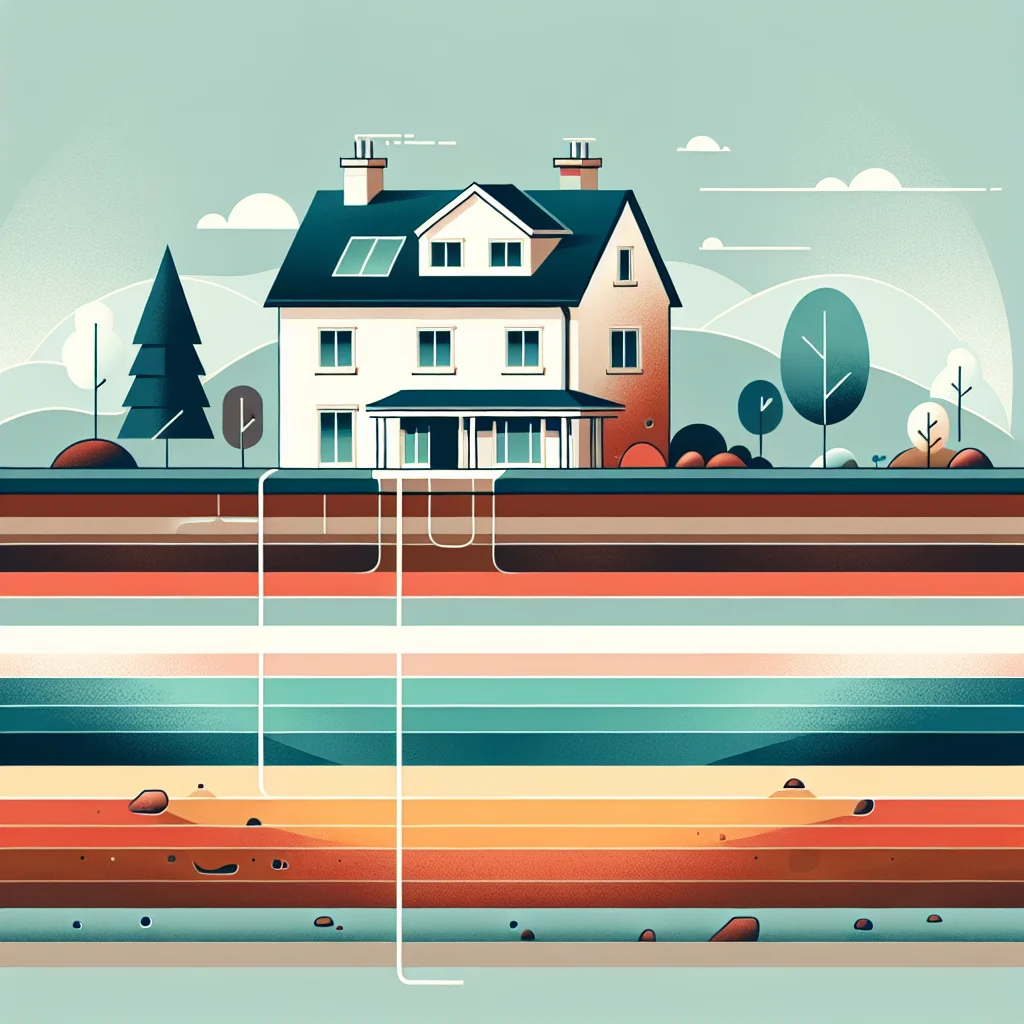
Choosing the right ground conditions plays a huge role in how a structure settles and performs over time. Understanding the basic types of soil and their behavior helps predict risks like uneven settlement, poor drainage, and bearing capacity failure.
This article breaks down common soil categories, explains how each impacts foundations, and lists practical testing and mitigation approaches that reduce surprises on site.
How soil behavior controls foundation performance
Soil is not just dirt. It is a layered system with varying grain size, moisture content and chemistry. Those properties control strength, compressibility and permeability.
When load from a building reaches the ground, the soil must carry it without large deformation. Weak or compressible soil can allow excessive settlement or tilting. Excess water makes many soils softer and less stable.
Key soil properties to watch
Strength, compressibility and permeability are the three main factors. Strength tells you how much load the soil can carry. Compressibility indicates how much it will settle under load. Permeability controls how fast water moves through the ground.
- Strength: measured by shear resistance and bearing capacity.
- Compressibility: affects long-term settlement and is higher in organic and clayey soils.
- Permeability: influences drainage and susceptibility to frost or liquefaction.
Major soil categories and practical traits
Soils are often grouped by particle size and organic content. Each group behaves differently under load and moisture changes.
Below are the common types found under foundations and what to expect from each.
Clay
Clay has very fine particles and can hold water tightly. It often shows plastic behavior when wet and becomes stiff when dry.
- High compressibility leads to large settlement over time.
- Volume changes with moisture cause heaving or shrinkage, stressing foundations.
- Low permeability slows drainage, increasing pore pressure after rain.
Silt
Silt particles are finer than sand but coarser than clay. Silt feels floury and can be unstable when wet.
- Moderate compressibility but prone to loss of strength when saturated.
- Can be vulnerable to erosion and piping under flowing water.
- Often found in river floodplains and reclaimed land.
Sand
Sand has larger particles and drains well. Dry sand provides good bearing capacity but behaves differently when saturated or loosely compacted.
- Low compressibility when well compacted, so settlement is usually small.
- Loose, waterlogged sand can compact suddenly or liquefy during shaking.
- Permeability is high, which helps with drainage but can allow water flow to wash fines away.
Gravel and rock fragments
Coarse materials like gravel and crushed rock are stable and carry loads efficiently. They are commonly used as foundation fill or base layers.
- High bearing capacity and low settlement when compacted.
- Good drainage reduces frost risk and pore pressure build-up.
- Uneven distribution of rock can create local stiffness contrasts under a slab.
Organic soils and peat
Organic matter and peat compress a lot and retain moisture. These are the most challenging places to build directly upon.
- Very high compressibility causes major long-term settlement.
- Low strength makes bearing capacity unreliable.
- Often requires removal or deep foundation solutions to reach stable layers.
Common site tests and how they inform decisions
Before deciding on a foundation type, a few simple and targeted tests reveal much about ground behavior. Tests can be quick or detailed depending on risk and budget.
Results direct choices about soil replacement, drainage, compaction, or deeper support systems.
Visual inspection and simple probes
A careful walkover and manual probing can find soft spots, organic layers, high water tables, and loose fills. These early checks guide more detailed testing.
- Hand auger or probe rod shows depth and consistency of surface layers.
- Look for standing water, staining, or plant species that indicate wet ground.
Standard penetration and vane shear
The standard penetration test (SPT) gives a quick measure of relative compactness in sand and density in gravel. Vane shear helps estimate undrained strength in clays.
- SPT results correlate with bearing capacity and liquefaction potential.
- Vane shear is useful for soft clays where sampling is difficult.
Laboratory classification and consolidation tests
Samples tested in a lab yield grain-size distribution, Atterberg limits, and consolidation behavior. These quantify compressibility and swelling potential.
- Atterberg limits separate clays from silts and indicate plasticity.
- Consolidation tests predict long-term settlement under specific loads.
Risks linked to soil types and practical mitigation
Each soil type has predictable issues. Identifying those early allows targeted solutions rather than blanket overdesign.
Solutions range from improving the soil to altering foundation systems to suit ground conditions.
Settlement and differential movement
Soft clays and organic fills compress under load and can keep compressing for years. Uneven compressibility across a site causes differential settlement and cracking.
- Mitigation: preloading or staged loading to accelerate settlement before building.
- Replacement of weak soil with compacted granular fill when feasible.
- Using deeper footings or piles to transfer loads to firmer layers.
Excess moisture and poor drainage
High water tables and slow-draining soils raise pore pressures, reduce strength, and encourage frost issues in cold climates.
- Mitigation: perimeter drainage, sub-slab drains, and careful grading to divert water.
- Use of capillary breaks and moisture barriers under slabs to limit upward moisture movement.
Frost heave and seasonal volume change
Fine-grained soils that retain water can expand when frozen. Clay shrink-swell activity also stresses foundations with seasonal moisture shifts.
- Mitigation: place footings below frost depth and use non-frost-susceptible fill around foundations.
- Design flexible connections and continuous foundations to accommodate minor movement.
Liquefaction and seismic concerns
Loose, saturated sands can temporarily lose strength during strong shaking. This can cause bearing loss and ground deformation.
- Mitigation: densify loose sand by vibro-compaction or deep dynamic methods.
- Use deep foundations that bypass liquefiable layers and reach stable strata.
Practical steps on site to reduce surprises
Planning, targeted testing and simple improvements often avoid expensive fixes later. The following steps fit most small to medium projects.
They emphasize early detection and proportionate treatment rather than over-engineering every site.
Investigate early and target effort
Start with desktop research and a site walk. Use probes and a few boreholes where conditions are uncertain. Tailor lab testing to the identified risks.
- Map soft spots, fills, and groundwater behavior before heavy work begins.
- Base decisions on measured properties rather than assumptions.
Use the right fill and compaction standards
Where weak soil is removed, replace with well-graded compacted granular fill. Proper compaction and moisture control are key to achieving expected bearing capacity.
- Specify compaction percentage and test with field density checks.
- Avoid mixing fine, organic or clay-rich material into structural fills.
Consider deeper support where needed
Piles, piers or caissons transfer load to stiffer layers and reduce settlement risk. They are a common solution when shallow soil is inadequate.
- Choose pile type based on depth to competent strata and load magnitude.
- Evaluate pile group effects and potential downdrag in compressible soil.
Conclusion
Understanding the common soil groups and their behavior under load is essential to safe, economical foundation choices. Early testing and targeted treatments reduce the chance of costly repairs later.
Simple steps—identify weak zones, control water, use suitable fill, or opt for deep foundations—often resolve the main risks tied to ground conditions.
Frequently Asked Questions
Which soil type is best to build on?
Coarse, well-graded gravel and dense sand typically give the best shallow bearing capacity and lowest settlement. However, compacted granular fills engineered on site can also perform very well.
How can I tell if soil is likely to shrink or swell?
High plasticity clays and soils with certain Atterberg limits are prone to shrink-swell. Lab tests such as plasticity index and simple field observations of seasonal cracking in nearby structures help indicate risk.
When is removal of weak soil necessary?
Removal is needed when weak layers are near the surface and cannot be economically improved in place. If replacement with compacted granular fill can achieve required stiffness and bearing, removal is a practical option.
Can drainage alone fix a soft soil problem?
Better drainage reduces moisture and can improve strength in the long term, but it may not fix compressibility or organic matter issues. Drainage works best combined with other measures like compaction or soil replacement.
How deep should footings be placed?
Footing depth depends on frost depth, surface stability, and location of competent bearing layers. Minimum depths often follow local codes, but actual design should respond to soil test results.