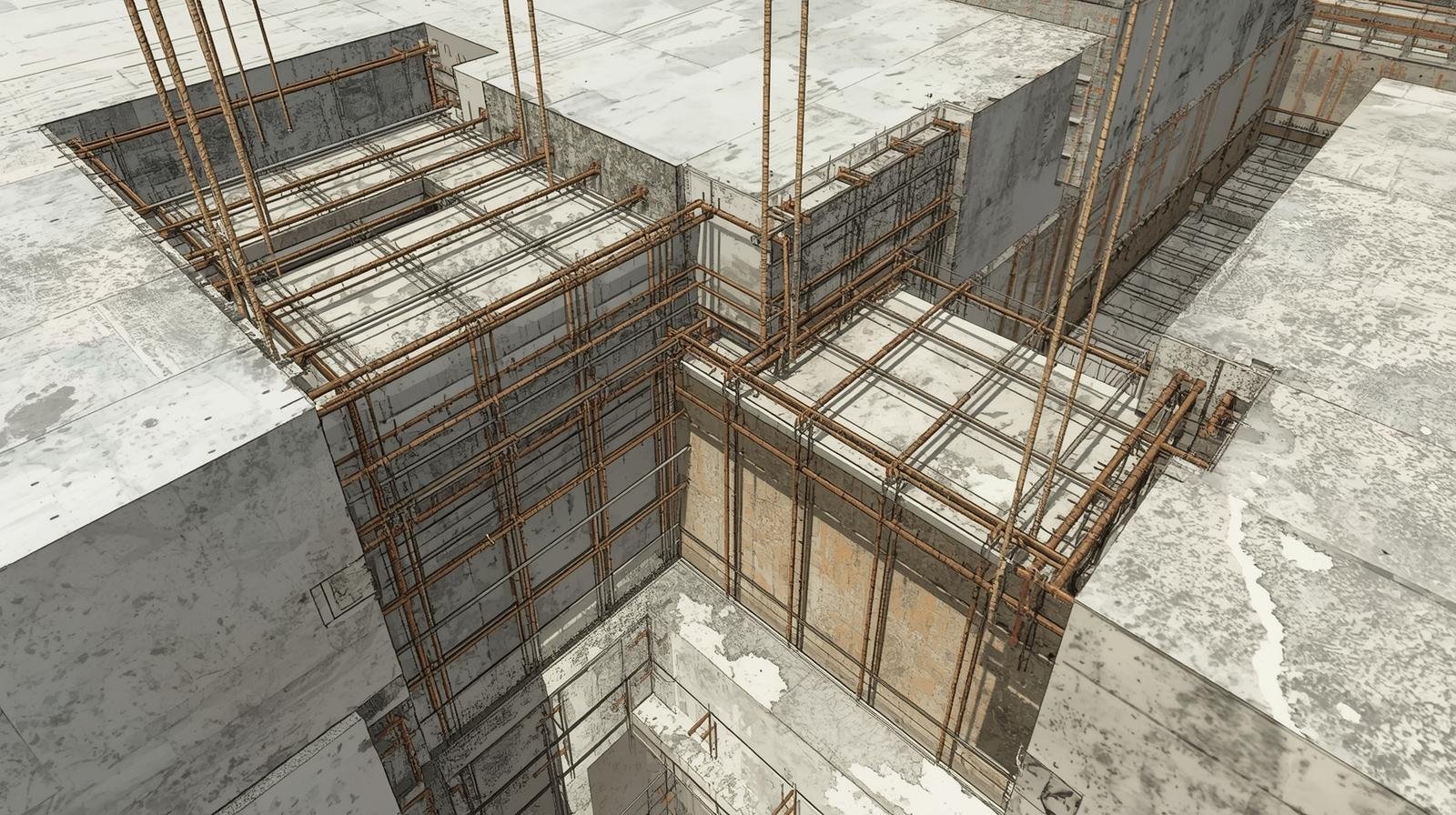
A combined footing is a type of shallow foundation that supports two or more columns with a single concrete base. It is used when columns are spaced closely, when soil bearing capacity is low, or when one column is located near a property boundary and cannot have a centered isolated footing. Combined footing ensures uniform load distribution to the soil and helps prevent differential settlement. It is commonly used in residential, commercial, and urban construction projects where space limitations exist.
What Is a Combined Footing?
A combined footing is designed to support multiple columns on one footing slab. Instead of constructing separate isolated footings, a single footing is built to distribute loads evenly. This system balances structural forces and reduces uneven pressure on soil. The size and shape of the combined footing depend on column loads, spacing between columns, and soil bearing capacity.
When Is Combined Footing Required?
Combined footing is required under the following conditions:
- When two columns are very close to each other
- When property boundary restricts centered footing
- When soil bearing capacity is low
- When unequal column loads must be balanced
- When isolated footings would overlap
These situations make combined footing a more practical and safe foundation solution.
Types of Combined Footing
Rectangular Combined Footing
Rectangular combined footing is used when column loads are equal and spacing between columns is uniform. The footing is rectangular in shape and distributes load symmetrically to the soil. It is the simplest and most commonly used combined footing type.
Trapezoidal Combined Footing
Trapezoidal combined footing is used when column loads are unequal or when one column is near a property line. The trapezoidal shape helps balance soil pressure and maintain uniform load distribution. This type is often used in boundary column construction.
Components of Combined Footing
A combined footing typically includes the following components:
- Reinforced concrete slab
- Steel reinforcement bars in both directions
- Column pedestals
- Proper concrete cover
- Compacted soil or lean concrete base
These components work together to transfer loads safely to the soil.
Design Parameters of Combined Footing
Below is a general reference table for combined footing design. Actual values depend on soil testing and structural calculations.
| Parameter | Typical Range |
|---|---|
| Depth of footing | 1.0 m – 2.0 m |
| Thickness | 300 mm – 600 mm |
| Concrete grade | M20 or higher |
| Reinforcement steel | Fe415 / Fe500 |
| Soil bearing capacity | 100 – 250 kN/m² |
Advantages of Combined Footing
Combined footing offers several structural and practical benefits:
- Uniform load distribution
- Prevents overlapping of isolated footings
- Reduces risk of differential settlement
- Suitable for boundary columns
- More economical than raft foundation in moderate conditions
These advantages make it an effective foundation solution in many urban construction projects.
Limitations of Combined Footing
Despite its advantages, combined footing has certain limitations:
- Not suitable for very weak soils
- May require larger area if loads are high
- Design is more complex than isolated footing
- Requires careful reinforcement detailing
Proper engineering design minimizes these limitations.
Construction Steps of Combined Footing
The construction process involves systematic stages to ensure stability and durability:
- Site marking and layout preparation
- Excavation to required depth
- Compaction and leveling of base
- Placement of lean concrete layer
- Installation of reinforcement cage
- Concrete pouring and proper vibration
- Curing for required strength development
Each step must follow structural drawings and engineering standards.
Comparison with Other Footings
| Footing Type | Suitable For | Cost | Load Capacity |
|---|---|---|---|
| Isolated Footing | Single column | Low | Moderate |
| Combined Footing | Two or more columns | Medium | Moderate to High |
| Raft Foundation | Entire building area | High | High |
| Pile Foundation | Heavy structures | Very High | Very High |
Applications of Combined Footing
Combined footing is widely used in:
- Residential buildings with boundary columns
- Commercial complexes
- Schools and hospitals
- Urban construction projects
- Medium-rise buildings
It is particularly suitable where space constraints exist and soil conditions are moderate.
Conclusion
Combined footing is a reliable and practical shallow foundation system designed to support multiple columns efficiently. It ensures balanced load transfer, minimizes settlement issues, and optimizes space usage. With proper soil investigation and structural design, combined footing provides long-term stability and durability in various construction projects.