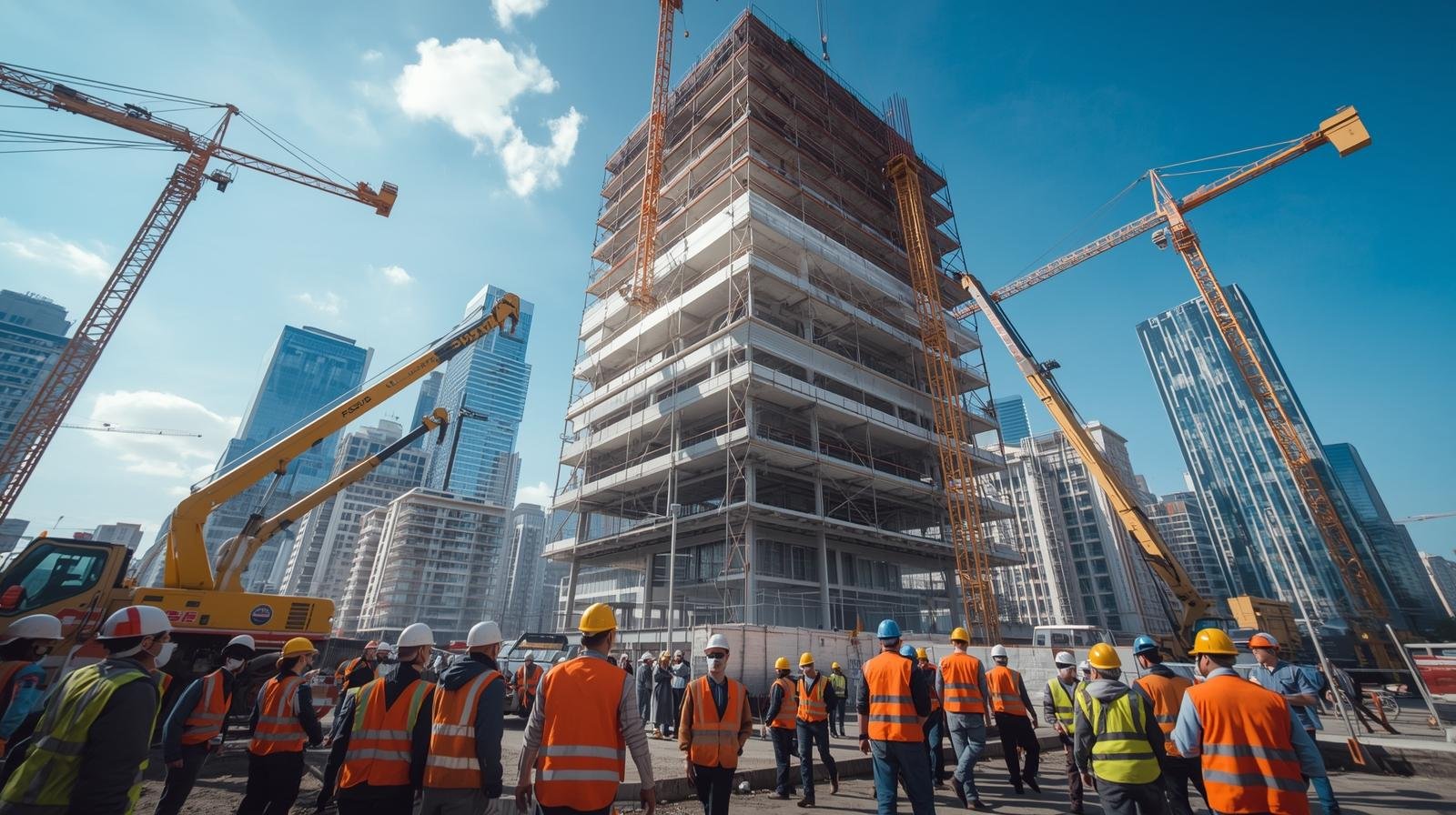
Building construction represents the organized process of planning, designing, and assembling materials to create safe, durable, and functional structures. Modern construction is no longer limited to simply stacking bricks and pouring concrete; it integrates engineering precision, architectural design, project management, environmental sustainability, and advanced technology. Every successful project follows a structured workflow beginning from feasibility analysis and ending at occupancy certification.
The construction industry today operates as a coordinated business ecosystem involving architects, civil engineers, contractors, suppliers, and regulatory authorities. Projects are executed with strict compliance to structural stability, cost optimization, and lifecycle performance. A well-constructed building ensures safety, longevity, and financial value while minimizing maintenance requirements.
Types of Building Construction
Residential Construction
Residential construction focuses on homes and living spaces designed for comfort and safety. These structures include independent houses, apartments, villas, and housing complexes. The primary emphasis is livability, ventilation, natural lighting, and cost efficiency.
Commercial Construction
Commercial buildings serve business purposes such as offices, malls, hotels, and restaurants. These require larger load capacity, parking areas, elevators, fire safety systems, and HVAC installations. Planning prioritizes usability and customer flow.
Industrial Construction
Industrial construction includes factories, warehouses, manufacturing units, and power plants. Structural strength and equipment installation are critical. Heavy foundations and steel structures are commonly used due to high operational loads.
Institutional Construction
Schools, hospitals, government offices, and public facilities fall under this category. Safety standards, accessibility, and functional layout are essential. Emergency evacuation routes and public compliance codes dominate design decisions.
Stages of Building Construction Process
Project Planning and Feasibility
The project begins with site evaluation, soil testing, and budget estimation. Engineers determine whether the land can support the structure. Cost-benefit analysis ensures financial viability.
Architectural and Structural Design
Architectural drawings define layout and appearance, while structural drawings determine load-bearing components such as beams, columns, and foundations. Design software helps calculate strength and material quantity.
Approval and Permits
Authorities verify that plans meet building regulations. Approvals typically include zoning clearance, environmental permissions, and safety compliance certificates.
Site Preparation
The site is cleared, leveled, and excavated. Temporary utilities and storage areas are installed. Boundary marking ensures accurate construction alignment.
Foundation Construction
Foundation transfers structural load to the ground. Its design depends on soil bearing capacity and building height. Proper foundation prevents settlement and cracks.
Superstructure Construction
Columns, beams, slabs, and walls are built above the foundation. Reinforced concrete and masonry work are executed according to structural drawings.
Finishing and Services Installation
Electrical wiring, plumbing, plastering, flooring, painting, and fixtures are installed. Quality finishing determines usability and aesthetics.
Inspection and Handover
Final inspection confirms safety and compliance. After certification, the building is ready for occupancy.
Major Components of a Building
Foundation
Supports the entire building load and prevents differential settlement. Common types include shallow footing and pile foundation.
Plinth
The portion between ground level and floor level. Protects building from moisture and water entry.
Superstructure
All parts above plinth level including columns, walls, beams, and slabs.
Roof
Protects against weather conditions. May be flat or sloped depending on climate.
Doors and Windows
Provide ventilation, lighting, and access. Their placement affects energy efficiency.
Finishes
Includes plaster, paint, tiles, and decorative work enhancing appearance and durability.
Building Materials Used in Construction
Concrete
Concrete is the backbone of modern construction due to strength and durability. It is made from cement, sand, aggregate, and water. Reinforced concrete improves tensile resistance.
Steel
Steel reinforcement bars provide structural strength. Structural steel frames are also used in high-rise buildings.
Bricks and Blocks
Used for wall construction. Concrete blocks and fly ash bricks offer better insulation and dimensional accuracy.
Wood
Used for doors, windows, and interior finishes. Engineered wood products improve stability.
Glass
Used extensively in modern architecture for lighting and aesthetics. Tempered and laminated glass enhance safety.
Construction Techniques
Conventional Construction
Traditional method using bricks and reinforced concrete. Suitable for small to medium structures and offers flexibility in design.
Precast Construction
Structural components are manufactured off-site and assembled at site. It reduces construction time and improves quality consistency.
Steel Frame Construction
Preferred for commercial and industrial buildings. Provides faster erection and large span capability.
Green Construction
Eco-friendly materials and energy-efficient systems reduce environmental impact. Includes solar panels, rainwater harvesting, and insulation materials.
Quality Control in Construction
Quality assurance ensures structural safety and durability. Tests are performed on materials such as cement strength, aggregate grading, and concrete compressive strength. Supervision guarantees adherence to design specifications.
Inspection stages include:
- Material inspection
- Reinforcement checking
- Concrete pouring supervision
- Finishing verification
Proper quality management reduces repair costs and increases building lifespan.
Safety Measures on Construction Sites
Worker safety is mandatory in construction projects. Protective equipment and safety procedures prevent accidents.
Personal Protective Equipment
Helmets, gloves, safety shoes, and harnesses protect workers from injury.
Site Safety Protocols
Barricades, warning signs, and equipment checks minimize hazards.
Fire Safety
Fire extinguishers and emergency exits must be available during construction and after completion.
Cost Factors in Building Construction
Construction cost depends on multiple parameters including material quality, labor rates, and building size.
Major cost components:
- Material cost
- Labor cost
- Equipment cost
- Design and approval charges
- Finishing quality
Efficient planning reduces waste and improves profitability.
Sustainable Building Construction
Modern projects prioritize sustainability to conserve resources and reduce operational costs.
Energy Efficiency
Insulated walls and reflective roofs reduce energy consumption.
Water Conservation
Rainwater harvesting and efficient plumbing fixtures minimize water usage.
Waste Management
Recycling debris reduces environmental impact.
Sustainable buildings maintain indoor comfort while lowering maintenance expenses.
Role of Technology in Construction
Advanced technology improves accuracy and productivity.
Building Information Modeling (BIM)
Creates 3D digital models for better coordination and clash detection.
Automation and Machinery
Concrete pumps, tower cranes, and laser leveling equipment accelerate construction speed.
Smart Buildings
Sensors control lighting, ventilation, and security systems for efficiency.
Maintenance After Construction
Regular maintenance preserves structural integrity and appearance. Periodic inspection identifies cracks, leakage, or corrosion early.
Maintenance activities include:
- Waterproofing checks
- Painting and coating renewal
- Plumbing inspection
- Structural monitoring
Preventive maintenance increases property value and lifespan.
Conclusion
Building construction combines engineering science, architectural planning, and systematic execution to create reliable structures. Successful projects depend on proper design, quality materials, skilled labor, and disciplined management. Modern construction methods emphasize safety, sustainability, and efficiency, ensuring long-term durability and economic value. Careful planning and execution produce buildings that remain functional, secure, and aesthetically appealing for decades.