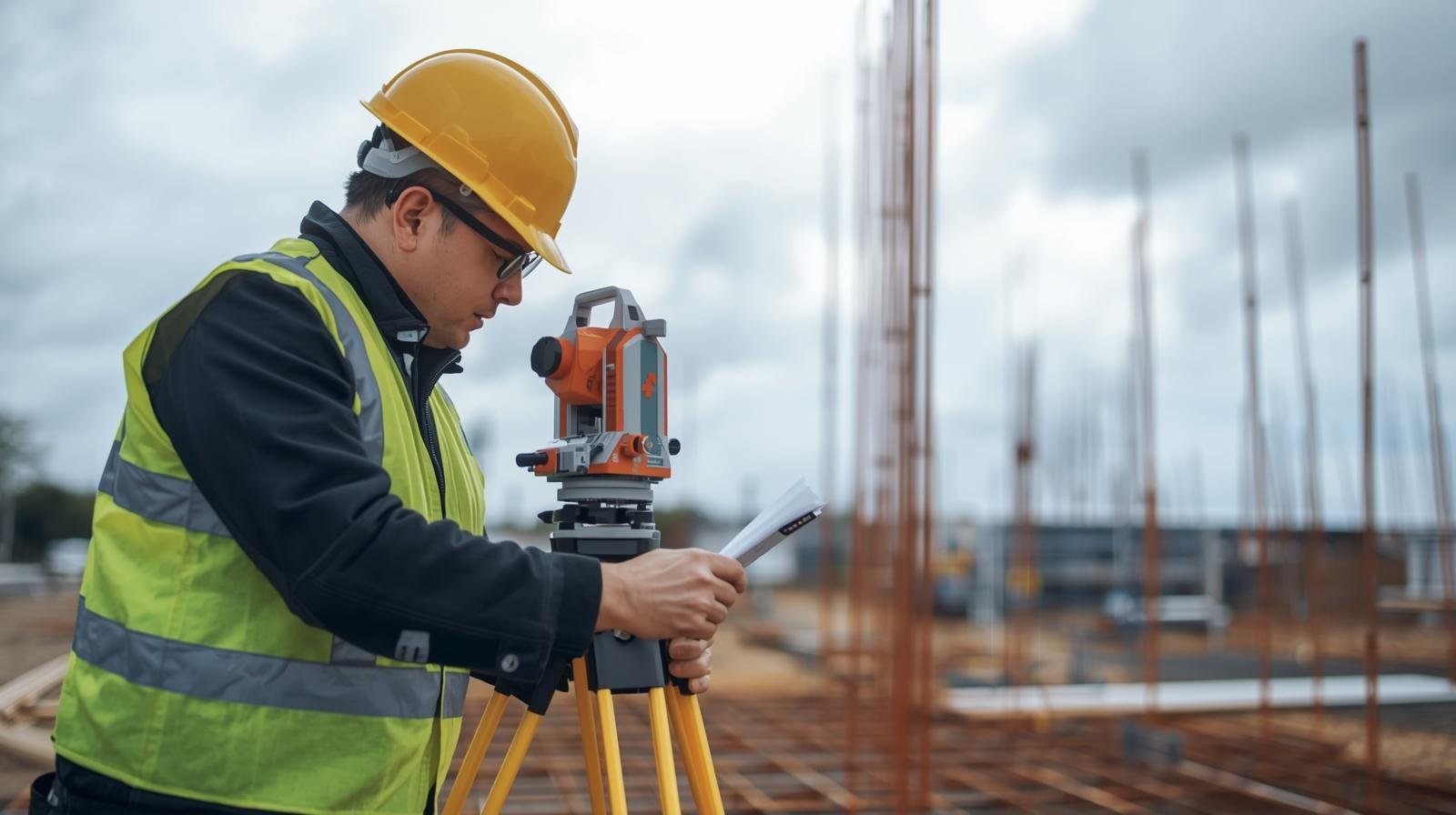
Types of levelling are fundamental methods used in surveying to determine the relative heights of points on the earth’s surface. Levelling helps in finding elevation differences, setting out construction levels, and preparing contour maps. In civil engineering projects like roads, buildings, canals, and railways, accurate levelling is essential to ensure safety, drainage, and proper design. Different types of levelling are used depending on accuracy requirements, terrain conditions, and project scale.
What Is Levelling in Surveying
Levelling is the process of determining the vertical distance or difference in elevation between two or more points. It is mainly used to establish reduced levels of points with respect to a reference datum. Levelling ensures that construction works are carried out at correct heights and slopes.
Main Types of Levelling
Levelling methods are broadly classified into direct and indirect methods based on the technique used to measure height differences.
Direct Levelling
Direct levelling is the most accurate and commonly used method in surveying. It involves direct measurement of height differences using a levelling instrument and staff.
Simple Levelling
Simple levelling is used to find the difference in elevation between two nearby points. The instrument is placed between the points, and staff readings are taken. This method is suitable for small and simple works.
Differential Levelling
Differential levelling is used when the distance between two points is large or when there are obstacles in between. Multiple instrument setups are used to transfer levels from one point to another accurately.
Fly Levelling
Fly levelling is a rapid method used to transfer reduced levels from a benchmark to a required point. Accuracy is moderate, and it is mainly used for preliminary surveys or route surveys.
Profile Levelling
Profile levelling is carried out to determine the longitudinal section of a ground surface. It is commonly used in road, railway, and canal projects to fix gradients and alignment.
Cross-Section Levelling
Cross-section levelling is done perpendicular to the main alignment. It is used to calculate earthwork quantities in road and canal construction.
Check Levelling
Check levelling is performed to verify the accuracy of previous levelling work. It helps in identifying errors and ensures reliability of survey data.
Indirect Levelling
Indirect levelling methods are used when direct measurement is difficult or not possible. These methods are generally less accurate compared to direct levelling.
Trigonometric Levelling
Trigonometric levelling uses vertical angles and horizontal distances to calculate elevation differences. It is useful in hilly areas, valleys, and where points are inaccessible.
Barometric Levelling
Barometric levelling determines height differences based on atmospheric pressure readings. This method is quick but less accurate and is mainly used in reconnaissance surveys.
Stadia Levelling
Stadia levelling uses a theodolite and stadia staff to determine elevation differences. It is faster than direct levelling and suitable for rough terrain.
Temporary Adjustment of Levelling Instrument
For all types of levelling, proper adjustment of the levelling instrument is necessary. This includes setting up the instrument, leveling it using foot screws, and focusing the eyepiece and objective. Accurate adjustment ensures reliable results.
Uses of Levelling in Civil Engineering
Levelling is widely used in construction and infrastructure projects. It helps in setting foundation levels, fixing road gradients, designing drainage systems, and calculating earthwork quantities. Accurate levelling ensures proper water flow and structural stability.
Major Applications of Levelling
- Building foundation level setting
- Road and railway construction
- Canal and drainage works
- Contour mapping
- Earthwork calculation
Importance of Choosing the Right Type of Levelling
Selecting the correct type of levelling improves efficiency and accuracy. Simple projects may require simple levelling, while large infrastructure works demand differential or profile levelling. Indirect methods are useful when speed is more important than high precision.
FAQs on Types of Levelling
Which is the most accurate type of levelling
Direct levelling, especially differential levelling, is the most accurate method.
Which levelling method is used for road construction
Profile levelling and cross-section levelling are mainly used in road construction projects.
What is fly levelling used for
Fly levelling is used to quickly transfer reduced levels from a benchmark to a site.
Is trigonometric levelling accurate
Trigonometric levelling is reasonably accurate but not as precise as direct levelling methods.
Conclusion
Types of levelling play a crucial role in surveying and construction by ensuring accurate height measurements and proper alignment of structures. Each levelling method has its own purpose, accuracy level, and application. Understanding these types helps engineers and surveyors select the right method for safe, economical, and efficient project execution.