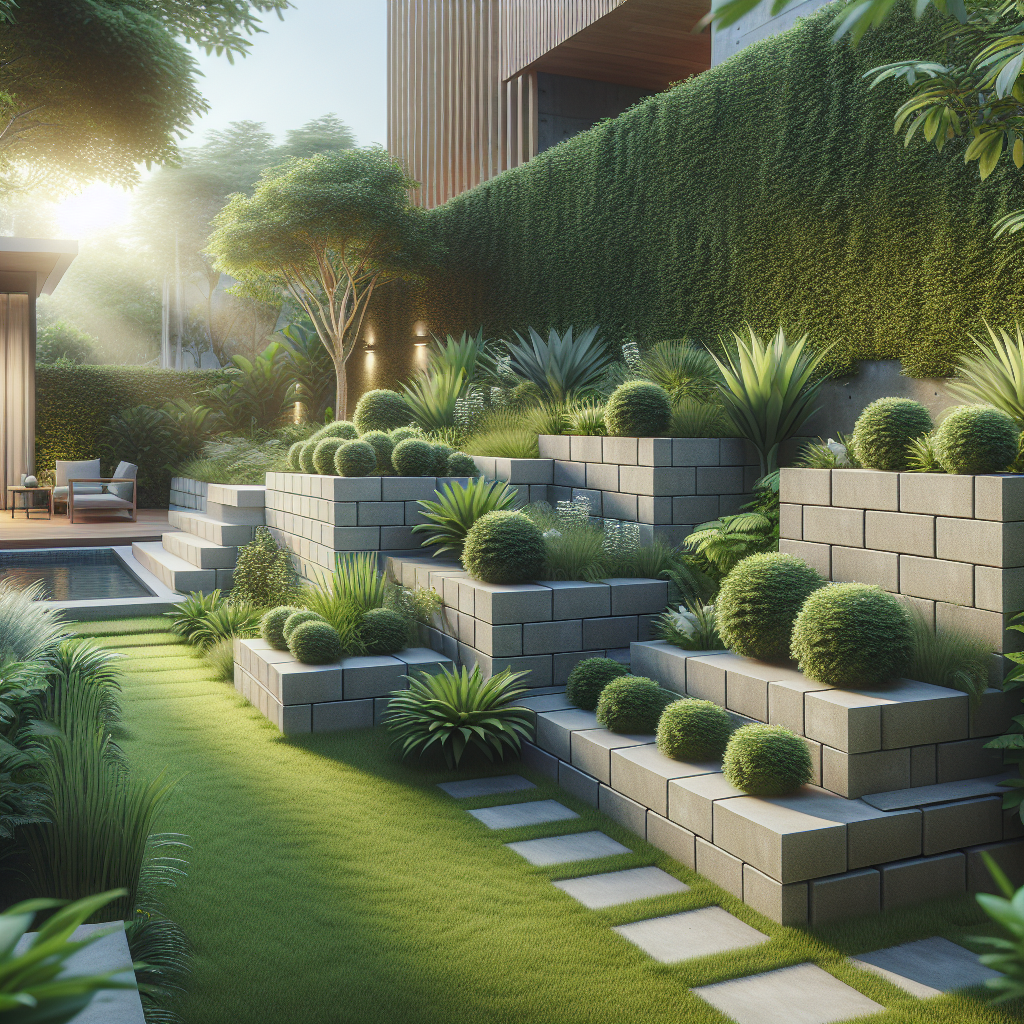
Concrete retaining wall blocks are a practical way to hold soil, shape slopes and add structure to outdoor spaces. Their weight, uniform shape and variety of finishes make them a popular choice for long-lasting landscape walls.
This article explains how these blocks perform, what to plan before starting, key building steps and styling ideas that help the wall blend with the rest of the yard. Read on for clear, simple explanations and useful tips.
How these blocks work and why they suit many landscapes
Concrete blocks for retaining walls are made to lock together or sit tightly while resisting lateral earth pressure. Their mass and shape provide stability without relying on mortar in many systems.
They come in many sizes and textures, from smooth to split-face. That variety lets you match a modern patio, a cottage garden or a terraced bed while keeping the structure strong.
Key benefits
Durability is a major advantage—concrete resists rot and insect damage that can affect timber. Blocks also often include built-in drainage options and modularity that speeds up construction.
Common uses
Typical uses include leveling small yards, creating raised beds, stabilizing slopes and forming steps or planters. They are also used along driveways and property borders where a neat, uniform wall is needed.
Planning the wall: site, materials and permits
Good planning prevents costly repairs. Start with a clear idea of the wall height, the slope behind it and where water will flow. Small walls under about 3 feet often follow simpler rules than taller engineered walls.
Check local rules early. Some areas require permits or inspections for walls above a certain height. Knowing this avoids delays and extra costs.
Choosing the right block
Match block size to wall height and appearance. Larger blocks speed installation for bigger walls, while smaller blocks can offer more curves and detail.
Drainage and soil
Soil type affects how water moves behind the wall. Clay holds water and increases pressure, while sandy soil drains better. Include a gravel backfill and a drainage pipe where water can accumulate.
Step-by-step building approach and practical tips
Building with these blocks follows clear stages: prepare the trench and base, lay the first course accurately, add backfill and drainage, then stack remaining courses while checking level and alignment.
Consistency in leveling and compaction matters more than speed. A well-formed base prevents leaning or settling later.
Base and leveling
Excavate a trench below frost depth if necessary and deep enough for a compacted stone base. The usual base is crushed gravel compacted in layers to create a solid, drained footing.
Laying the first course
The first block line sets the whole wall. Lay it on the compacted base and use a string line and level to keep it straight. Use a rubber mallet to settle blocks without damage.
Drainage and backfill
Place a perforated pipe behind the base and cover it with gravel to channel water away. Backfill in layers and compact gently to avoid shifting the wall. Keep fine soils away from the gravel drainage layer to prevent clogging.
Stacking and setbacks
Many modular blocks are designed to lean slightly into the retained soil, improving stability. Follow manufacturer instructions for setback and any locking features. Stagger joints like brickwork unless the system specifies otherwise.
Finishing touches
Cap stones give a clean top line and protect the wall from water entry. Use adhesive recommended for concrete if caps need fixing. Sealants can help preserve color but pick breathable products to avoid trapping moisture.
Design options, planting and long-term care
Blocks offer both function and aesthetic potential. Finish and color choices determine whether the wall reads as a hard edge or a soft garden feature.
Integrating plants and lighting can hide the wall’s mass and make it a decorative part of the yard while preserving its structural role.
Styles and textures
Split-face textures mimic natural stone, while smooth finishes suit modern layouts. Consider cap profiles—rounded caps soften the silhouette, squared caps feel contemporary.
Planting and drainage considerations
Choose shallow-rooted plants in front of the wall and pick species that tolerate the microclimate. Avoid planting large trees too close, as roots and soil moisture can affect the wall over time.
Maintenance tips
Inspect the wall annually for signs of bulging, leaning or water pooling. Clear debris from the drainage path and repair minor settling by repacking gravel and soil.
Conclusion
Concrete retaining wall blocks are a flexible and durable option to shape outdoor spaces. With proper planning—especially around drainage and base preparation—they provide many years of reliable service.
Choosing the right block style, following careful construction steps and adding sensible vegetation will keep the wall both useful and attractive for seasons to come.
Frequently Asked Questions
How tall can a block wall be without extra reinforcement?
Many modular block systems are stable up to about 3 feet without reinforcement, depending on soil and loading conditions. Taller walls generally require geogrid, deeper footings or professional assessment.
Do I need a drainage pipe behind the wall?
Yes. A perforated drain at the base with gravel around it is critical to carry water away and reduce pressure on the wall. Without it, hydrostatic pressure can cause failure over time.
Can these blocks be used on a curved wall?
Many smaller modular blocks allow gentle curves. Designing tight curves may require specially shaped units or cutting blocks. Check the block type and curvature limits before starting.
What base material works best?
Crushed stone or gravel compacted in layers makes a stable, drained base. Avoid using sand as the main support material since it can shift more easily under loads.
How long does installation typically take?
Timing depends on wall length, height and site access. A small backyard wall might take a few days, while longer or taller walls can take a week or more. Proper base work and drainage take most of the time but pay off in longevity.
Are there any special tools I should have on hand?
Basic tools include a shovel, level, string line, rubber mallet, compactor for the base layers and a wheelbarrow. For cutting or shaping blocks, a masonry saw or splitter may be needed.