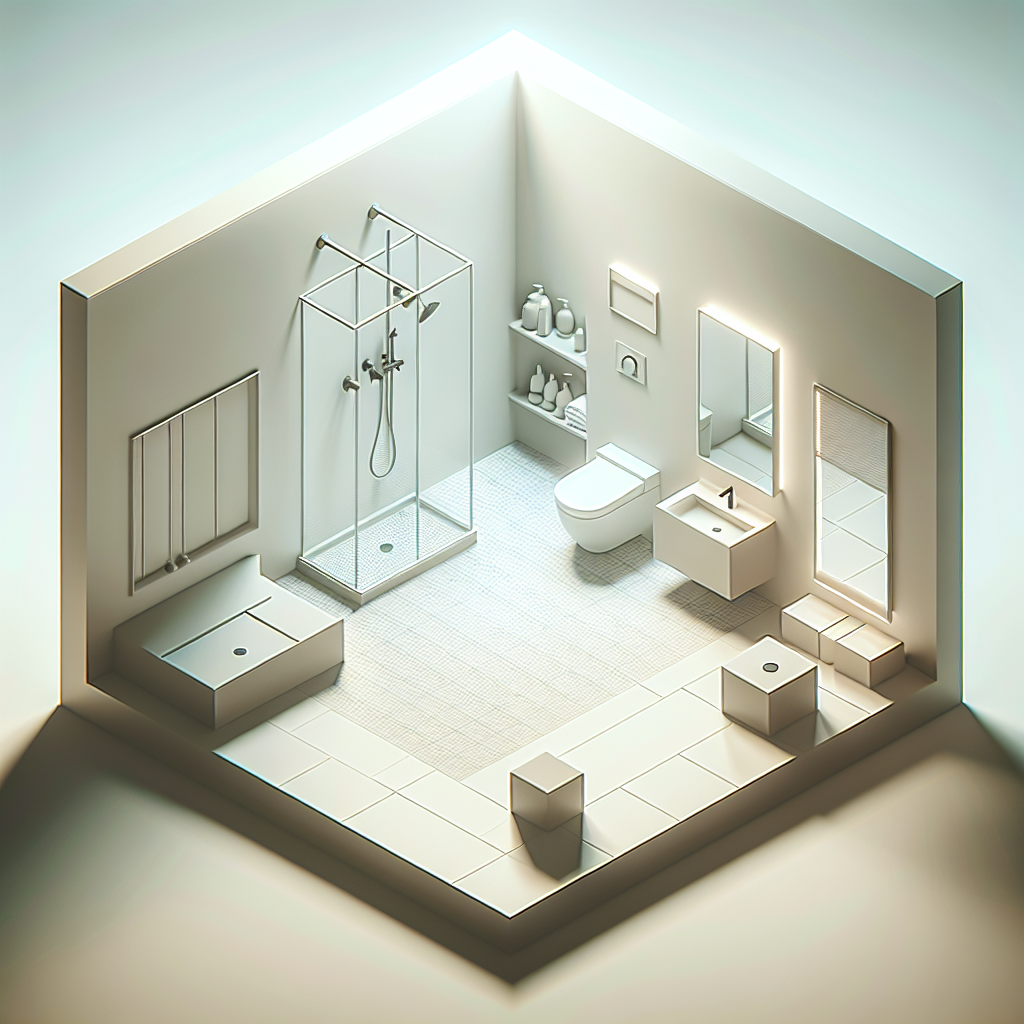
Picking the right shower pan size shapes the comfort and practicality of any bathroom. Knowing common dimensions, how drain placement affects layout, and which styles fit your space helps avoid costly mistakes.
This article breaks down typical sizes, measuring tips, material effects, and accessibility options. Use the clear numbers and simple checks to match a pan to your bathroom plans.
Common shower pan sizes and shapes
Shower pans come in several standard footprints to fit typical bathroom layouts. Choosing the right shape often depends on available square footage and how the shower will be used.
Below are the most common sizes and their usual uses, along with quick notes on when to pick each one.
Square pans (32″ x 32″ to 48″ x 48″)
Square pans are popular in smaller bathrooms and powder rooms. The smallest common size is 32 x 32 inches, while roomy options reach 48 x 48 inches.
Use a 32 or 36 inch square when space is tight. A 42 or 48 inch square adds comfort for adults and allows for more movement.
Rectangular pans (36″ x 48″ and larger)
Rectangular pans are versatile and suit many layouts. The 36 x 48 inch pan is a frequent choice that balances space and zoning in mid-size bathrooms.
Larger rectangular pans, such as 36 x 60 or 48 x 72, work well in master baths or when a bench or dual heads are planned.
Neo-angle and corner pans
Neo-angle pans (typically 36 inches on the long walls) save floor space and fit neatly into corners. They are shaped with a diagonal front to create a compact but usable shower area.
Corner pans are ideal when a bathroom layout forces plumbing into a corner and you want to maximize open floor space elsewhere.
How to measure and ensure a proper fit
Accurate measuring prevents surprises during installation. Measure both the rough opening and finished floor dimensions, and check wall plumb and floor level.
Always account for wall finishes, door clearances, and the thickness of any curb or threshold when selecting a pan.
Measure the opening carefully
Take three measurements across each wall: top, middle, and bottom. If there is a difference, work from the smallest number. That avoids ordering a pan that won’t fit between out-of-plumb walls.
Also measure from the finished floor height up to any fixtures or shelves that could interfere with a showerhead or glass panel.
Drain placement and plumbing alignment
Standard pans come with center, corner, or off-center drains. Confirm the pan’s drain location matches the existing plumbing to cut down on expensive rework.
If you must move the drain, know that shifting it more than a few inches may require opening the subfloor and rerouting pipe, which adds cost and time.
Slope, pitch, and water flow
Shower pans must slope toward the drain to prevent standing water. The recommended slope is around 1/4 inch per foot, enough to move water while staying comfortable underfoot.
Prefabricated pans have the slope molded in; tiled pans require a mortar bed with correct pitch to the drain location.
Material choices and how they affect dimensions
The material of a shower pan affects thickness, durability, and how much finished depth it adds to a bathroom. This changes how thresholds and doors are installed.
Common materials include acrylic, fiberglass, and tile-ready pans made of composite or mortar bases.
Acrylic pans
Acrylic pans are lightweight and often molded in one piece. They usually have a built-in slope and are available in many standard sizes.
Thickness varies but is generally slimmer than tiled pans, which makes them easier to fit into bathrooms with low ceilings or tight doorhead clearances.
Fiberglass pans
Fiberglass tends to be less expensive and is similar to acrylic in installation steps. It is lightweight but can flex if not supported properly.
Support issues can lead to cracking or uneven drainage, so ensure proper substrate support when installing fiberglass pans.
Tile-ready and custom mortar pans
Tile-ready pans or mortar beds allow complete customization of size and drain placement. They are thicker and require a waterproof membrane and careful slope work.
These are the best option when non-standard dimensions are needed or when a flush, curbless finish is desired.
Planning for accessibility and low-threshold options
Accessibility needs change how a shower pan is chosen and installed. Low-threshold and curbless pans create safer, barrier-free entries but need precise floor leveling and drainage planning.
Consider door swings, grab bar locations, and whether a built-in bench or seat is necessary when planning accessible layouts.
Curbless and low-threshold pans
Curbless pans sit nearly flush with the bathroom floor. They require a well-graded subfloor and a drain system capable of handling rapid water flow to avoid spills into the rest of the room.
These pans are often tile-ready or custom built, as prefabricated units that are truly flush are less common.
ADA-style dimensions to consider
An ADA-compliant shower receptor often measures at least 36 x 36 inches for roll-in or transfer setups, but specific needs vary by region and intended use.
For wheelchair access, account for a clear turning radius in the bathroom and plan plumbing and door locations to keep the entry unobstructed.
Common mistakes and practical tips
Many issues stem from assuming walls are perfectly square or that existing plumbing can be moved easily. Anticipate irregularities and plan accordingly.
Keep an eye on door clearances, towel bars, and nearby fixtures that could block access or interfere with shower doors.
Don’t assume finished dimensions
Wall tile, drywall, or added backer board each add thickness. Order a pan based on finished wall-to-wall measurements, not rough opening sizes.
If you forget to account for tile thickness, the pan may become too tight to fit or leave visible gaps at the front edge.
Mind the shower door or curtain
Sliding or swinging doors need clearance. Swinging glass doors especially require extra space to open and close without hitting fixtures.
Curtains need a stud to fasten the rod securely and enough projection to keep water inside the pan.
Conclusion
Choosing the right shower pan means balancing size, material, drain placement, and accessibility needs. Measure carefully, account for finished surfaces, and match the pan style to how the shower will be used.
Well-planned dimensions reduce headaches during installation and lead to a bathroom that works reliably for years.
Frequently Asked Questions
What are the most common shower pan dimensions?
Common sizes include 32 x 32, 36 x 36, 36 x 48, and 48 x 48 inches. Neo-angle corner pans and custom rectangular pans are also popular. Choice depends on available floor space and desired comfort.
How much slope is needed in a shower pan?
The typical slope is about 1/4 inch per foot toward the drain. That slope ensures water moves efficiently without creating an uncomfortable incline underfoot.
Can I change the drain location on a prefabricated pan?
Most prefabricated pans come with a fixed drain location. Minor adjustments may be possible, but major changes usually require repositioning plumbing under the floor, which increases cost and labor.
Are tile-ready pans better than acrylic?
Tile-ready pans offer full customization and a seamless finish, which is ideal for curbless entries. Acrylic pans are quicker and cleaner to install and often less expensive. The best choice depends on desired finish and budget.
What should I measure before ordering a shower pan?
Measure finished wall-to-wall width and depth, floor levelness, and the location of the existing drain. Also note wall plumb, door swing area, and any nearby fixtures that could interfere.